

When planning your dream home, electrical wiring is one of the most crucial aspects to consider. It ensures safety, efficiency, and cost control, making it essential to get it right from the start. A well-executed wiring plan not only meets your current needs but also prepares your home for future upgrades, such as smart systems or additional appliances.
Accurate wiring estimation is the foundation of a successful electrical project. By carefully planning and forecasting, homeowners and builders can avoid budget overruns, safety risks, and delays. In fact, mastering this process can save up to 20% on project costs, all while ensuring compliance with local codes and standards. Let’s break down the process step by step so that you can approach your house wiring project with confidence.
Why Accurate Estimation Matters
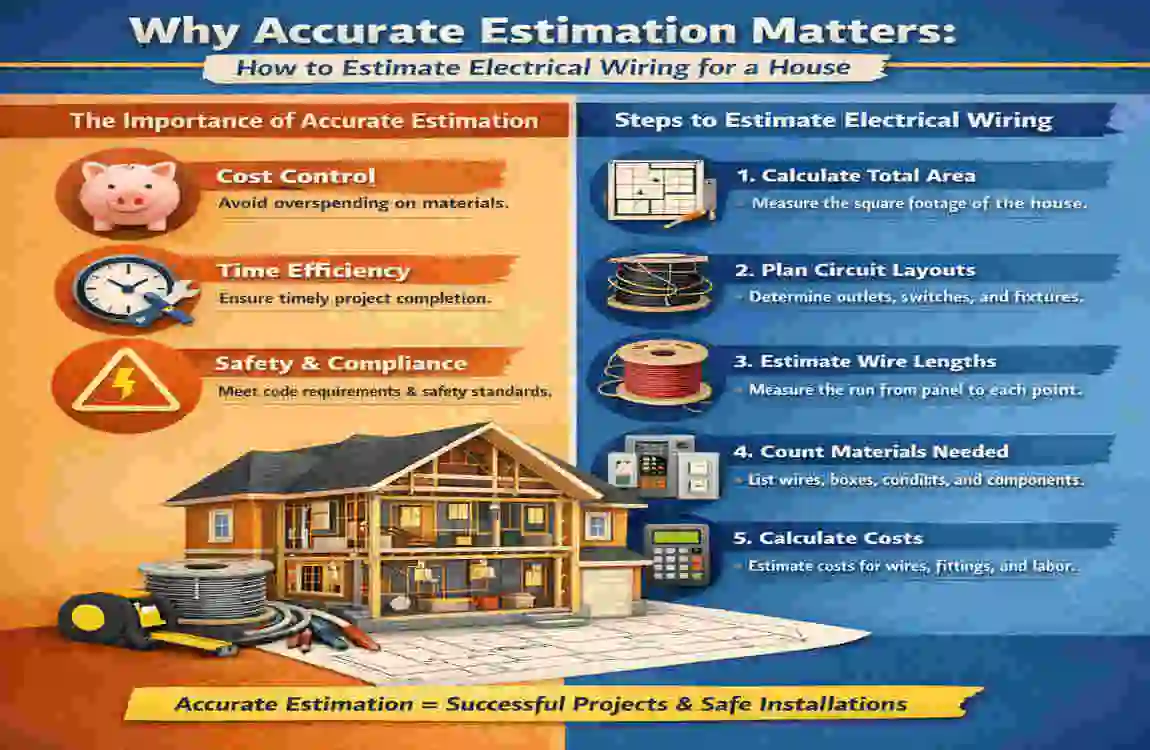
Budget Control and Avoiding Overruns
Poor estimation often leads to unexpected expenses during construction. When material quantities aren’t calculated correctly, you may end up buying more supplies mid-project, disrupting timelines and increasing costs. Additionally, underestimating labour costs can lead to budget blowouts.
Accurate estimation allows you to allocate your budget effectively. Knowing how much wire, conduit, and accessories you need helps you avoid unnecessary spending and maximise efficiency.
Safety and Code Compliance
Electrical safety is paramount. Incorrect estimates can result in overloaded circuits, posing fire hazards or causing frequent power trips. Moreover, every home must comply with local electrical codes to ensure installations are safe and legal. Proper planning ensures your wiring meets these standards, preventing costly rework or fines.
Future-Proofing Your Home
In today’s world, technology evolves rapidly. From smart home systems to electric vehicle (EV) chargers, homes require more power than ever before. Accurate wiring estimation helps you future-proof your home by ensuring sufficient capacity for these upgrades so that you won’t need expensive rewiring later.
Assess House Size and Layout
The first step in wiring estimation is evaluating the size and layout of your home. This provides a clear picture of how much wire and how many accessories you’ll need for the project.
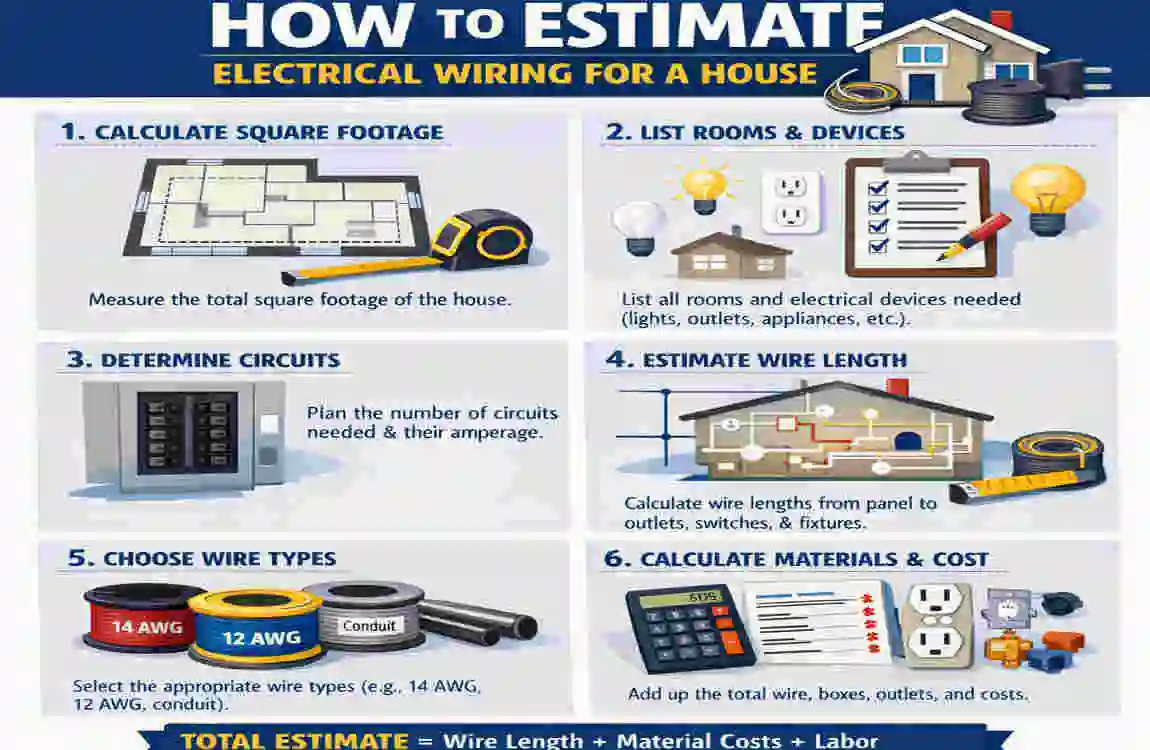
Measure the Square Footage
Start by calculating the total square footage of your house. A general rule of thumb is to use 1.5 to 2 feet of wire per square foot as a baseline. For example, for a 2,000 sq. ft. house, you’ll need approximately 3,000 to 4,000 feet of wire.
Create a Detailed Floor plan.
Draw a floor plan of your house, marking out:
- Outlets: At least one outlet every 12 feet in living areas, and additional outlets in specific spots like the kitchen or bathroom.
- Switches: Note the placement of light switches at convenient locations near doors.
- Lighting Fixtures: plan for ceiling lights, wall sconces, and any decorative lighting.
- Appliances: Include heavy-duty appliances such as refrigerators, ovens, and HVAC systems.
For multi-story homes, factor in vertical runs of wires at a rate of 3.5 to 4 meters per floor. This ensures adequate wiring for staircases and second floors.
Calculate Electrical Load
List All Load Points
In this step, you’ll calculate the total electrical load required for your house. Start by listing all the devices and fixtures that will use electricity, including:
- Lights: Estimate 100–200 watts per light fixture.
- Outlets: Each circuit of outlets typically handles up to 1,800 watts.
- Appliances: Include major power-consuming appliances like air conditioners (e.g., 5,000 watts), washing machines, and ovens.
Add a Safety Margin
Once you’ve added up the total load, divide it by 80% to leave a safety buffer. For example, if your total calculated load is 20,000 watts, your system should be capable of handling 25,000 watts. This ensures that your circuits won’t be overloaded during peak usage.
Determine the Main Service Panel Capacity
For a standard home, aim for a 100- to 200-amp service panel. Larger homes or those with heavy appliances, like EV chargers, may require higher capacities.
Determine Number of Circuits
General Circuit Planning
On average, plan 2–3 circuits per 1,000 sq. ft. For example, a 2,000 sq. ft. home might need 6–8 circuits to handle general lighting and outlets. Each circuit should not exceed 80% of its total capacity.
Room-Specific Circuit Needs
- Bedrooms: Require 1–2 outlets per wall. Consider installing AFCI (Arc Fault Circuit Interrupter) outlets for added safety.
- Kitchen: Use 20-amp small appliance circuits for countertop outlets. Include dedicated circuits for high-load appliances, such as the refrigerator and microwave.
- Bathrooms: install GFCI (Ground Fault Circuit Interrupter) outlets to protect against electrical shocks.
- Living Rooms: plan circuits for lighting, entertainment systems, and additional outlets for flexibility.
Types of Wiring Materials
Selecting the right wiring material is critical for both performance and cost-effectiveness. Here’s a comparison of common wiring options:
Wiring Type Best Use Cost per Foot Pros Cons
NM-B (Romex) Indoor walls $0.50–$1.00 Easy to install Not suitable for wet areas
UF-B Outdoor/buried runs $0.70–$1.50 Moisture-resistant , stiffer, harder to work with
MC Cable: Exposed runs $1.00–$2.00. Durable metal armour. Heavier and pricier.
Choosing the Right Gauge
- 14 AWG: Suitable for lights and low-power outlets.
- 12 AWG: Standard for most outlets and general circuits.
- 10 AWG: Required for heavy appliances like dryers.
Add an extra 10–15% of wire to account for bends, waste, and unforeseen adjustments.
Measure Wire Lengths
Horizontal and Vertical Runs
Measure the length of wires needed for phase, neutral, and earth connections:
- Horizontal Runs: Use your floor plan to calculate distances for outlets and switches.
- Vertical Runs: For wall-mounted fixtures or multi-story homes, measure drops of 0.5–1 meter for each connection.
Room-Based Wire Needs
For a typical 2,000 sq. ft. house, you might estimate:
- Living Rooms: 200–300 feet of wire per room.
- Kitchens: 100+ feet per circuit due to multiple appliances and outlets.
Always add a 15% buffer to ensure you have enough material for adjustments.
Select Switches and Panels
Choosing the right switches and panels ensures smooth operation and safety.
- Main Switch: Opt for a 100A or higher capacity switch for standard homes.
- MCBs (Miniature Circuit Breakers): Use 16–32 amps per circuit, depending on load.
- Distribution Boards (DBs): Select 8–24-way boards based on the number of circuits.
For modern homes, consider smart panels that integrate with solar systems or EV chargers.
Cost Breakdown for Materials
Here’s a sample cost breakdown for a 2,000 sq. ft. house:
Component Quantity Unit Cost Total Cost
12/2 Wire 2,000 ft $0.80/ft $1,600
Conduit 500 ft $0.60/ft $300
Outlets/Switches 50 $5 each $250
Labor and Overhead Costs
Electricians charge $50–$100 per hour, and a full-house wiring project may take 60–100 hours. Including overhead and permits, total labour costs can range from $3,000 to $10,000.
Common Mistakes to Avoid
- Underestimating Future Needs: Always plan for additional appliances and smart systems.
- Ignoring Safety Codes: Non-compliance can lead to fines or safety hazards.
- Skipping Buffers: Failing to account for extra materials can cause delays.
FAQ: How to Estimate Electrical Wiring for a House
How much wire do I need per square foot?
A common rule is to use about 1.5 to 2 feet of wire per square foot of living space. This accounts for wiring outlets, switches, lights, and appliances throughout the house.
How do I calculate the total electrical load?
List all electrical devices and fixtures, estimate their wattage, add them up, and then add a safety margin (usually 20%) to avoid overloads.
How many circuits should I plan for?
Typically, plan for 2 to 3 circuits per 1,000 square feet, including dedicated circuits for kitchens, bathrooms,
What types of wire should I use?
Use 14 AWG wire for lighting circuits, 12 AWG for general outlets, and 10 AWG for heavy appliances like dryers.
Should I add extra wire length?
Yes, always add about 10-15% extra wire to cover bends, waste, and unforeseen adjustments.
Can I estimate wiring costs myself?
You can estimate materials and labor costs by measuring your home’s size and layout, but it’s best to consult a licensed electrician for precise calculations and code compliance.
How do I factor in multi-story homes?
Include vertical wire runs between floors, typically adding about 3.5 to 4 meters per floor to your total wire length estimate.