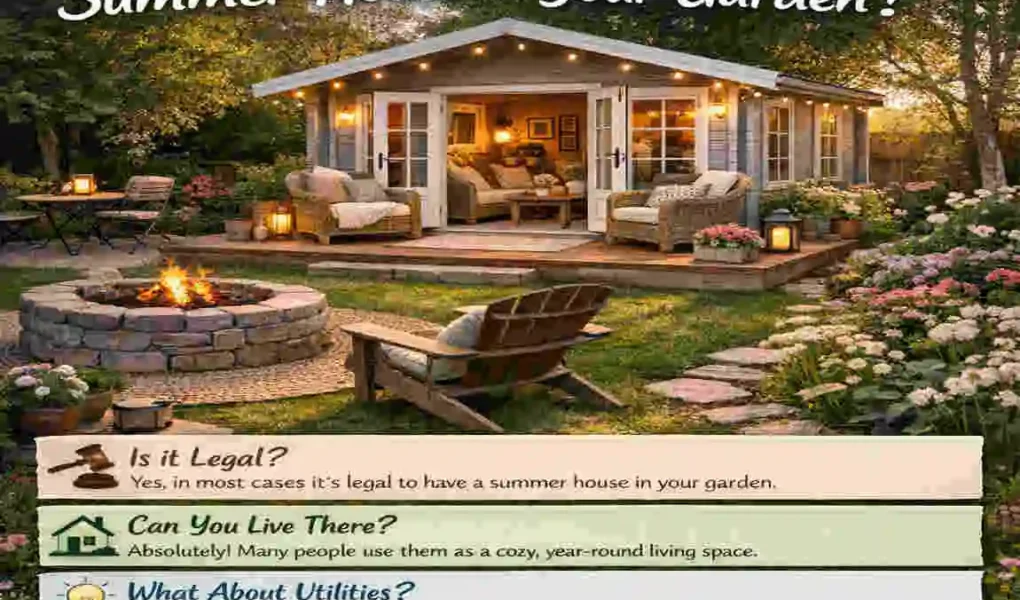
Imagine escaping into your very own garden retreat all year round. A space where you can unwind, work, or even live full-time—all within steps from your home. But can you really live in a summer house in your garden? The answer is yes, but it requires careful planning.
What Is a Summer House—and Can You Live in One Full-Time?
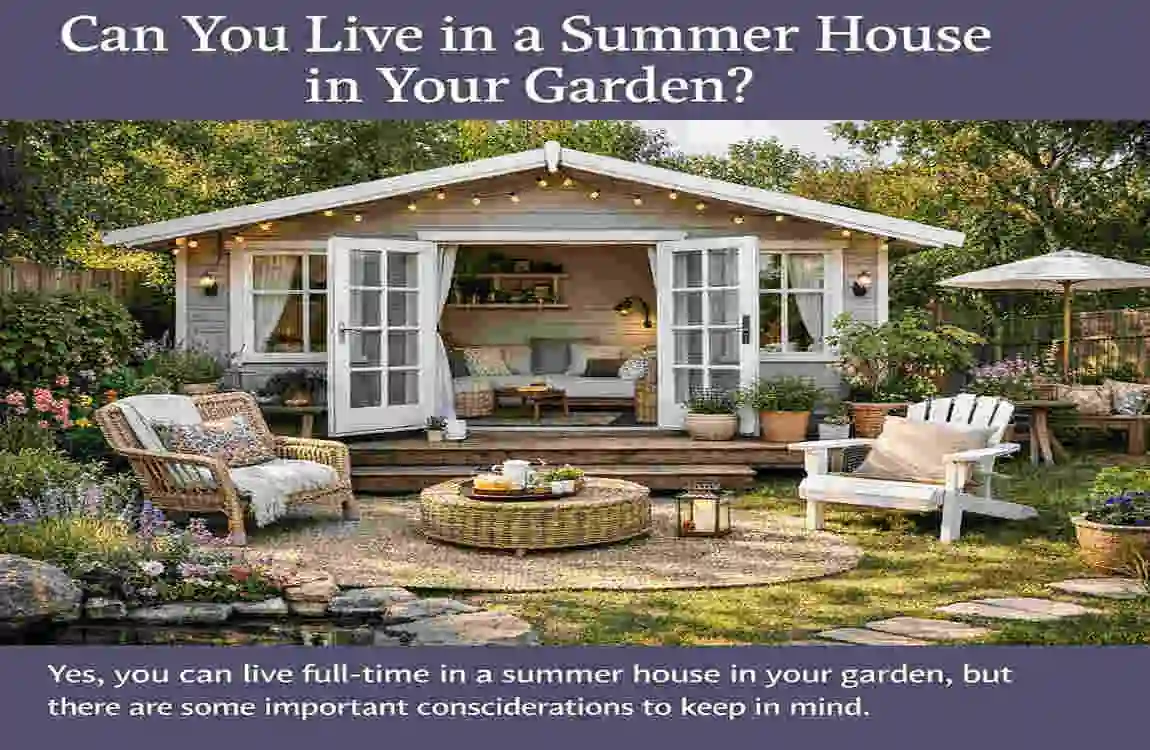
A summer house is a small, timber-framed structure, typically located in gardens, designed for leisure or relaxation. Think of it as an upgraded shed with large windows, cozy interiors, and often a veranda. Unlike sheds or log cabins, summer houses are built with comfort in mind, making them ideal for hobbies, offices, or even dwellings with the right adjustments.
Core Features of a Summer House
- Structure: Made of timber, often sold as flat-pack kits for easy assembly.
- Size: Typically starts from 8×10 feet but can be much larger.
- Design: Includes windows, doors, and sometimes verandas or decorative roofs.
Can You Live in One Full-Time?
The short answer: Yes, you can live in a summer house in your garden, but factors like size, build quality, and local regulations come into play. Many models can be customized to include essentials like insulation, electricity, and plumbing, making them suitable for year-round living.
Summer House vs. Tiny Home Comparison
Here’s a quick comparison to understand how summer houses differ from tiny homes:
Feature Summer House Tiny Home
Cost (UK Avg) £5k-£20k £30k+
Permitted Development Often yes (if under 2.5m) Rarely
Year-Round Use Convertible Designed for it
Example: The Shire Sundown summer house is a popular model that can serve as a great starting point for converting into a livable space.
Legal Side: Is Living in a Garden Summer House Allowed?
Legalities are often the biggest concern when considering living in a garden summer house. In the UK, regulations are clear but vary depending on location, size, and intended use.
Planning Permission Rules for Garden Summer Houses
Most summer houses fall under permitted development rights, meaning you don’t need planning permission if:
- The eaves height is under 2.5m.
- The total floor area is under 30m².
- The structure is located more than 2m from your property boundaries.
If you’re wondering, “Can you live in a summer house in your garden legally?”, these thresholds are a good starting point. However, full-time living usually requires additional permissions.
Converting to Full-Time Residence: Granny Annex Rules
To make your summer house a legal living space:
- Change of Use Approval: You’ll need approval to convert your summer house into a dwelling.
- Council Tax: The summer house may be classified as a Class C dwelling, meaning you’ll pay council tax.
- Ancillary Use: Summer houses are often approved for ancillary purposes (e.g., as a guest room or office), but full-time living needs extra steps.
Red Flags to Watch Out For:
- Structures covering more than 50% of your garden space.
- Properties in conservation areas or National Parks (stricter rules apply).
- Renting out the summer house—this requires an HMO (House in Multiple Occupation) license.
Practical Feasibility: Making Your Summer House Livable Year-Round
Converting a summer house into a year-round living space involves addressing key challenges like insulation, utilities, and heating. With the right upgrades, your summer house can become a cozy and functional home.
Essential Conversions for Daily Living
- Insulation: Proper insulation is critical for comfort. Options include:
- Spray foam insulation.
- PIR boards for walls and roofs.
- Estimated cost: £2,000–£5,000.
- Electrics and Plumbing:
- Hire a certified electrician to install wiring.
- Connect to the mains water supply or use a garden tap with a filter.
Heating, Ventilation, and Utilities Setup
- Heating Options:
- Electric radiators.
- Log burners (require flue permissions).
- Mini-split AC systems.
- Ventilation: Add vents or windows to prevent dampness.
- Off-Grid Solutions:
- Solar panels (cost: ~£3,000).
- Composting toilets.
- Rainwater harvesting systems.
Utility Costs Comparison
Set up Monthly Cost (UK)Pros
Mains Grid £100-£150 Reliable
Solar + Battery £20-£50 Eco-friendly, grants
Cost Breakdown: How Much to Live in a Garden Summer House?
Living in a garden summer house is an affordable alternative to traditional housing. Let’s break down the costs:
Initial Build and Conversion Costs
- Base Summer House: £4,000–£15,000.
- Livable Upgrades: £10,000–£25,000.
- Total Costs: £15,000–£40,000 (compared to £200,000+ for a home extension).
Cost Breakdown (Pie Chart Data)
- 40%: Structure.
- 30%: Insulation and utilities.
- 20%: Planning and permissions.
- 10%: Furnishings.
Ongoing Expenses
- Utility Bills: £500-£800/year (30-50% cheaper than a traditional home).
- Maintenance: Annual timber treatment (~£200).
Pros and Cons of Full-Time Summer House Living
Living in a garden summer house has its benefits and challenges. Here’s a balanced view:
Pros:
- Affordable housing solution (UK average house price: £288,000).
- Privacy and connection to nature.
- Quick and easy to build (1-2 weeks).
Cons:
- Limited space—ideal for singles or couples, not families.
- Exposure to weather, especially in winter.
- Lower resale value compared to traditional homes.
Real-Life Success Stories: Who’s Already Doing It?
Real-life examples show how living in a summer house is becoming a popular trend.
- UK Couple in Kent: Converted a 25m² summer house into a granny annex post-2024 planning approval.
- Eco-Influencer in Scotland: Built an off-grid summer house with solar panels and rainwater harvesting.
- Global Trends: In places like Lahore, tiny homes and garden summer houses are gaining popularity for eco-conscious living.
Common Mistakes to Avoid + Step-by-Step Setup Guide
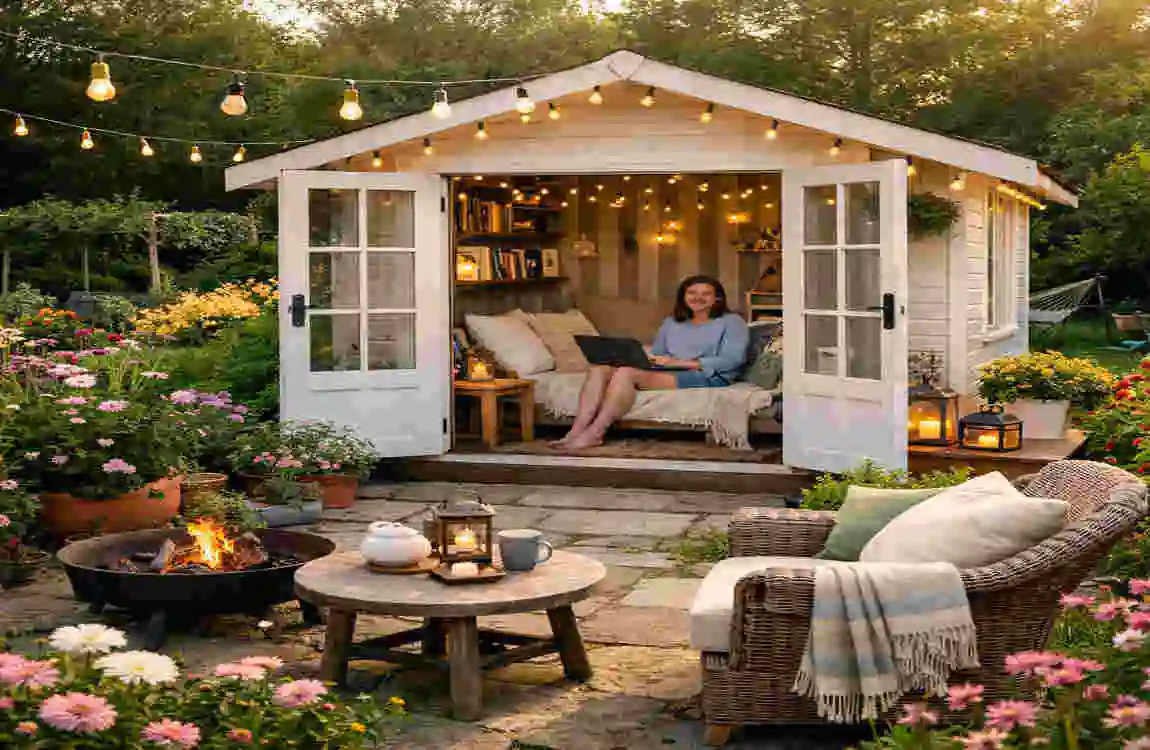
Top Mistakes to Avoid
- Skipping a garden survey (damp and flood risks can ruin plans).
- Choosing cheap, poorly insulated models.
Step Setup Guide
- Measure your garden and check permitted development rules.
- Choose an insulated model (e.g., Palmako or Shire brands).
- Apply for planning permission if needed.
- Insulate and install electrics (hire certified professionals).
- Add utilities like heating, plumbing, and ventilation.
- Test the setup for 30 days to ensure livability.
- Ensure the structure is designated as a residential annex.
FAQs: Answering Your Summer House Living Questions
- Can you live in a summer house in your garden all year?
- Yes, with proper insulation and utilities.
- Do you need planning permission?
- Often no, if under 2.5m, but check local rules.
- How much does it cost?
- Between £15,000 and £40,000.
- Is it legal to rent out?
- You may need an HMO license for renting.
- Is it suitable for families?
- Best for singles or small families due to space constraints.