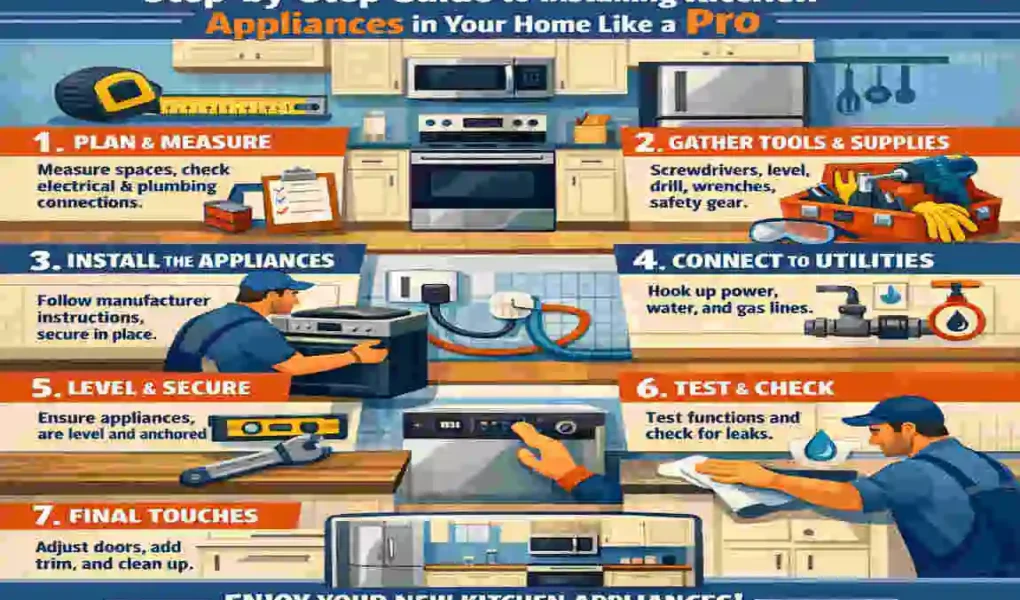
The kitchen is the heart of every home, and having the right appliances installed correctly can make all the difference. With the rise of DIY home improvement projects, more homeowners are learning how to install home kitchen appliances themselves. Not only does this save money, but it also gives you the satisfaction of customizing your kitchen to suit your needs.
| Appliance | Key Preparation | Installation Steps | Safety Checks |
|---|---|---|---|
| Refrigerator | Measure space + 1″ clearance; check water line | 1. Level base with adjustable feet 2. Connect water/ice line (if any) 3. Plug into grounded outlet 4. Test seals/door | Voltage tester on outlet; wait 4 hrs before loading |
| Oven/Range | Verify 30-50A circuit; gas line if applicable | 1. Slide into slot; secure anti-tip bracket 2. Connect gas/electric per manual 3. Leak test (soapy water for gas) 4. Level and test | GFCI outlet; pro for gas |
| Dishwasher | Shut off water/power; clear under sink | 1. Level and fit to cabinet 2. Connect water inlet + drain hose 3. Wire to junction box 4. Run test cycle | Check leaks; secure hoses |
| Microwave | Mark template above range | 1. Install mounting bracket 2. Hang and secure screws 3. Plug/vent outdoors 4. Test operation | Weight support; no venting inside |
| General | Read manual; gather tools (level, wrench, tester) | Always: Clear area, shut utilities, level unit, test functions | Grounded outlets; call pro for gas/220V |
Why DIY Kitchen Appliance Installation Matters
Hiring a professional to install kitchen appliances can cost between $100 and $500 per appliance. By investing in a few essential tools, which typically cost $50–$200, you can save hundreds of dollars.
Customization
Every kitchen is unique, and DIY installation allows you to tailor the setup to your specific layout. Whether it’s adjusting the height of a refrigerator or ensuring a dishwasher fits snugly under the counter, you have full control over the process.
Self-Sufficiency
There’s a sense of pride and satisfaction that comes with completing a project yourself. Plus, you’ll gain valuable skills that can be applied to future home improvement tasks.
Fun Fact: According to recent studies, kitchen remodels offer an average ROI (return on investment) of 60-80%, making them one of the most valuable home upgrades.
Tools and Materials Needed
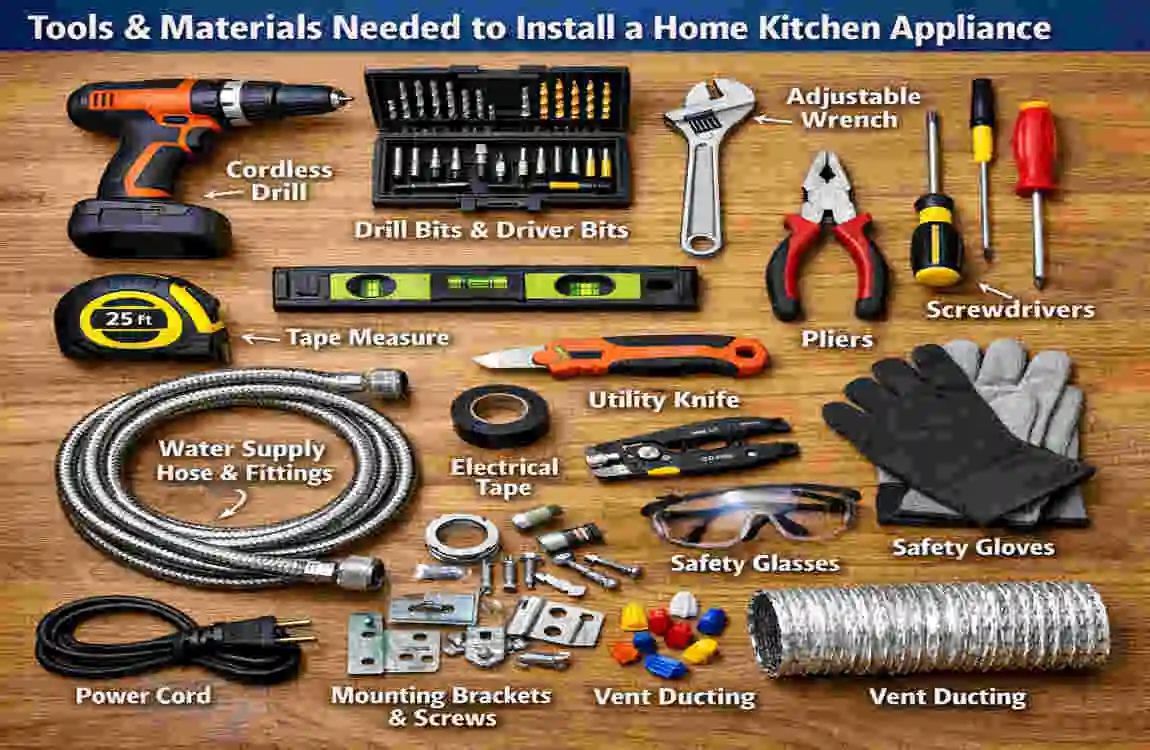
Before you begin, gather all the tools and materials you’ll need for the installation. Having everything ready will save you time and prevent unnecessary trips to the hardware store.
Tool/Material Purpose Kitchen Appliance Use
Spirit Level Ensuring even placement of all (fridge, oven, etc.)
Pipe Wrench Securing water lines Dishwasher, refrigerator
Voltage Tester Checking electrical outlets , ovens, and ranges
Screwdrivers (variety) General assembly All appliances
Pipe Tape Sealing water connections Dishwasher, refrigerator
Gloves, Safety during installation, All appliances
Preparation Steps Before Installation
Preparation is key to a smooth and successful installation. Follow these steps to ensure your kitchen is ready for its new appliances.
Shut Off Utilities
Before starting, turn off the power, water, and gas supplies to the kitchen. This is a critical safety step to prevent accidents.
Measure the Space
Measure the appliance’s dimensions and the space where it will be installed. Allow for 1-2 inches of ventilation space around the appliance to ensure proper airflow.
Read the Manual
Every appliance comes with a user manual that includes specific installation instructions. Take the time to read it thoroughly before beginning.
Clear the Area
Remove any obstacles, such as furniture or old appliances, from the installation area. Inspect the flooring and cabinets to ensure they can support the weight of the new appliance.
Check Local Codes
In some areas, certain installations (like gas lines) may require permits. Check your local regulations to avoid fines or complications.
Installing Major Kitchen Appliances: Step-by-Step
Now that you’re prepared, let’s dive into the step-by-step installation process for common kitchen appliances.
Refrigerator Installation
- Measure and Clear Path: Ensure the refrigerator can fit through doorways and into its designated spot.
- Level the Floor: Use a spirit level to make sure the floor is even. Adjust the refrigerator’s leveling feet if necessary.
- Connect the Water Line (if applicable): Attach the water supply line to the refrigerator for ice and water dispensers. Use pipe tape to prevent leaks.
- Plug Into a Grounded Outlet: Ensure the outlet is properly grounded to avoid electrical issues.
- Adjust Doors and Test Cooling: Align the doors and test the cooling system to ensure it’s functioning properly.
Oven and Range Setup
Gas Oven Installation
- Position the Oven: Place the oven in its designated spot and ensure it’s level.
- Connect the Gas Line: Use a flexible gas connector and apply a bubble test to check for leaks.
- Secure the Anti-Tip Bracket: Attach the bracket to the wall to prevent the oven from tipping forward.
- Test Ignition: Turn on the gas and test the burners to ensure they ignite properly.
Electric Oven Installation
- Secure the Anti-Tip Bracket: As with gas ovens, this is a crucial safety step.
- Connect the Power Cord: Attach the cord to the oven and plug it into a grounded outlet.
- Test the Oven: Turn on the oven and test its heating elements.
Dishwasher Installation
- Install Mounting Brackets: Attach the brackets to the countertop or cabinet to secure the dishwasher.
- Connect the Water Supply: Attach the water inlet hose to the dishwasher and the water supply valve.
- Connect the Drain Hose: Secure the drain hose to the sink drain or garbage disposal.
- Wire to the Junction Box: Connect the dishwasher’s electrical wires to the junction box.
- Secure Under the Counter: Slide the dishwasher into place and secure it with screws.
Microwave and Range Hood Installation
Microwave Installation
- Mount the Template: Use the provided template to mark the mounting holes on the wall.
- Drill and Secure: Drill the holes and secure the mounting bracket.
- Wire the Microwave: Connect the microwave to the power supply and mount it onto the bracket.
Range Hood Installation
- Mark and Drill Holes: Mark the mounting points and drill holes for the screws.
- Secure the Hood: Attach the range hood to the wall or cabinet.
- Connect Ventilation: Ensure the hood is vented outdoors if possible.
Safety Tips and Common Mistakes to Avoid
Safety should always be your top priority when working with electrical, gas, or water connections.
General Safety Tips
- Use GFCI Outlets: Ground Fault Circuit Interrupter outlets are essential for preventing electrical shocks.
- Secure All Units: Ensure appliances are properly anchored to prevent tipping.
- Perform Final Checks: Double-check all connections and test the appliance before full use.
Common Mistakes to Avoid
- Skipping the bubble test for gas lines.
- Over-tightening water connections can cause leaks.
- Ignoring ventilation requirements for refrigerators and ovens.
Post-Installation Checks and Maintenance
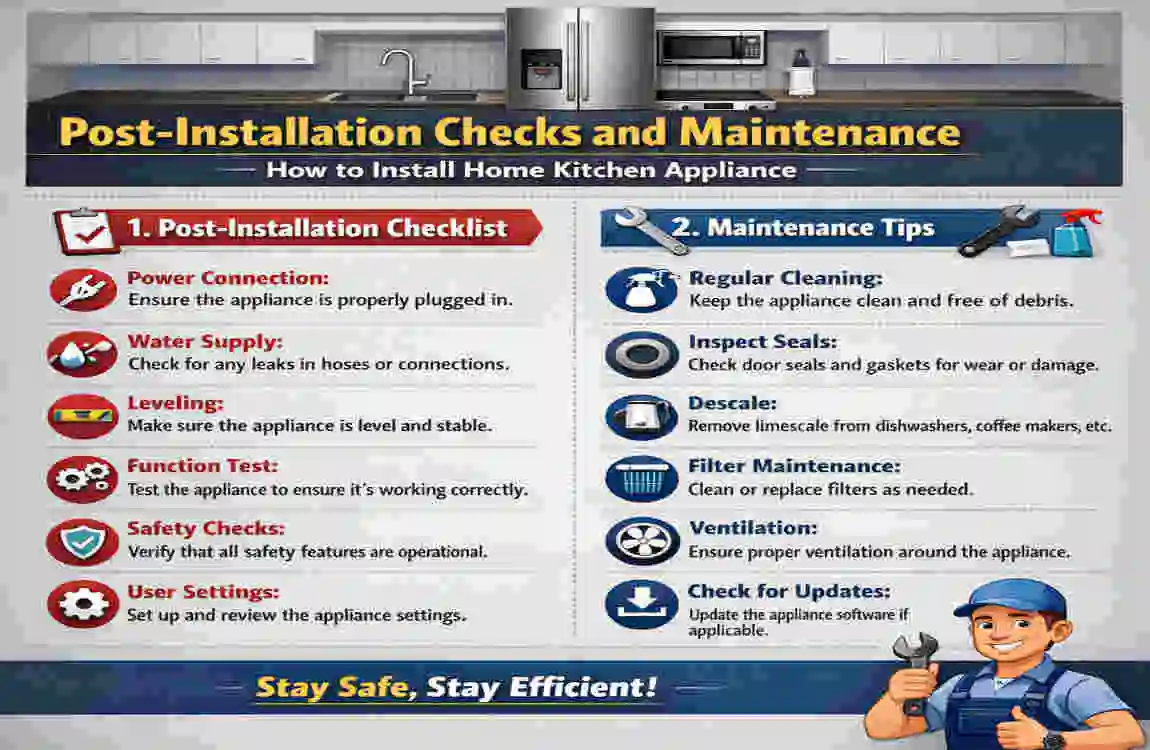
Proper maintenance can extend the lifespan of your appliances and keep them running efficiently.
- Clean Vents and Filters: Regularly clean vents and replace filters to maintain airflow.
- Check Seals: Inspect door seals on refrigerators and ovens to ensure they’re airtight.
- Update Warranties: Register your appliances to activate warranties and access support.
FAQs
Can I install a gas range myself?
While it’s possible, it’s recommended to hire a certified professional for safety reasons.
How long does it take to install a kitchen appliance?
Most installations take 1-4 hours, depending on the appliance and your experience level.
What tools do I need for DIY installation?
Basic tools include a spirit level, pipe wrench, voltage tester, and screwdrivers.