
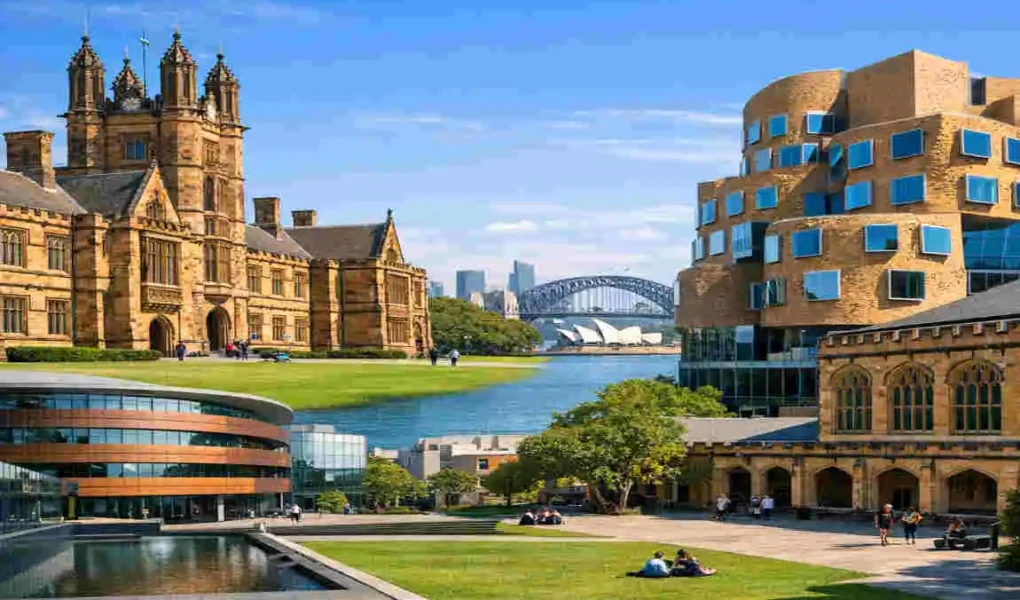
The University of Sydney’s architecture is one of the biggest reasons the campus feels so memorable. It is not just a place to study. It is also a place where history, design, and everyday student life come together in a very visible way.
What makes this campus special is the mix of old sandstone buildings and new modern structures. That combination gives the university a strong identity. You can walk from a building that feels like it belongs to the nineteenth century into a space that looks clean, bright, and contemporary.
History and Evolution of University of Sydney Architecture
The Founding of the University of Sydney
The University of Sydney was founded in the mid-1800s, when Australia was building many of its key institutions. From the beginning, the university was meant to look important, permanent, and connected to older academic traditions.
That is one reason early planners looked to European university design for inspiration. They wanted the campus to feel serious and respected, not temporary or plain.
The Development of the Historic Campus
As the university grew, so did its buildings. Over time, they added more classrooms, halls, and academic spaces. Many older structures were built from Sydney sandstone, which gave the campus its warm, historic look.
This sandstone became one of the university’s strongest visual features. It helped create a sense of unity across the campus’s historic parts.
Architecture Through Different Eras
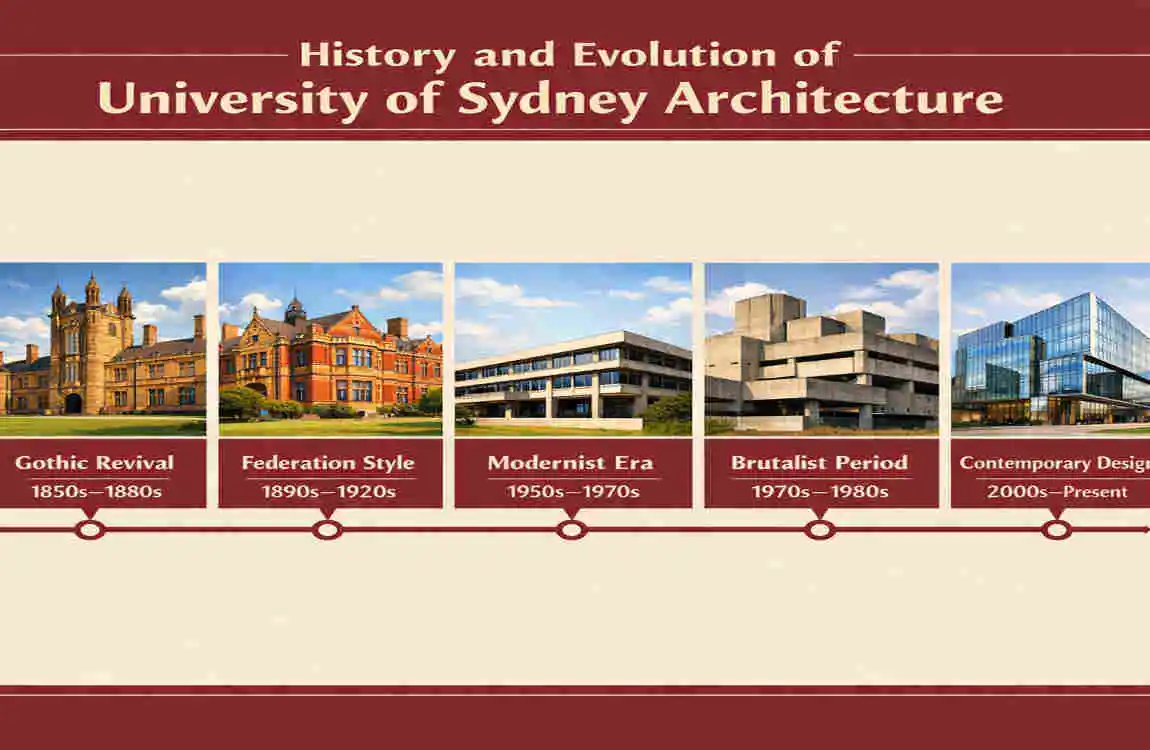
Over the years, the campus changed with the times. The earliest buildings often showed Victorian and Gothic Revival influence. Later additions brought in more practical twentieth-century styles. More recent buildings added glass, steel, and sustainable design.
The result is a campus where old and new buildings live side by side. That contrast is part of what makes the university so interesting.
Iconic Buildings and Architectural Landmarks
Quadrangle and Main Building
The Quadrangle is the most famous part of the University of Sydney. It is often the first image people think of when they hear about the campus.
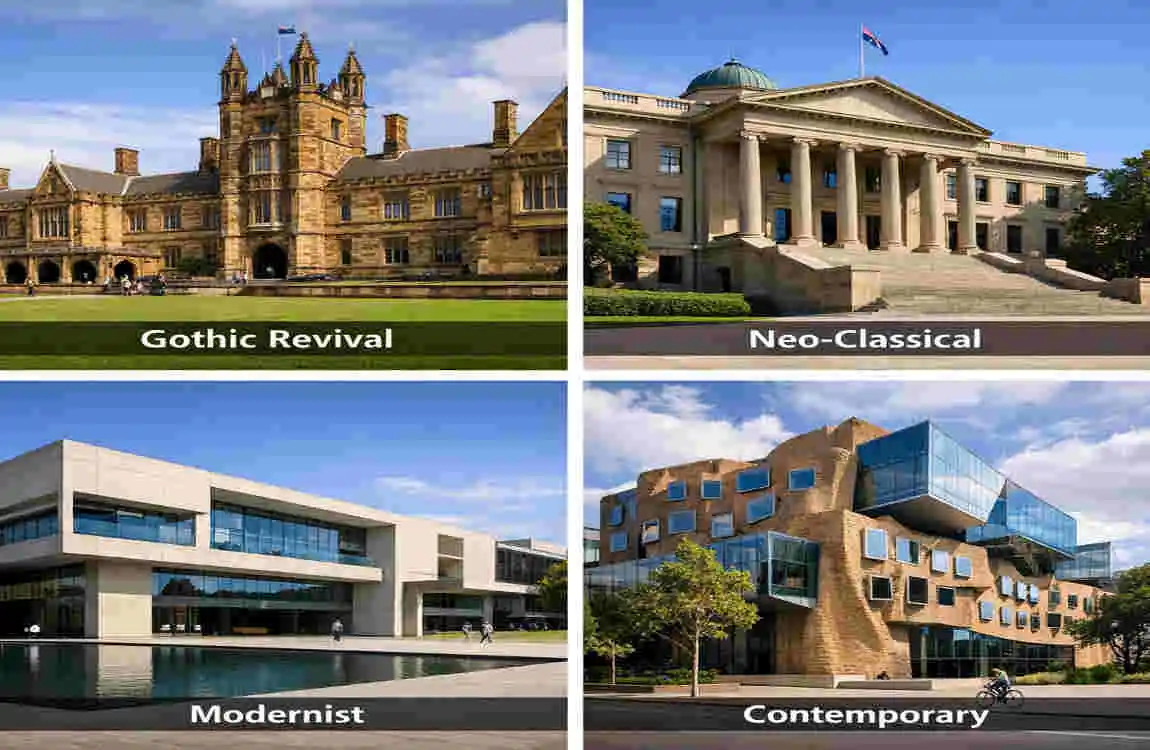
Its design is strongly linked to Gothic Revival architecture. You can see this in the pointed arches, towers, detailed stonework, and long courtyards. The building feels grand, formal, and deeply connected to academic tradition.
Great Hall
The Great Hall is another important landmark. It is known for its impressive interior and ceremonial use. The hall has a strong historic atmosphere and feels important the moment you step inside.
Its design also reflects Gothic-inspired ideas. The tall spaces, decorative details, and sense of scale all help it stand out.
University of Sydney Clocktower
The Clocktower is one of the most recognisable features on campus. It serves as both a landmark and a symbol of the university’s history.
Its height makes it easy to spot from across campus. It also strengthens the university’s visual identity.
Nicholson Museum and Other Historic Structures
The Nicholson Museum and other older buildings add even more character to the campus. These structures help show how the university grew over time and how different academic needs shaped the built environment.
Together, they form a historic setting that feels rich and layered.
Contemporary Architectural Landmarks
Modern campus buildings look very different from the old sandstone structures. They often use glass, concrete, steel, and energy-efficient design.
These buildings are usually built for flexibility, technology, and student comfort. They show how the university has adapted to modern education without losing its historic heart.
Architectural Styles Found at the University of Sydney
Gothic Revival Architecture
This style is most closely associated with the university. Gothic Revival buildings often include:
- Pointed arches
- Tall towers
- Stone façades
- Decorative details
At the University of Sydney, this style was used to create a feeling of tradition and academic prestige. It makes the campus look historic and important.
Victorian Architectural Influences
Some buildings also show Victorian influences. These often include symmetry, ornamentation, and a sense of formal design.
Victorian architecture helped shape many university buildings in the nineteenth century because it felt elegant and established.
Modernist Architecture
Later buildings moved toward modernist design. These structures are usually simpler, with cleaner lines and more practical layouts.
Modernist architecture focuses more on function than decoration. That change reflects the needs of a growing university community.
Contemporary Sustainable Design
Today, many new campus buildings are designed with sustainability in mind. This means better energy use, more natural light, and smarter building materials.
Modern university architecture now tries to support both learning and environmental responsibility.
What Makes University Sydney Architecture Unique?
Historic and Modern Design Together
One of the campus’s most distinctive features is how historic sandstone buildings stand beside modern structures. This creates a strong visual contrast.
Instead of feeling disconnected, the campus feels layered and alive. You can see the university’s past and present at the same time.
Use of Australian Sandstone
Sandstone is one of the most important materials in the University of Sydney’s architecture. It gives the buildings a warm colour and a strong sense of place.
This material is closely tied to Sydney’s architectural identity. It helps the university feel connected to the surrounding city.
Courtyards, Open Spaces, and Landscapes
The campus is not only about the buildings. The courtyards, paths, and gardens matter too.
These open spaces make the university feel more peaceful and walkable. They also connect different parts of the campus naturally.
Architectural Details and Craftsmanship
Historic buildings on campus often include beautiful details like carved stone, arches, and decorative windows. These features show the care and skill that went into the original construction.
This craftsmanship is one reason people find the campus so memorable.
Architecture as Part of University Identity
The buildings do more than provide space for classes. They help create the university’s identity. They tell students and visitors that this is a place with history, ambition, and tradition.
Modern University Sydney Architecture and Future Design Trends
New Buildings and Campus Expansion
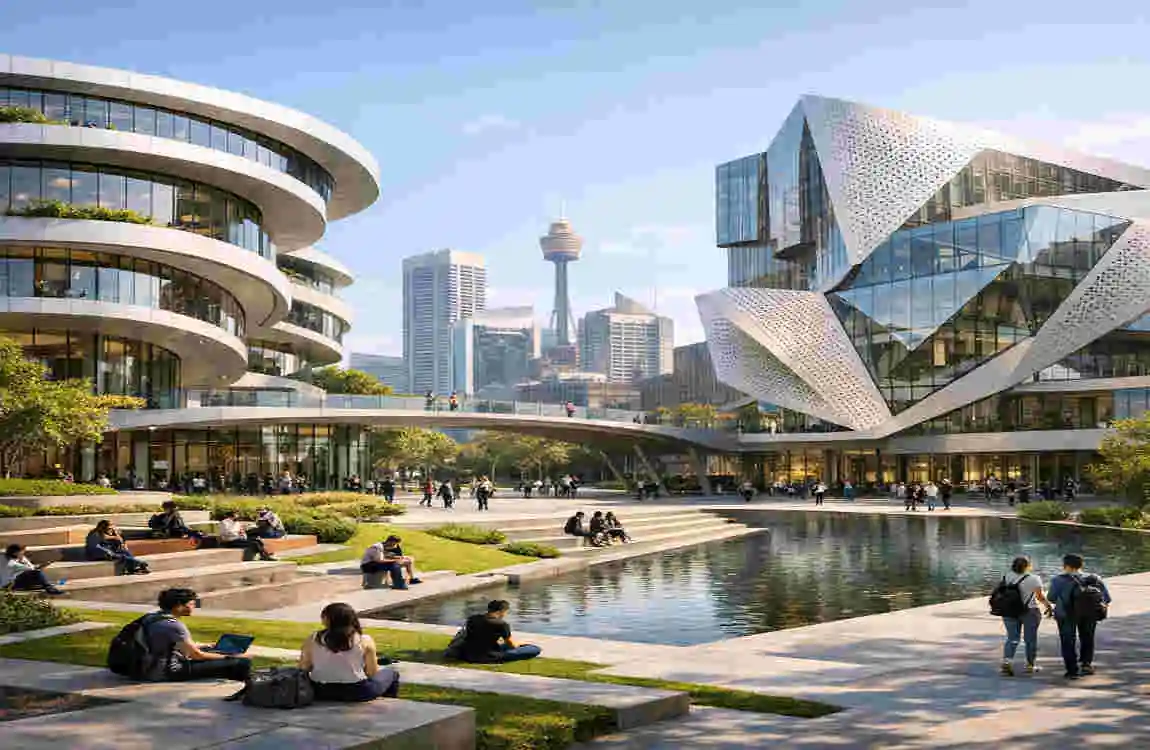
As the university grows, it needs modern spaces for teaching, research, and student life. That means adding new buildings that can support changing needs.
These spaces are usually designed to be flexible and practical.
Sustainable University Architecture
Sustainability is now a major part of campus design. New buildings may include:
- Energy-efficient systems
- Natural ventilation
- Water-saving features
- Environmentally friendly materials
This helps the university reduce its environmental impact.
Technology and Smart Campus Design
Modern buildings also support digital learning. They may include smart classrooms, technology-ready labs, and flexible spaces for group work.
This makes the campus better suited to today’s learning style.
Preserving Historic Architecture
Keeping old buildings in good condition is not easy. Heritage structures need care, repairs, and sensitive updates.
The challenge is to protect the historic value while still making the buildings useful for modern needs.
The Future of University of Sydney Architecture
The future will likely focus on balance. The university will continue blending heritage with innovation. That means keeping the sandstone landmarks while adding buildings that are flexible, sustainable, and student-friendly.
Building TypeMain StyleKey FeatureWhy It Matters
Quadrangle Gothic Revival Sandstone, arches, towers Most iconic historic landmark
Great Hall Gothic-inspired Grand ceremonial space Cultural and academic importance
Clocktower Historic landmark Tall, recognisable structure Strong campus identity
Modern academic buildings Contemporary Glass, steel, flexible spaces Supports current learning needs.
Heritage structures Victorian / Gothic Decorative stonework Connects campus to its history.
FAQ About University of Sydney Architecture
What architectural style is the University of Sydney known for?
It is best known for Gothic Revival architecture, but the campus also includes Victorian, modernist, and contemporary styles.
What is the most famous building at the University of Sydney?
The Quadrangle is usually considered the most famous and most iconic building on campus.
Why is the University of Sydney architecture important?
It is important because it reflects the university’s history, culture, educational mission, and architectural development over time.
Is the University of Sydney architecture Gothic?
Yes, Gothic Revival is a major part of the campus identity, but it is not the only style present.
What materials are commonly used in University Sydney architecture?
The most famous material is sandstone, though many modern buildings also use glass, steel, concrete, and brick.
Can visitors see the historic architecture at the University of Sydney?
Yes, visitors can usually explore the campus, but access may vary depending on events and university schedules.
How has University Sydney architecture changed over time?
It has shifted from nineteenth-century Gothic Revival buildings to modern, sustainable designs that support current university needs.
What makes the University of Sydney Quadrangle special?
It is special because of its sandstone construction, arches, towers, courtyard, and strong historical importance.
How does modern architecture fit with the historic campus?
Modern buildings are carefully planned, so they support function while still respecting the historic setting.
| Feature | Information |
|---|---|
| University | University of Sydney |
| Location | Sydney, New South Wales, Australia |
| Architectural Style | Gothic Revival, Victorian, Modern and Contemporary |
| Iconic Building | Quadrangle (Main Building) |
| Established | 1850 |
| Key Design Feature | Historic sandstone buildings, arches and towers |
| Modern Architecture | Contemporary glass, steel and sustainable structures |
| Landscape Design | Courtyards, gardens, pathways and open spaces |