
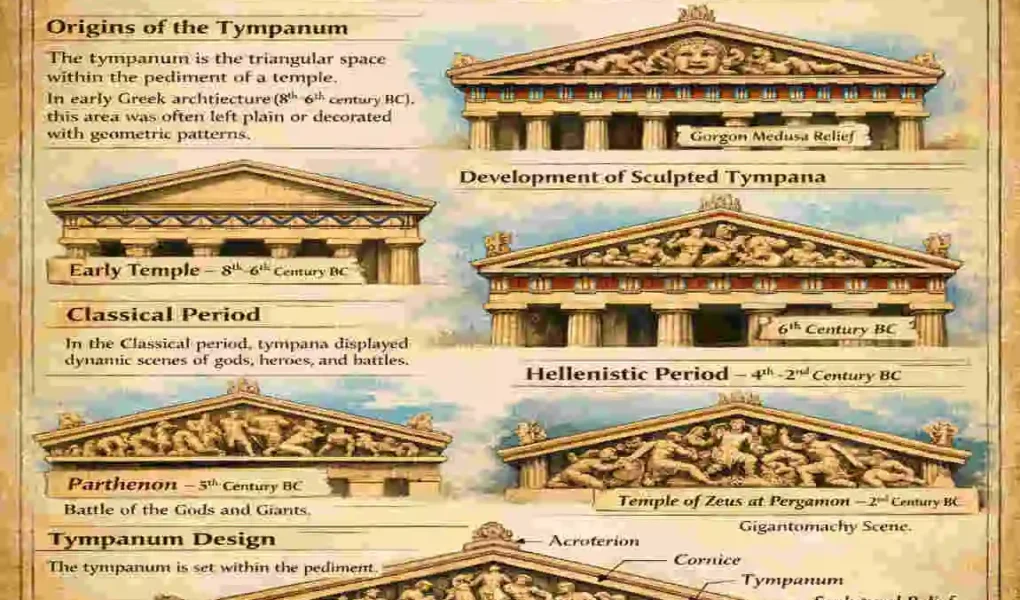
Greek tympanum architecture is one of the most striking parts of ancient temple design. It refers to the recessed space inside a pediment, usually the triangular area above the temple columns. Ancient Greek builders used this space for sculpture, reliefs, and painted decoration.
| Feature | Short Information |
|---|---|
| Definition | A tympanum is the triangular or semicircular space enclosed by architectural elements, often above a doorway or entrance. |
| Historical Origin | Widely used in ancient Greek temple architecture. |
| Main Location | Usually found within the triangular pediment above a temple’s columns and entablature. |
| Architectural Style | Classical Greek architecture, especially Doric, Ionic, and Corinthian buildings. |
| Common Materials | Marble and stone. |
| Decorative Elements | Sculptures depicting gods, myths, heroes, and historical events. |
| Famous Example | The Parthenon in Athens, Greece. |
| Main Purpose | Provides space for decorative artwork and enhances the building’s visual appearance. |
| Design Features | Symmetry, geometric shapes, sculptural details, and balanced proportions. |
| Architectural Influence | Inspired Roman temples and later Neoclassical buildings. |
This feature mattered because Greek temples were not just buildings. They were sacred spaces, public symbols, and visual stories about gods, heroes, and city identity. When people looked at a temple façade, the tympanum helped tell them what the building stood for.
History and Origins of Tympanum Architecture in Ancient Greece
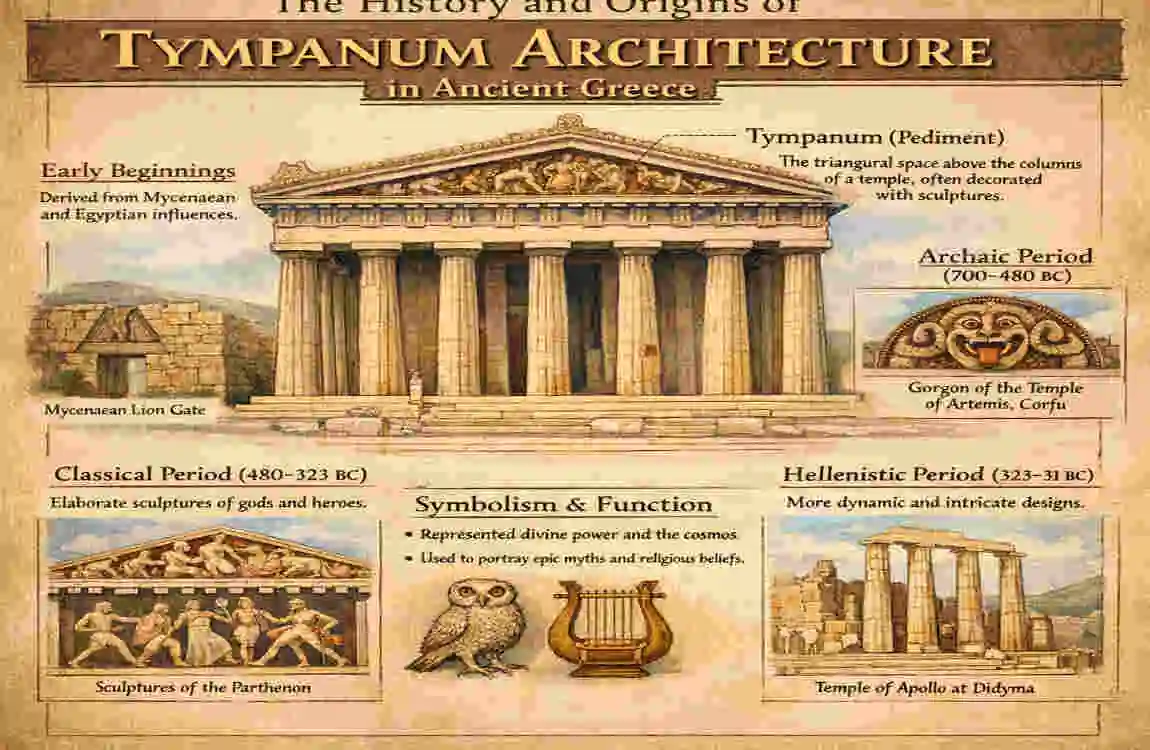
The Beginnings of Greek Temple Architecture
Early Greek temples began as simpler sacred structures. Many were made from wood and terracotta before stone became more common. As Greek builders developed stronger, more permanent temples, they needed a roof shape that would protect the structure from the weather.
That roof shape created a sloping triangle at the front and back of the building. This is where the pediment and tympanum appeared.
The Development of the Pediment and Tympanum
The pediment is the full gabled form at the top of a temple façade. The tympanum is the enclosed inner field within that frame. This distinction is important. The pediment is the architectural outline, while the tympanum is the space often filled with sculpture or decoration.
Greek builders quickly saw the value of this area. It was highly visible, and it worked well for storytelling through art.
Religious and Cultural Importance
Greek temples honoured specific gods and goddesses. As a result, the decoration often depicted mythological scenes related to the temple’s deity.
This decoration was more than ornament. It communicated faith, civic pride, and cultural memory. In many cases, the sculptures helped visitors understand the sanctuary’s importance before they even entered.
From the Archaic to the Classical Period
During the Archaic period, Greek artists began experimenting with painted decoration and sculpted figures in triangular spaces. This was not easy, because the shape narrows at the corners.
By the Classical period, sculptors had become much more skilled. They used realistic bodies, balanced poses, and dramatic motion to fit complex stories into the pediment’s shape. Later Hellenistic work often pushed detail and expression even further.
Architectural Features and Design Principles
Shape and Structure of the Tympanum
The traditional Greek tympanum is usually triangular because it sits beneath a pitched roof. The top edge follows the roofline, while the base sits above the columns and entablature.
This shape gives architects both a challenge and an opportunity. It is strong and balanced, but it also creates an awkward space for sculpture. Greek artists solved this with careful composition.
Proportion and Visual Balance
Greek architecture prized symmetry, proportion, and harmony. The front of a temple often follows a central axis, so the tympanum helps complete that balance.
Sculptors placed larger figures near the center and smaller figures near the corners. They also used reclining, kneeling, or seated poses to fit the narrowing shape. This made the whole scene feel connected and natural.
Materials and Surface Treatment
Greek builders used marble, limestone, terracotta, and painted surfaces. Marble allowed detailed carving, while terracotta was common in earlier or regional work.
Many people imagine ancient Greek temples as plain white, but that is not accurate. They were often painted in bright colours. Those colours highlighted architectural lines and sculptural details.
Connection to Classical Orders
The Doric and Ionic orders shaped the temple façade. They influenced the columns, frieze, and roof structure, which in turn affected the pediment and tympanum.
In other words, the tympanum was not an isolated feature. It worked with the whole building to create a unified design.
Mythology, Sculpture, and Symbolism
Why Myths Were Common
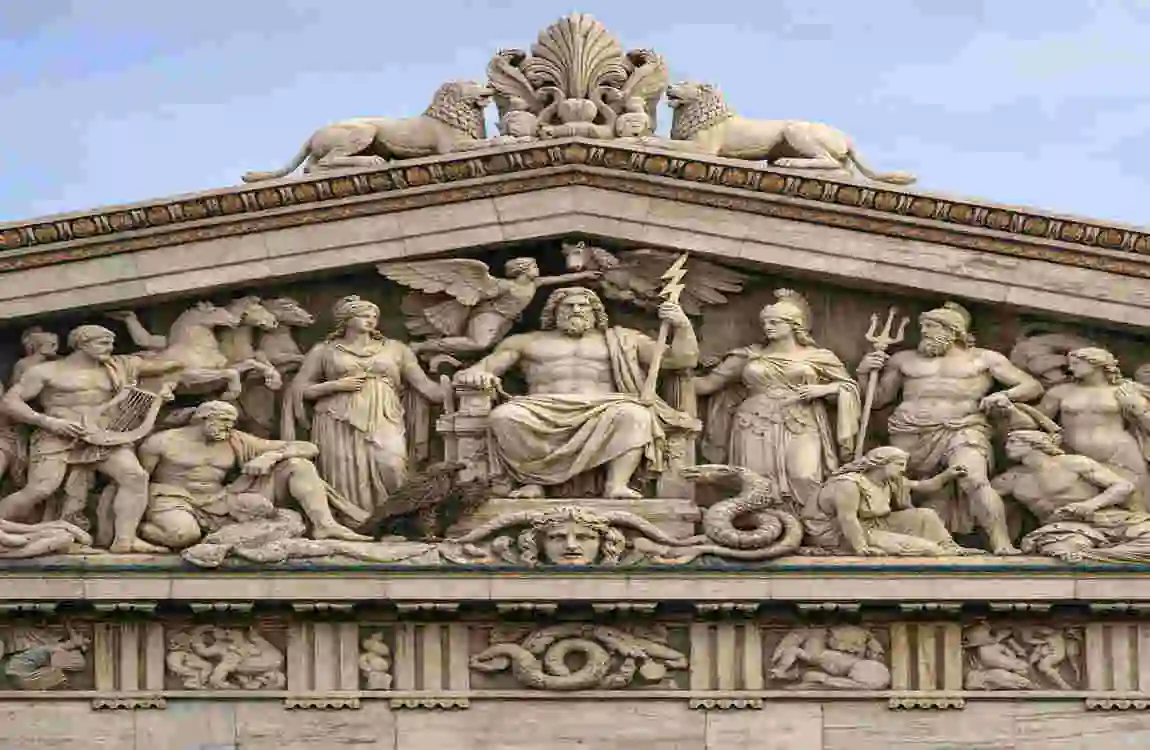
Greek temple tympanums often showed myths because myths connected the gods to human life. They explained power, conflict, victory, and divine protection.
A temple dedicated to Athena might show scenes linked to her birth or her victory over Poseidon. A sanctuary tied to Zeus might use stories that reflected strength, order, and justice.
Sculpting for a Triangular Space
Fitting figures into a triangle required real skill. Artists had to think about pose, scale, and movement. They could not simply place figures in a straight row.
Instead, they used a flowing arrangement. Reclining figures often filled the corners, while the main action sat near the center. This created visual harmony and kept the story easy to follow.
Symbolism and Meaning
Sculptures in a tympanum were not random decoration. It expressed the temple‘s identity and the community’s values.
It could suggest divine protection, heroic struggle, or sacred order. At the same time, modern viewers should avoid inventing meanings the evidence does not support. Some interpretations are strong; others remain uncertain.
Famous Examples of Greek Tympanum Architecture
The Parthenon in Athens
The Parthenon is one of the best-known examples of Greek temple pediment sculpture. Its east and west pediments once held major mythological scenes.
Traditional interpretations link one pediment with the birth of Athena and the other with the contest between Athena and Poseidon. Even today, the Parthenon remains a powerful example of how art and architecture worked together.
The Temple of Zeus at Olympia
This temple is famous for its dramatic sculptural programs. The east pediment depicts the story of Pelops and Oenomaus. In contrast, the west pediment depicts the battle between the Lapiths and the Centaurs.
These scenes combine movement, tension, and moral meaning. They also show how Greek artists used the tympanum to present large, dynamic stories.
The Temple of Aphaia on Aegina
The Temple of Aphaia is important because its surviving pedimental sculptures help us understand the shift from Archaic to Early Classical style. The figures show changing ideas about anatomy, motion, and realism.
This temple is especially useful for studying how Greek sculptors improved their technique over time.
Comparing the Major Examples
Here is a simple comparison:
TempleMain FeatureArtistic StyleKey Value
Parthenon Refined marble pediments Classical balance and detail Political and religious prestige
Temple of Zeus at Olympia Mythological action scenes Strong movement and drama Moral and sacred storytelling
Temple of Aphaia Transitional sculpture Archaic to Early Classical change Artistic development.
Construction, Preservation, and Modern Influence
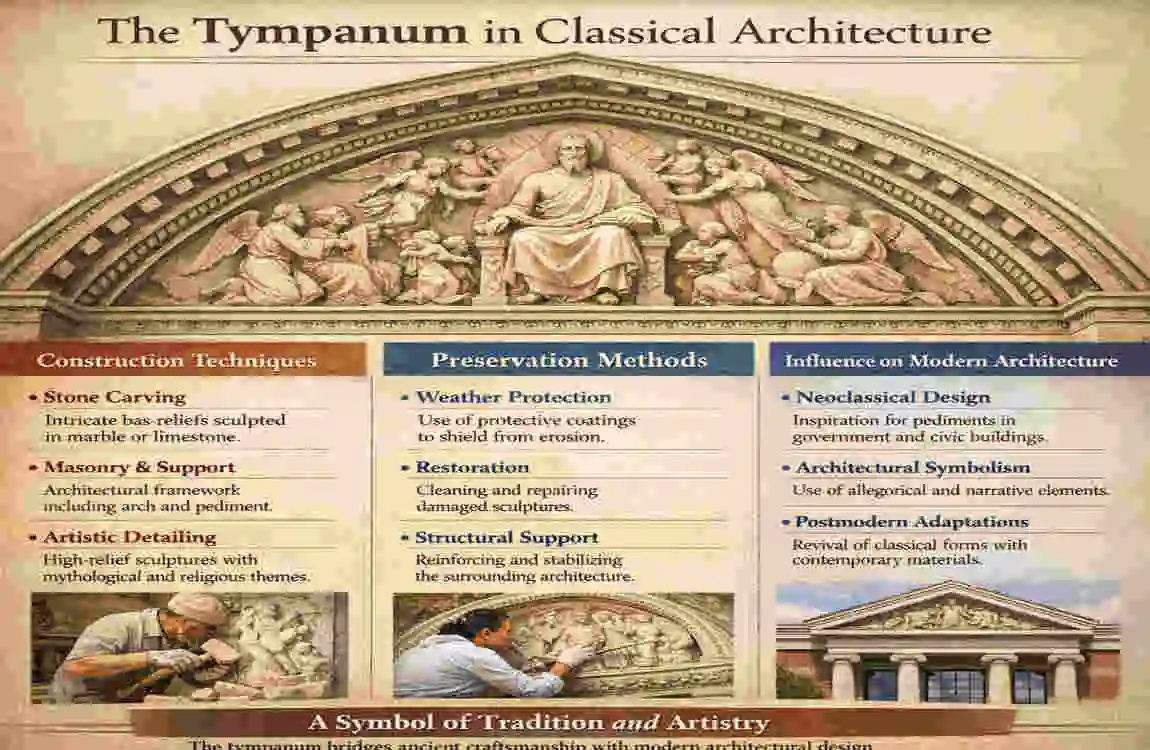
How Tympanums Were Built
Greek tympanums were created as part of the temple structure. Builders shaped the roof, pediment frame, and stone blocks so the sculpture could fit properly.
This required close teamwork between architects, stoneworkers, and sculptors. Every piece had to align correctly.
Preservation Challenges
Over time, these structures suffered from weather, earthquakes, pollution, and human damage. Many sculptures survive only in fragments.
That is why archaeology and conservation matter. They help us understand what these temples once looked like and protect what remains.
Influence on Later Architecture
Greek pediment design influenced Roman architecture, then Renaissance and Neoclassical buildings. Today, you can still see pediments on museums, courthouses, libraries, and government buildings.
Modern designers often simplify the form, but the idea remains the same: a triangular top section that gives a building dignity and focus.
Frequently Asked Questions
What is a tympanum in Greek architecture?
It is the inner field inside a pediment, often decorated with sculpture or relief.
What is the difference between a tympanum and a pediment?
The pediment is the whole gabled feature. The tympanum is the space inside it.
Why did ancient Greek temples have tympanums?
They gave architects a place for religious storytelling, symbolism, and visual balance.
What materials were used?
Common materials included marble, limestone, terracotta, and paint.
What are the most famous examples?
The Parthenon, the Temple of Zeus at Olympia, and the Temple of Aphaia are among the best-known.