If you are wondering how to fix flickering lights in the house, you are not alone. Flickering lights are common in many homes, and they can have simple causes like a loose bulb or more serious ones like electrical problems in the house.
Sometimes the issue is small and easy to solve. Other times, it may indicate a loose electrical connection, a faulty switch, or a wiring issue that requires expert help. That is why it is important to pay attention early.
The good news is that many cases of flickering lights in the home can be checked with a few simple steps.
Why Are the Lights in Your House Flickering?
Flickering can happen for many reasons. Some are harmless, while others are not. Understanding the cause is the first step toward fixing it.
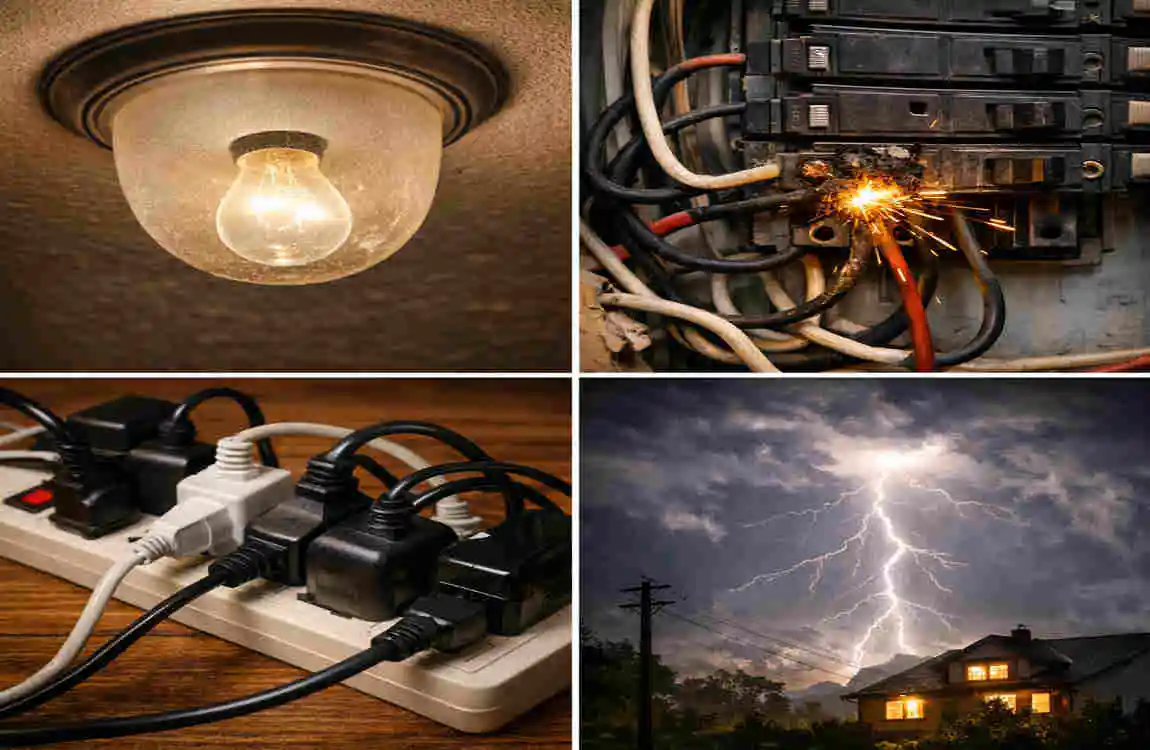
Loose Light Bulbs
A loose bulb is one of the most common causes of flickering. If the bulb is not screwed in tightly, the connection may keep breaking and reconnecting. That can cause the light to blink or shimmer.
This is often the first thing to check. In many cases, tightening the bulb solves the issue right away.
Faulty Light Switches
A worn-out switch can also cause trouble. When the switch inside becomes damaged or loose, it may not deliver power to the bulb smoothly.
If the light flickers when you touch or move the switch, the switch may be the problem.
Overloaded Electrical Circuits
When too many devices run on one circuit, the system can become overloaded. This can make lights dim or flicker, especially when large appliances turn on.
This is common in older homes where the electrical system was not built for today’s power needs.
Voltage Fluctuations
Voltage is the flow of power into your home. If it changes too much, your lights may flicker. Small changes may not be dangerous, but repeated changes can signal a bigger issue.
Sometimes this happens when major appliances start up. Other times, it may point to a deeper electrical fault.
Loose Wiring Connections
A loose electrical connection can be more serious than a loose bulb. Loose wires can interrupt power flow and cause flickering in one light or several lights.
This is one of the biggest reasons to take flickering seriously. Loose wiring can become a fire risk if ignored.
Problems with the Utility Power Supply
Sometimes the issue is not inside your home at all. The power coming from the utility company may be unstable for a short time.
If the lights in nearby homes flicker too, the problem may be outside your house. In that case, the utility provider may need to check it.
How to Fix Flickering Lights in House
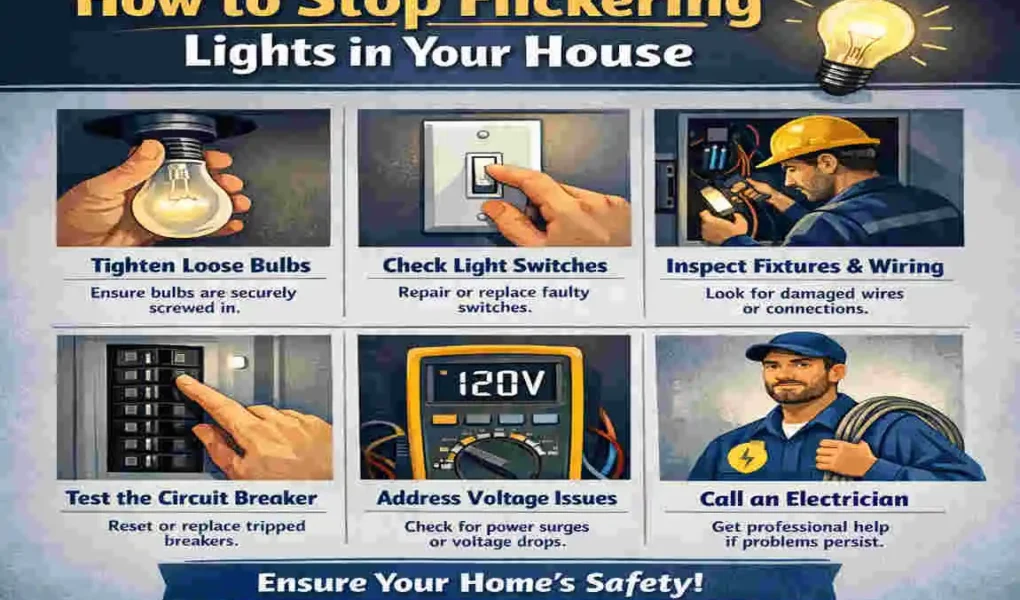
Now let us look at the simple steps you can try first. These fixes are safe for many homeowners and can solve common problems fast.
Tighten or Replace the Bulb
Start with the easiest step. Turn off the light, let the bulb cool, and check if it is loose. Tighten it gently.
If the bulb still flickers, replace it with a new one. A damaged bulb may have an internal fault that causes unstable light.
Test the Light Switch
Try flipping the switch a few times. If the light flickers when you touch the switch, the switch may be worn out.
A faulty switch usually needs replacement. If you are not comfortable doing that, call an electrician.
Reset the Circuit Breaker
If several lights act up at once, check the breaker panel. A breaker that has tripped or is not working well can interrupt power.
Turn the breaker off and back on once, if you know how to do it safely. If it keeps tripping, stop there and get help.
Reduce Circuit Overload
If the flickering happens when you run a microwave, heater, or vacuum, the circuit may be overloaded.
Try unplugging some devices and moving them to different outlets. This helps reduce the load on a single circuit and may stop the flickering.
Check LED Compatibility
LED lights flickering is a very common issue, especially with older dimmer switches. Some LED bulbs do not work well with certain switches or fixtures.
If you use LED bulbs, make sure they are the right type for the fixture. A poor-quality LED bulb can also flicker even in a good setup.
Contact an Electrician for Wiring Repairs
If the problem keeps coming back, the wiring may need repair. This is not a DIY job for most homeowners.
An electrician can identify hidden electrical issues, repair damaged wiring, and ensure your home’s electrical safety is not at risk.
Warning Signs That Require Immediate Attention
Some flickering issues are more than a nuisance. If you notice any of the signs below, stop using the affected area and get professional help.
- Burning smell
- Buzzing sounds
- Sparking outlets
- Frequent breaker trips
- Flickering throughout the entire house
These signs can point to serious electrical problems. Do not wait if you see them.
Can You Fix Flickering Lights Yourself?
Yes, some fixes are safe to do on your own. You can tighten a bulb, test a switch, reduce overload, or swap a compatible LED bulb. These are simple tasks that do not usually require special tools.
However, wiring repairs, breaker issues, and panel problems should be left to a licensed electrician. Electrical work can be dangerous if done incorrectly.
A good rule is this: If the fix is simple and safe, try it. If the problem keeps coming back, call a pro.
How to Prevent Flickering Lights
A little care can help you avoid future problems. Prevention is easier and safer than emergency repairs.
Simple Ways to Prevent the Problem
- Perform regular electrical inspections
- Avoid overloading outlets
- Use quality LED bulbs
- Replace old wiring when needed
- Maintain your electrical panel
These steps help keep your system steady and reduce the chance of flickering.
Common Mistakes Homeowners Make
Many people ignore flickering lights because they think it is harmless. That can be a mistake. Even small flickers may be a warning sign.
Another common mistake is using the wrong bulb type. Some bulbs do not match the dimmers or fixtures and start flickering right away.
People also overload extension cords and power strips. This can make lights unstable and create safety risks.
Finally, some homeowners try dangerous electrical repairs without training. That can make the problem worse and put the whole house at risk.
Cost to Fix Flickering Lights
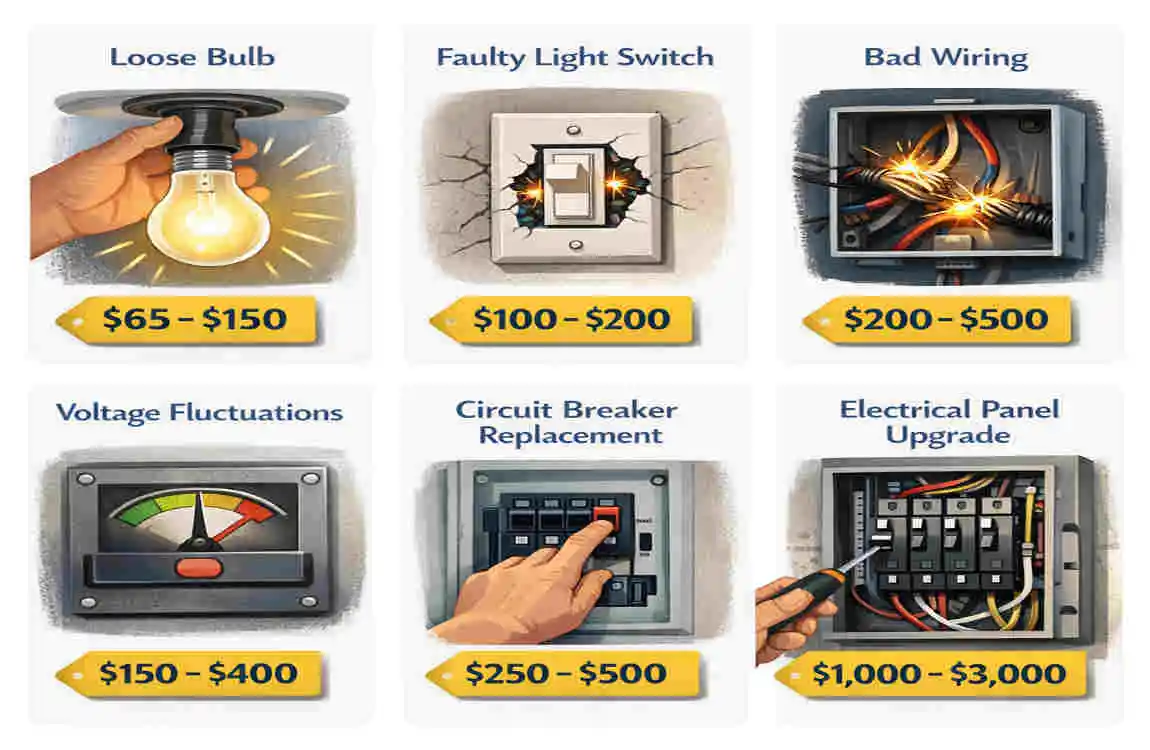
The cost depends on what is causing the issue. A simple bulb change is cheap, while wiring repairs can cost much more.
Repair Type Average Cost
Replace light bulb $5–$20
Replace switch $50–$150
Circuit repair $150–$500
Electrical panel repair $500–$2,000+
Whole-house wiring repair $2,000–$10,000+
If the problem is small, the cost may be low. If it is part of bigger electrical problems in the house, the repair may be more expensive.
When to Call a Professional Electrician
Call an electrician if you see any of these signs:
- Multiple lights flicker at once
- Breakers repeatedly trip
- Burning odours or scorch marks
- Old or damaged wiring
- Flickering continues after basic troubleshooting
If the issue affects more than one room or recurs after simple fixes, it is safer to seek help quickly.
Frequently Asked Questions
How do I fix flickering lights in my house?
Start by tightening or replacing the bulb, checking the switch, reducing circuit overload, and inspecting the breaker. If the issue persists, contact a licensed electrician.
Is it dangerous if my house lights keep flickering?
Yes. Persistent flickering can indicate loose wiring, overloaded circuits, or electrical faults that may pose a fire risk.
Why do my LED lights flicker?
LED lights may flicker due to incompatible dimmer switches, voltage fluctuations, low-quality bulbs, or loose connections.
Can a bad circuit breaker cause flickering lights?
Yes. A worn or faulty circuit breaker can interrupt the flow of power and cause lights to flicker.
Why do all the lights in my house flicker at the same time?
Whole-house flickering may be caused by utility power issues, a failing electrical panel, or a loose main electrical connection.
Should I call an electrician for flickering lights?
Yes, if multiple lights flicker, you notice burning smells, hear buzzing, or simple fixes do not work, call a licensed electrician right away.
| Issue | Possible Cause | How to Fix It |
|---|---|---|
| Single light flickers | Loose bulb | Turn off power and tighten or replace the bulb. |
| Multiple lights flicker | Loose electrical connection | Have a licensed electrician inspect and repair the wiring. |
| Lights dim when appliances run | Circuit overload | Move appliances to separate circuits or upgrade the electrical system. |
| LED lights flicker | Incompatible dimmer switch | Install an LED-compatible dimmer or replace the bulb. |
| Frequent voltage fluctuations | Utility power issue | Contact your electricity provider to inspect the supply. |
| Old or damaged wiring | Worn-out electrical system | Replace damaged wiring to improve safety and performance. |
| Loose light switch | Faulty switch connection | Replace or tighten the switch after turning off the power. |
| Faulty light fixture | Internal fixture damage | Repair or replace the fixture if the problem persists. |
| Overloaded breaker | Too many devices on one circuit | Reduce the electrical load or add a new dedicated circuit. |
| Main electrical panel issue | Loose breaker or panel fault | Have a qualified electrician inspect the electrical panel immediately. |