
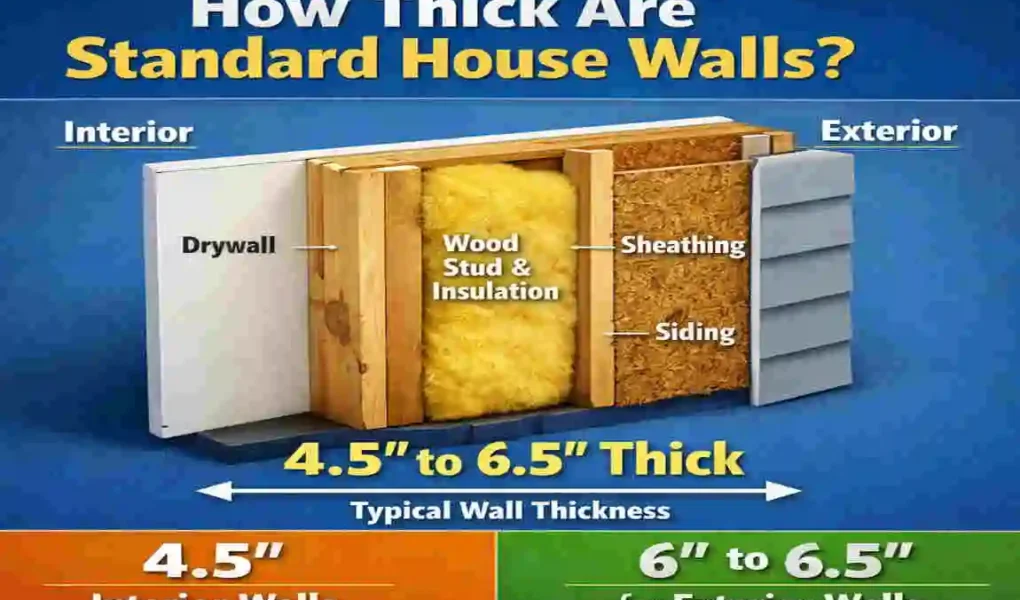
If you have ever asked how thick house walls are, the answer depends on the wall type, building material, and home design. In most homes, interior walls are thinner, while exterior walls are built thicker for strength, insulation, and weather protection.
Wall thickness matters more than many people think. It affects privacy, energy efficiency, sound control, and even how safe and durable a home feels. When you understand wall thickness, you can make smarter choices when buying a home, remodeling, or making repairs.
What Determines Wall Thickness?
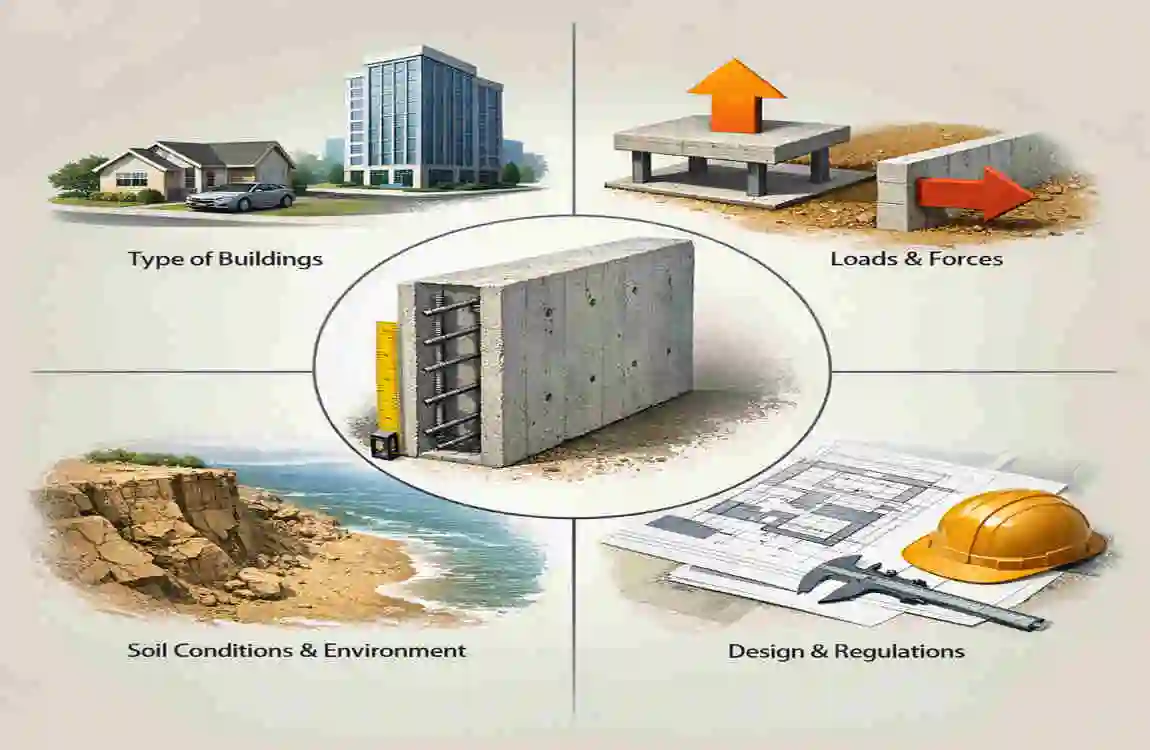
Wall thickness is not the same in every luxury home. Several things affect it.
Building Materials
The main material used in the wall plays a big role. A wall made with wood studs and drywall is usually thinner than one made from brick, concrete, or block. Heavier materials often need more space and support, which makes the wall thicker.
Climate and Insulation
Homes in hot or cold places often need better insulation. That extra insulation adds thickness to the wall. In colder areas, thicker walls help keep warm air inside. In hotter areas, they help keep heat out.
Structural Needs
Some walls carry weight from the roof or upper floors. These are called load-bearing walls, and they are usually stronger or built with more support than simple dividing walls.
Building Codes and Design
Local building rules can also affect wall size. Some homes are built with extra layers for fire safety, noise control, or energy savings. In luxury homes, builders may choose thicker walls for comfort and better soundproofing.
Standard Thickness of Interior Walls
Interior walls divide rooms inside the house. These walls do not usually face the weather, so they are thinner than outside walls.
Typical Construction
Most interior walls use 2×4 studs covered with drywall on both sides. This is the most common setup in many homes.
Average Thickness
A standard interior wall is usually about 4.5 inches thick. In many cases, it can reach 4.5 to 5 inches once drywall, paint, and finishing are included.
Common Variations
Some interior walls are thicker than normal.
- Soundproof walls may include extra insulation or double drywall.
- Plumbing walls need more space for pipes.
- Luxury homes may use specialized wall systems to improve quietness and comfort.
Standard Thickness of Exterior Walls
Exterior walls are made to protect the home from wind, rain, heat, and cold. Because of this, they are usually much thicker.
Wood Frame Exterior Walls
In many modern homes, exterior walls are built with 2×6 studs instead of 2x4s. This makes them stronger and gives room for more insulation. These walls are often 6 to 7 inches thick before siding is added, and other layers are added.
Brick Walls
Brick homes can have thicker walls than wood-frame homes. A single brick wall is thinner than a double brick wall, but total thickness often falls between 9 and 13 inches.
Concrete and Block Walls
Concrete and block walls are used in homes that need extra strength or fire resistance. These walls may be 8 to 12 inches thick, and sometimes more depending on the design.
Extra Layers Add More Thickness
Exterior walls are not just the frame. They also include:
- Insulation
- Weatherproof layers
- Siding or finish material
- Vapor barriers
These layers can make the total wall thickness much greater than the frame alone.
Wall Thickness at a Glance
Wall TypeCommon ThicknessNotes
Interior wall 4.5 to 5 inches Usually 2×4 studs with drywall
Exterior wood wall 6 to 7 inches Often 2×6 studs before siding
Brick wall 9 to 13 inches Depends on single or double brick
Concrete/block wall 8 to 12+ inches Strong and durable
Load-Bearing vs Non-Load-Bearing Walls
Not all walls do the same job.
Load-Bearing Walls
A load-bearing wall helps support the weight of the roof, floor, or upper levels. These walls are important to the house’s structure, so they are often built more strongly.
Non-Load-Bearing Walls
A non-load-bearing wall only divides rooms. It does not hold the main weight of the building, so it is usually simpler and thinner.
Why This Matters
If you plan to remove or change a wall, you need to know which type it is. Removing a load-bearing wall without support can cause serious structural problems. That is why professional advice is important during remodeling.
Modern Trends in Wall Thickness
Today, many homes are built with comfort and efficiency in mind.
Better Energy Efficiency
Homeowners want lower heating and cooling costs. Thicker walls with better insulation help keep indoor temperatures steady.
Soundproofing
In busy cities or shared homes, people want less noise between rooms. That is why builders may use extra insulation or double layers of drywall.
New Materials
Modern materials like foam boards and SIP panels can improve insulation without making walls extremely bulky.
Why Wall Thickness Matters
Wall thickness affects more than just size.
Key Benefits
- Better insulation
- Less outside noise
- Stronger structure
- Improved fire resistance
- Higher home value in some cases
Thicker walls can make a home feel more comfortable and efficient. Still, thickness alone does not guarantee quality. The material and construction method matter just as much.
How to Measure Wall Thickness in Your Home
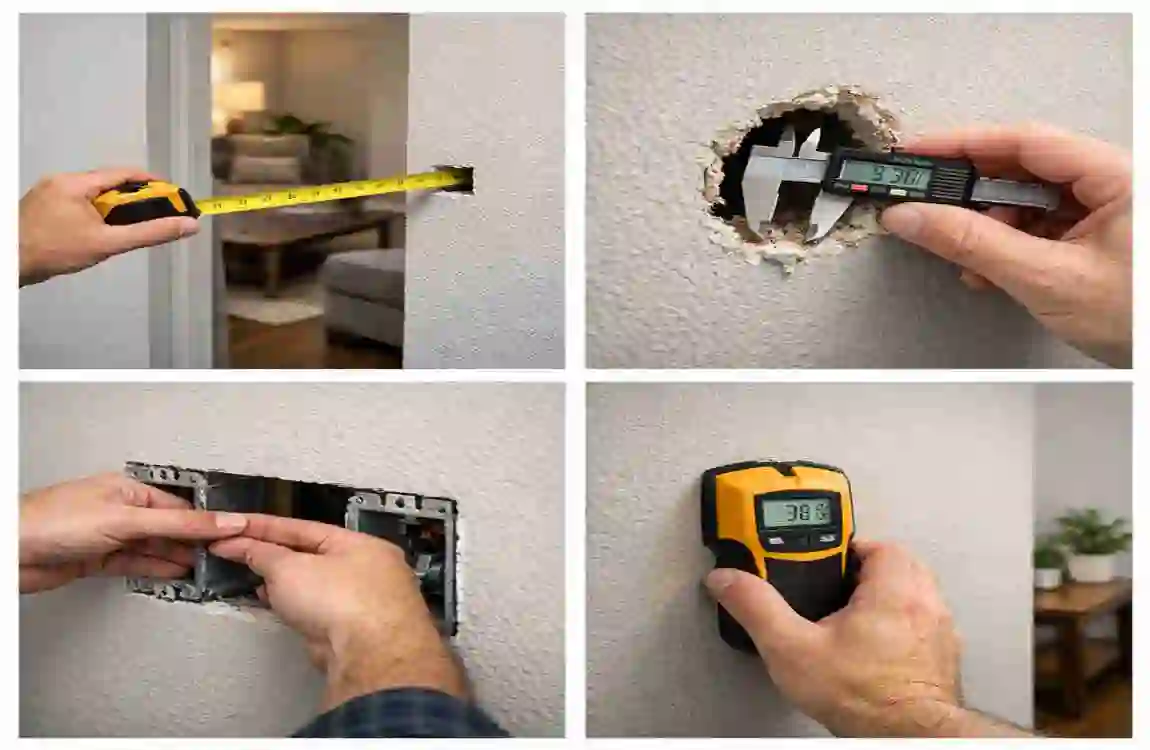
If you want to know the thickness of a wall in your luxury home, there are a few simple ways to check.
Easy Methods
- Look at a door or window frame for a rough idea.
- Check builder plans or home documents.
- Use a professional inspection tool if needed.
If you are unsure, especially with a load-bearing wall, it is best to ask a professional.
Common Myths About House Wall Thickness
All walls are the same thickness.
This is false. Interior and exterior walls are usually very different.
Thicker always means stronger.
Not always. A wall can be thick but poorly built. Good materials and proper support matter too.
Interior walls do not matter.
Incorrect. Interior walls can help with privacy, sound control, and even some insulation.
FAQ
How thick are house walls in most homes?
Most interior walls are around 4.5 inches thick, while exterior walls are usually 6 to 12 inches depending on the material.
Are exterior walls thicker than interior walls?
Yes. Exterior walls are thicker because they need insulation, weather protection, and structural strength.
What is the thickness of a brick house wall?
A brick wall usually ranges from 9 to 13 inches thick, depending on whether it is single- or double-brick construction.
Why are some house walls thicker than others?
Wall thickness depends on building materials, insulation needs, climate, and structural design.
Can wall thickness affect home insulation?
Yes. Thicker walls often allow better insulation, which can improve energy efficiency and lower heating and cooling costs.
| Wall Type | Standard Thickness |
|---|---|
| Interior wall (2×4 stud + drywall) | 4.5 inches (114 mm) |
| Interior wall with plumbing (2×6 stud + drywall) | 6.5 inches (165 mm) |
| Exterior wall (wood frame, modern) | 6 inches (152 mm) |
| Exterior wall (range) | 4–12 inches (100–305 mm) |
| Solid brick wall | ~9 inches / 22 cm (plus plaster/rendering) |
| Cavity wall | 11–12 inches / 27–30 cm (plus plaster/rendering) |