If you have ever stood in your hallway and wondered, “Does my house have a basement in the UK”, you are definitely not alone. Many UK homeowners are unsure whether their property includes a basement, a cellar, or just a small space under the floor.
This confusion is very common, especially in older homes. Some properties have full basements that are easy to use. Others have small storage areas, crawl spaces, or hidden lower rooms that are not obvious at first glance. In many cases, the space may have been converted long ago, so it no longer looks like a basement.
It matters to know what is under your home. A basement can affect renovation plans, property value, damp checks, and even safety. If there is a hidden lower level, you may need to consider ventilation, flood risk, and structural support. That is why it is worth taking a proper look.
What Counts as a Basement in UK Homes?
Basement, cellar, and subfloor void: what is the difference?
In the UK, people often use the words basement and cellar interchangeably. But they are not always the same.
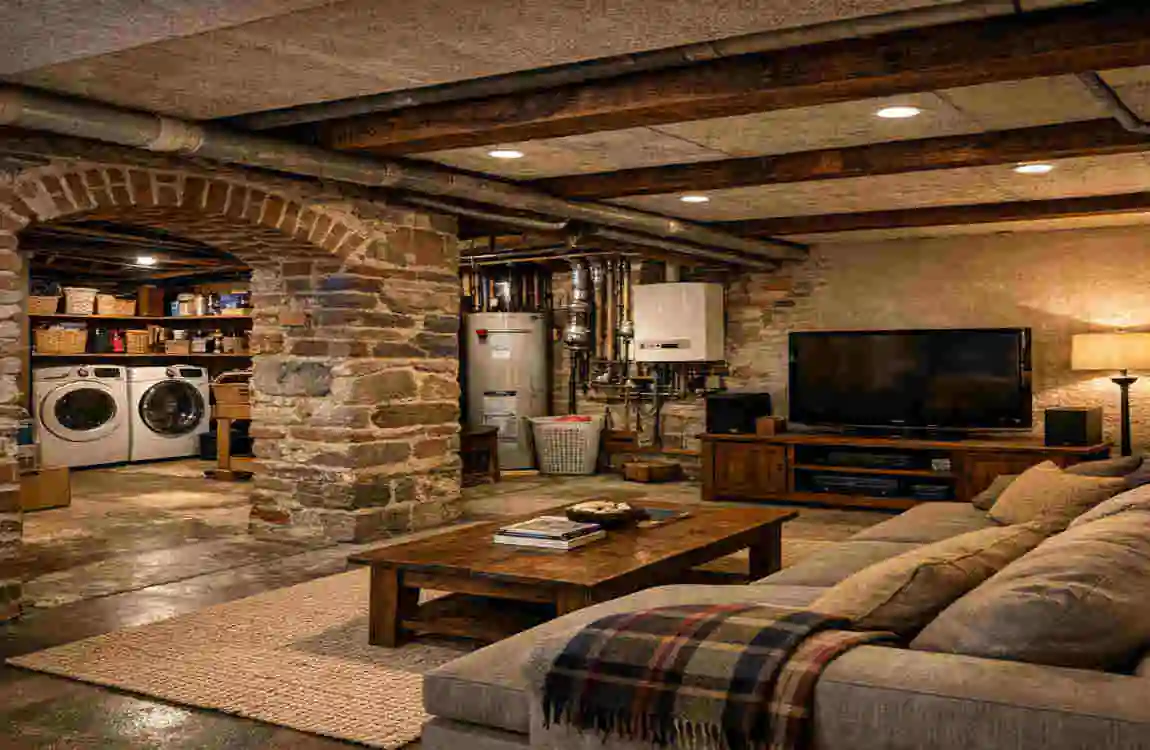
A basement is usually a room or level that lies entirely or partially below ground. It may be used as storage, utility space, living space, or a converted room. In some luxury homes, it is large and well-finished. In others, it is just a basic lower level.
A cellar is usually an older term. In many UK houses, especially older ones, a cellar is a smaller underground or partly underground space that was once used for storage, coal, or house equipment. It may have low ceilings and basic access.
A subfloor void is different again. This is the space between the floor and the ground below. Modern homes may have this space to improve airflow or support the structure. It is not a usable room, and it is usually too small to walk around in.
Common UK property types that often have basements
Basements are more common in certain kinds of homes. If your house was built in the Victorian, Georgian, or Edwardian era, there is a better chance it may have a basement or cellar.
These older homes were often built with extra lower-level space for storage, servants, or household work. In terraced streets, many homes were built with the same basic layout, so if one house has a basement, the neighbors may have one too.
Modern homes are less likely to have basements unless they were specially designed that way or converted later.
Quick comparison table
Feature Basement Cellar Subfloor Void
Usability Often usable or convertible Usually storage or utility Not a room
Size Often larger Often smaller Very limited
Position Fully or partly below ground Usually below ground Under the floor
Common in Older and converted homes , Older UK homes and most modern homes
Access Stairs, door, or separate entrance Simple steps or hatch Not normally accessed
Key Signs Your House May Have a Basement
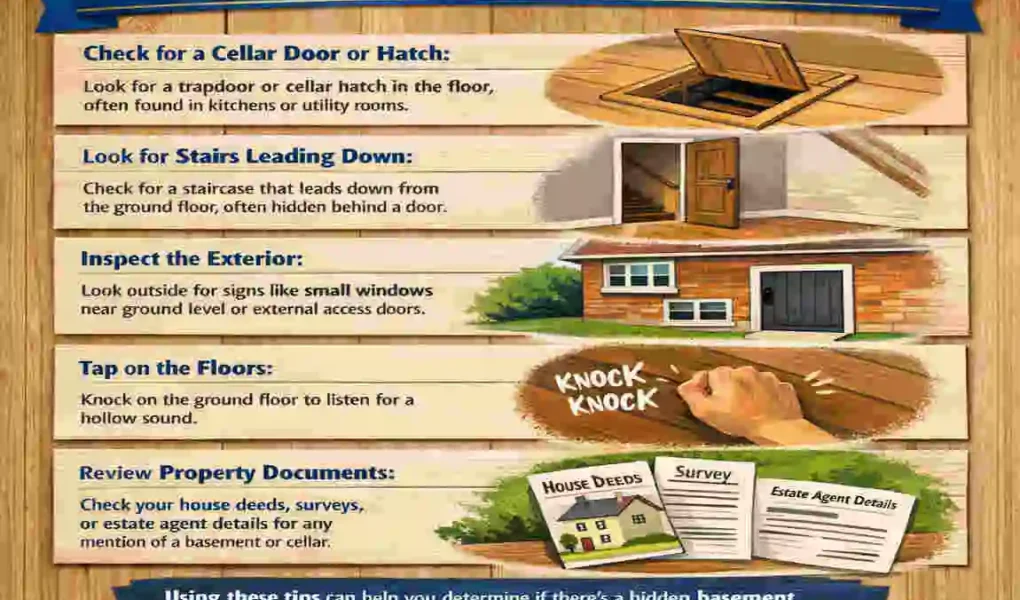
The ground floor feels lower than the street.
One of the easiest clues is how the house sits against the road. If your front door or main floor feels lower than the pavement or garden level outside, there may be a basement beneath it.
You may also notice that you step down into the house rather than up. In some homes, the basement level is partly visible from outside, while the main living area sits above it.
You can see small windows near ground level.
Small windows close to the pavement, driveway, or garden level are often a strong sign. These are sometimes called basement windows or ventilation windows.
They may be narrow and low down, and sometimes they are placed inside a small dip or “window well” outside. If you see these around the lower part of the house, it is worth taking a closer look.
There is a separate entrance on the side or at the back.
A basement may have its own entrance, often at the side or rear of the home. This entrance may lead down steps into a lower level.
If you have ever seen a door that seems to go below the main house level, that is a major clue. In some homes, this entrance was used for deliveries, as a workspace, or for separate access for tenants.
The layout feels unusual or split.
Some homes feel slightly odd inside because of a lower level hidden below the main rooms. You might notice:
- steps leading to a lower hallway
- storage space under stairs that seems deeper than expected
- uneven floor levels
- rooms that sit lower than the rest of the house
These signs can suggest that part of the property extends below ground.
The house has an older building style.
Older construction often tells a story. Thick brick walls, deep foundations, and traditional brick patterns are common in houses with basements or cellars.
Victorian and Georgian homes often featured a strong ground-level structure with additional lower rooms. If your home is from one of these periods, a basement is more likely than in a newer estate home.
How to Physically Check If You Have a Basement
Look inside the house for hidden lower spaces.
Start with simple checks indoors. Open the space under the stairs and see how deep it goes. In some homes, what looks like a small cupboard is actually a doorway to a larger lower area.
Also check any utility areas, old storage rooms, or locked doors in older parts of the house. Sometimes a basement has been blocked off, covered over, or turned into storage.
Check the outside walls at ground level.
Walk around the house and look carefully at the outside walls. Pay attention to:
- low-level vents
- small windows near the pavement
- gaps below garden level
- steps that lead down beside the house
- window wells or grates at ground level
These are all possible signs of a basement or cellar space.
Notice the slope of your garden or driveway.
If the garden slopes away from the house, the lower part of the building may become visible from the back or side. This can reveal basement windows, lower entrances, or exposed walls that you would not see from the front.
A sloping site is a common reason why part of a basement is visible on one side of the property but hidden on another.
Listen and feel for clues.
This may sound simple, but it helps. Floors over a basement may sound slightly different when tapped, especially if there is a hollow space below. Some parts of the ground floor may also feel cooler or less solid.
That does not prove there is a basement on its own, but it can support other clues.
Check where the boiler or utilities are located.
In many older UK homes, the basement or cellar was used for the boiler, fuse box, water tanks, or laundry equipment. If your utilities are placed in a lower room that feels separate from the rest of the home, that room may be a basement.
Review Your Property Documents
Look through the most useful paperwork.
If you want a clearer answer, your documents may already tell you. Property papers often include mention of lower-level spaces, even if the room is not obvious today.
Check these documents:
- title deeds
- property survey reports
- mortgage valuation documents
- EPC certificate
- planning permission records
These papers may mention a cellar, basement, lower ground floor, or storage space.
What the wording may look like
Sometimes the space is not called a basement directly. It may appear under a different name, such as:
- cellar
- lower ground floor
- storage room
- under-house storage
- vault
- basement area
This is why it is useful to read the exact wording carefully. A small note in a survey can reveal a lot.
Why are documents so useful
Documents matter because they show the property’s legal and structural history. Even if the basement has been converted, covered, or changed, the old record may still mention it.
If you are planning work, this information can also help your builder, surveyor, or insurer better understand the property.
Ask Neighbors or Learn the Estate History
Neighboring homes can give you a clue.
If your house is part of a terrace or similar street, there is a good chance the homes were built with the same layout. That means your neighbor may have the same basement or cellar arrangement.
A quick chat can save you a lot of guesswork. Ask whether their property has a lower level, a cellar door, or hidden storage below the ground floor.
Local history can help too.
Older houses often have records in local archives, planning files, or historic maps. A local council, history group, or estate record may show the original building layout.
This is especially useful if your home has been altered many times over the years. Sometimes the present-day look hides the original structure completely.
Hidden or Converted Basements
Some basements no longer look like basements.
A converted basement may now be used as a bedroom, office, playroom, studio, or even a rental flat. In those cases, it may not be obvious at all.
You may only notice it through clues such as:
- modern windows below ground level
- plasterboard walls
- radiators or heating vents
- fresh flooring in a lower room
- a staircase leading to a finished lower floor
If the space looks modern and well decorated, it may be easy to forget that it started life as a basement or cellar.
Signs a basement has been converted
Here are some common signs:
- Newer materials in an otherwise old house
- Better lighting than the rest of the lower level
- Proper heating in a below-ground room
- Finished ceilings and walls
- Separate access that feels more like a flat or annex
These signs often mean the space has been improved for regular use.
Watch for hidden risks.
A converted basement can be useful, but it can also hide problems. The most common ones are:
- damp
- poor airflow
- low ceiling height
- cold floors
- signs of water penetration
If you think a basement has been converted, look carefully for these issues before you plan any work.
Why It Matters to Know If You Have a Basement

It affects property value.
A basement can increase a home’s value if it is dry, safe, and usable. A finished lower level gives you extra space, which many buyers like.
On the other hand, a damp or unsafe basement can reduce value or lead to repair costs. Knowing what you have helps you judge the property more accurately.
It helps with renovation plans.
If you want to extend, remodel, or convert part of your home, you need to know whether there is a basement. This affects design, budget, and planning permission.
A basement may give you more room, but it may also require damp proofing, ventilation work, or structural checks.
It matters for safety.
Basements can come with extra safety concerns. You should think about:
- flooding risk
- structural movement
- poor ventilation
- escape routes
- low ceiling clearance
If the area is hidden or partly blocked, safety checks become even more important.
It can affect insurance and energy use.
Some insurers ask about basements because they may increase the risk of flooding or damp. In addition, a basement can affect how heat moves through the house.
A poorly insulated lower level may make the home colder and less efficient. A well-finished one may improve the living space, but only if it is properly maintained.
FAQ
How do I know if my house has a basement in the UK?
Look for signs like below-ground rooms, small windows near pavement level, lower side entrances, and clues in your property paperwork.
Is a cellar the same as a basement?
Not exactly. A cellar is usually smaller and used for storage, while a basement is often larger and may be suitable for living or conversion.
Can modern UK homes have basements?
Yes, but they are less common. They are usually added during construction or created later through conversion.
Where can I find official information?
Check your title deeds, survey report, mortgage documents, and EPC. These often mention lower-level spaces.
Are basements common in all UK houses?
No. They are more common in older homes, especially Victorian, Georgian, and Edwardian properties.
Is it expensive to convert a basement?
It can be. Costs depend on size, damp treatment, ventilation, structural work, and how finished you want the space to be.
| Clue | What to Look For | What It Means |
|---|---|---|
| Lower ground windows | Small windows near ground level (often below street height) | Likely indicates a basement or cellar |
| Internal staircase down | A stairway leading below the main ground floor | Strong sign of a basement level |
| Separate entrance door | Door at or below street level leading downward | Common in converted basements |
| Sloping garden or yard | Backyard slopes downward away from the house | Basement may be exposed at rear |
| Ventilation grilles | Metal vents near ground level on exterior walls | Used to air a basement or cellar |
| Cold, damp lower rooms | Noticeably cooler or slightly damp lower floor rooms | Typical basement environment |
| Higher ground floor entrance | Front door is above street level with steps going up | Basement may exist below main entry level |