Borromini architecture is one of the most exciting styles in Baroque design. It is bold, creative, and full of movement. Unlike many architects who followed strict rules, Francesco Borromini loved to experiment with curves, geometry, and light. That is why his work still feels fresh today.
Francesco Borromini is often seen as one of the greatest Baroque architects in history. His buildings are not just beautiful. They also feel alive, almost like they are moving. He used unusual shapes, dramatic spaces, and clever details to create something truly special.
Who Was Francesco Borromini?
Early Life and Background
Francesco Borromini was born in 1599 in Switzerland. He later moved to Italy, where he trained as a stonemason. This early work gave him strong technical skills and a deep understanding of materials.
He did not start as a famous architect. Instead, he learned by working with stone and studying form closely. That hands-on beginning helped shape his later style.
Career in Rome
Borromini built most of his major works in Rome. There, he worked on churches, palaces, and major renovation projects. His ideas stood out because they were different from the more classical styles that came before him.
He also had a famous professional rivalry with Gian Lorenzo Bernini. Bernini was more theatrical and decorative, while Borromini leaned toward bold geometry and structural invention. Their different styles helped define Roman Baroque architecture.
His Influence on European Architecture
Borromini’s ideas did not stay limited to Rome. His creative use of space, curves, and design inspired later architects across Europe.
Even today, architects admire his courage. He proved that buildings could be expressive, surprising, and deeply original.
What Is Borromini Architecture?
Definition of Borromini Architecture
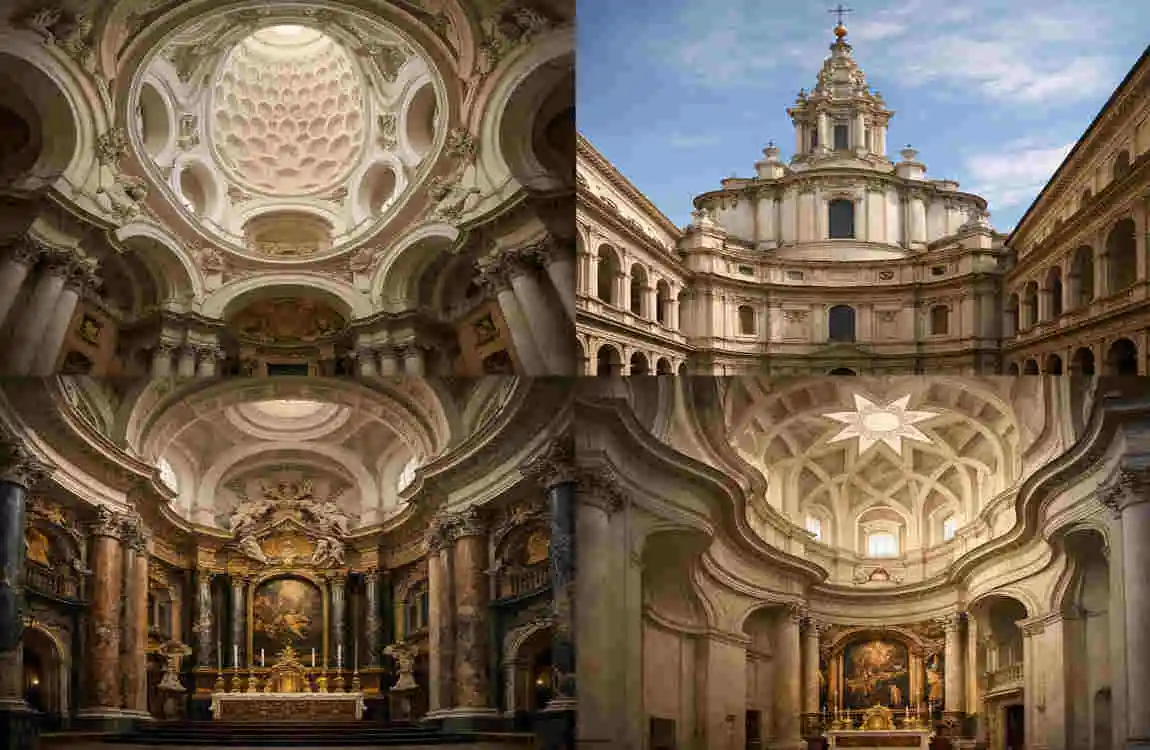
Borromini architecture refers to the distinctive Baroque style created by Francesco Borromini. It is known for unusual shapes, flowing lines, and a strong sense of movement.
Instead of simple symmetry, Borromini often used complex forms that feel more dynamic. His buildings seem to bend, twist, and breathe.
Main Characteristics
Borromini architecture is easy to recognise once you know what to look for.
- Curved walls that create motion
- Complex geometric plans like ovals and stars
- Dramatic façades that look layered and alive
- Rich interior details with stone patterns and texture
- Natural lighting that shapes the mood of the space
These features make his work stand apart from more traditional buildings.
Why Borromini’s Style Was Revolutionary
Borromini changed the way people thought about architecture. He did not treat buildings as static boxes. He treated them like active forms with rhythm and energy.
This was revolutionary because it broke away from strict classical balance. He showed that architecture could be emotional, experimental, and deeply artistic.
Key Features of Borromini Architecture
Dynamic Curves and Oval Shapes
One of the most famous traits of Borromini’s work is his use of curves. He often replaced straight lines with flowing walls and oval spaces.
These shapes create a sense of motion. As you move through one of his buildings, the space feels more alive and less predictable.
Innovative Structural Designs
Borromini was not only artistic. He was also clever with structure. He found new ways to support domes, walls, and interiors without making the design look heavy.
This mix of beauty and engineering made his work impressive both inside and out.
Use of Light and Shadow
Borromini understood that light changes how a building feels. He placed windows and openings carefully so light could move across surfaces in dramatic ways.
This created contrast and depth. Shadows became part of the design, not just something that happened naturally.
Decorative Stonework
His stone details were often very refined. He used carved patterns, layered surfaces, and fine finishes to add richness without making the building feel crowded.
This gave his buildings a strong sense of elegance.
Geometric Patterns
Geometry was central to his style. He often used circles, ovals, triangles, and stars in creative combinations.
These patterns gave his buildings both order and surprise. The result was a style that felt intellectual and artistic at the same time.
Famous Buildings Designed by Borromini
Building Location Why It Matters
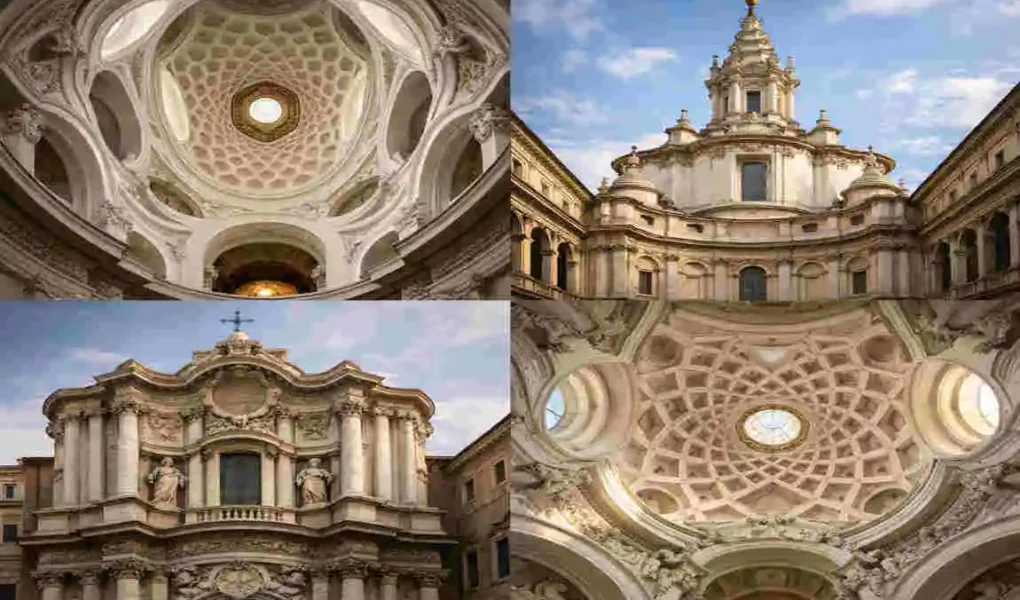
San Carlo alle Quattro Fontane Rome Famous for its curved façade and oval interior
Sant’Ivo alla Sapienza Rome Known for its star-like plan and dramatic dome
Oratory of Saint Philip Neri Rome A major example of Borromini’s church design style
Palazzo Spada Rome Features the famous optical illusion gallery
Basilica of Saint John Lateran Renovation Rome Shows his skill in large-scale architectural work
San Carlo alle Quattro Fontane
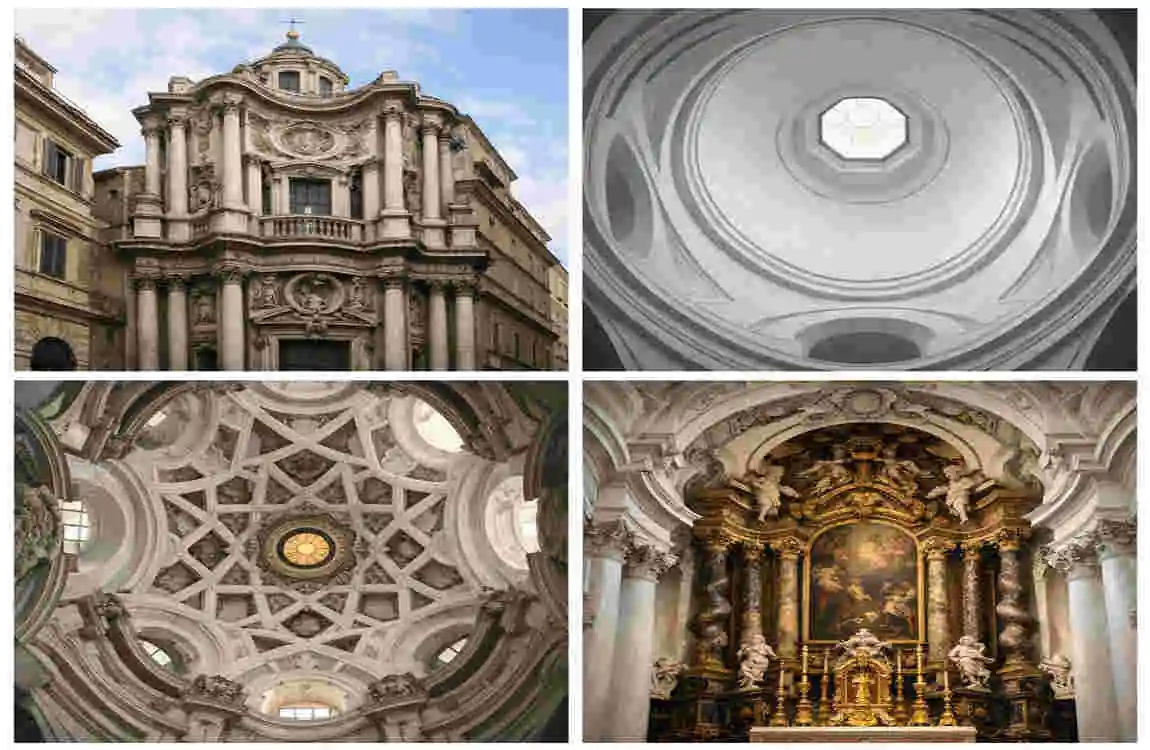
This small church is one of Borromini’s masterpieces. Its façade curves inward and outward in a way that feels almost wave-like.
Inside, the oval layout and layered design make the space feel larger than it is. It is one of the best examples of Borromini architecture.
Sant’Ivo alla Sapienza
Sant’Ivo is known for its unusual dome and star-shaped plan. The design is elegant, complex, and deeply symbolic.
Many people consider it one of Borromini’s most original works.
Oratory of Saint Philip Neri
This building shows Borromini’s skill in combining function and beauty. It was designed for religious gatherings and features a balanced but still lively style.
Palazzo Spada
Palazzo Spada is famous for its illusion corridor, which appears much longer than it really is. This is a perfect example of Borromini’s interest in visual tricks and smart design.
Basilica of Saint John Lateran Renovation
Borromini also worked on important renovations. His changes to this basilica showed that he could handle large and respected religious spaces with great care.
Borromini vs Bernini
Design Philosophy
Borromini loved structure, geometry, and invention. Bernini focused more on drama, emotion, and visual spectacle.
Both were brilliant, but they worked in different ways.
Architectural Style
Borromini’s style is more abstract and controlled. Bernini’s style is more theatrical and grand.
If Borromini makes you think, Bernini often makes you feel first.
Use of Decoration
Borromini used decoration with precision. He often let form and structure lead the design.
Bernini was usually more decorative and expressive.
Legacy Comparison
Both men shaped Baroque architecture, but Borromini is often praised for being more daring. His work can feel more modern because of its bold geometry and unusual space planning.
How Borromini Changed Baroque Architecture
Breaking Traditional Rules
Borromini did not follow old formulas. He experimented with shape, proportion, and movement in ways that challenged the norm.
Creative Geometry
He made geometry exciting. Instead of using it only for order, he used it to create surprise and beauty.
Engineering Innovations
His buildings were not just artistic. They were also smartly built. He found inventive ways to solve structural problems.
Influence on Modern Architects
Modern architects still study Borromini because he showed how design can be both logical and expressive. His work proves that architecture can be practical and imaginative at the same time.
Why Borromini Architecture Is Still Popular
Borromini architecture remains popular for many reasons.
- Timeless design that still feels fresh
- Historical significance in Baroque art
- Tourist appeal in Rome and beyond
- Educational value for students and architects
- Modern influence on creative building design
People still admire his work because it feels alive. It is not just about walls and roofs. It is about space, feeling, and movement.
Fun Facts About Borromini
- Borromini originally trained as a stonemason.
- He worked mainly in Rome, where many of his most famous buildings still stand.
- He was known for thinking differently from other architects of his time.
- Some of his designs use optical tricks to fool the eye.
- His buildings often look larger or more complex than they really are.
Tips for Recognising Borromini Architecture
If you want to spot Borromini’s style, look for these clues:
- Curved façades
- Oval or unusual floor plans
- Dramatic domes
- Detailed stonework
- Creative use of natural light
When you see a building that feels playful, smart, and highly original, there is a good chance Borromini’s influence is there.
Common Myths About Borromini Architecture
Was it only religious architecture?
No. While Borromini is best known for churches, he also worked on palaces and renovations.
Was Borromini more famous than Bernini?
During his lifetime, Bernini was often more famous. Today, many people admire Borromini just as much for his originality.
Does Borromini design every Baroque church?
Definitely not. Borromini was one of the key Baroque architects, but many other architects also shaped the style.
FAQ
What is Borromini architecture?
Borromini architecture is a Baroque style known for curves, geometry, dramatic spaces, and creative design.
Who was Francesco Borromini?
Francesco Borromini was a major Italian Baroque architect famous for his original and inventive buildings in Rome.
What architectural style is Borromini known for?
He is known for Baroque architecture, especially a more geometric and experimental version of it.
What are Borromini’s most famous buildings?
His best-known buildings include San Carlo alle Quattro Fontane, Sant’Ivo alla Sapienza, Palazzo Spada, and the Oratory of Saint Philip Neri.
How is Borromini different from Bernini?
Borromini focused more on structure, geometry, and curves, while Bernini focused more on drama and decoration.
Why is Borromini architecture important?
It is important because it transformed Baroque design and influenced later architects through its bold, creative ideas.
| Topic | Information |
|---|---|
| Architect | Francesco Borromini (1599–1667), one of the greatest architects of the Italian Baroque period. |
| Architectural Style | Baroque architecture with bold curves, dramatic shapes, and innovative geometric designs. |
| Time Period | Mainly active during the 17th century in Rome, Italy. |
| Origin | Developed during the Italian Baroque movement, emphasizing movement, light, and emotion. |
| Key Characteristics | Curved walls, oval domes, flowing facades, complex geometry, rich ornamentation, and creative use of light and shadow. |
| Building Materials | Stone, brick, marble, stucco, and decorative plaster. |
| Design Philosophy | Combined mathematics, geometry, and artistic creativity to create dynamic, expressive spaces. |
| Most Famous Buildings | San Carlo alle Quattro Fontane, Sant’Ivo alla Sapienza, Oratorio dei Filippini, and Palazzo di Propaganda Fide. |
| Unique Features | Undulating facades, intricate domes, hidden light sources, and unconventional floor plans. |