

A full house rewire is a big job, but it is often necessary for safety, reliability, and peace of mind. In many UK homes, old wiring can become unsafe over time. You may also need an upgrade if your fuse box is outdated, your lights flicker, or your electrics keep tripping.
What Is a Full House Rewire?
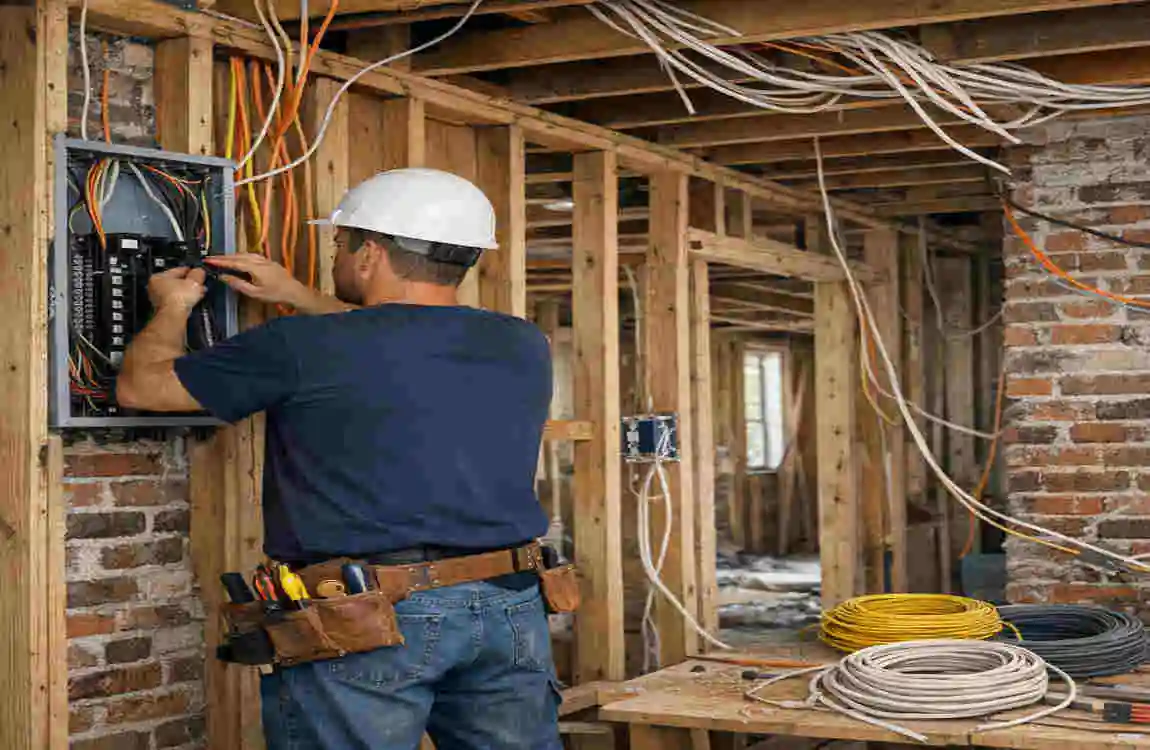
A full house rewire means replacing the old electrical wiring in your home with new cables and modern fittings. It is not just about changing a few sockets. It usually includes the main wiring system, the consumer unit, sockets, switches, lighting circuits, and safety testing.
What gets replaced?
A full rewire often includes:
- Old cables
- Sockets and switches
- Fuse box or consumer unit
- Lighting circuits
- Earthing and bonding
Full rewire vs partial rewire
A full rewire means the entire electrical system is replaced. A partial rewire only updates certain areas, such as the kitchen or a damaged circuit. If the house is very old, a full rewire is usually the safer and smarter choice.
Signs your 3-bed house may need rewiring
Look out for these warning signs:
- Frequent tripping
- Old fuse box
- Rubber or cloth wiring
- Burning smells
- Flickering lights
If you notice more than one of these, it is worth getting an electrician to inspect the system.
Average Cost to Rewire a 3 Bed House in the UK
So, how much does it cost to rewire a 3-bed house in the UK in 2026?
For most homes, the average cost is between £4,500 and £8,500. Some jobs are cheaper, while larger or more complex homes can cost more.
Typical price ranges
Property Type Estimated Cost
Small terraced 3-bed house £3,500 – £4,500
Typical 3-bed house £4,500 – £8,500
Larger or more complex home £9,000 – £12,000+
What makes up the cost?
A rewiring job usually breaks down like this:
- Labour: 60–70%
- Materials: 20–30%
- Consumer unit: £400–£900
- Extras: lights, sockets, upgrades
Labour is the highest cost because rewiring takes time and needs skilled work. Materials matter, too, but the house’s design and the amount of work required often have the biggest impact on the final bill.
Key Factors That Affect Rewiring Cost
No two homes cost the same to rewire. The final price depends on several practical things.
Size and type of property
A semi-detached house may be easier to work on than a detached house, which often has more rooms and longer cable runs. A bigger house usually means more sockets, more wiring, and more labour.
Age of the house
Older homes often have outdated wiring, awkward layouts, and hidden problems. If the property still has old fittings or unsafe wiring, the electrician may need extra time to properly remove and replace everything.
Number of sockets and switches
The more electrical points you want, the more the job will cost. If you want extra sockets in bedrooms, living rooms, or the kitchen, this adds to both labour and materials.
Access and layout
Easy access makes rewiring faster. If the electrician has to lift floors, work through solid walls, or deal with difficult loft access, the price can rise.
Location in the UK
Labour rates vary across the country. In places like London and the South East, costs are usually higher than in many northern areas.
Plaster repair and decoration
A rewire often leaves walls damaged, especially if cables are chased into the walls. If plastering is included, the total price goes up. Decorating after the work is another separate cost.
Smart home upgrades
If you want smart lighting, app-controlled switches, or modern energy-saving features, expect to pay more. These upgrades are useful, but they are not part of a standard rewire.
What Is Included in a Full Rewire?
A proper full rewire should cover more than just new wires.
Standard inclusions
- New wiring throughout the house
- New consumer unit
- New sockets and switches
- Updated lighting circuits
- Earthing and bonding
- Testing and certification
Why certification matters
After the work is complete, the electrician should test the system and issue the appropriate certificate. This matters for Part P compliance and proves the work meets UK safety standards.
How Long Does It Take to Rewire a 3 Bed House?
A typical 3-bedroom house rewire usually takes 5 to 10 days.
What can make it take longer?
- The house is still occupied
- The layout is complicated
- Plastering or repairs slow things down
- Extra electrical issues were found during the job
If the property is empty, the work is often quicker and easier. If people are still living there, the electrician may need to work around furniture and daily routines, which can add time to the job.
Step-by-Step Rewiring Process
Here is what usually happens during a full rewire.
Inspection and quote
The electrician first checks the home, looks at the current wiring, and gives you a price.
Power off and preparation
The power is switched off, and the home is prepared for the work. Furniture may need to be moved, and some areas may be covered for protection.
Removing old wiring
Old cables, sockets, and fittings are taken out where needed.
Installing new cables
New wiring is run through the property to power lights, sockets, and appliances.
Fitting new accessories
New switches, sockets, and light points are installed.
Consumer unit upgrade
The old fuse box is replaced with a modern consumer unit if needed.
Testing and certification
Finally, the electrician tests everything and provides you with the paperwork confirming the system is safe.
Hidden or Extra Costs to Watch For
A rewiring quote does not always include everything. Some extra costs may appear later.
Common extra costs
- Plaster repair: £500–£2,000
- Decorating after work
- Temporary accommodation
- Moving furniture
- Unexpected electrical faults
If the electrician finds hidden damage or unsafe parts inside the walls, the job may cost more than expected. That is why a clear quote matters before work starts.
Tips to Save Money on a 3 Bed Rewire
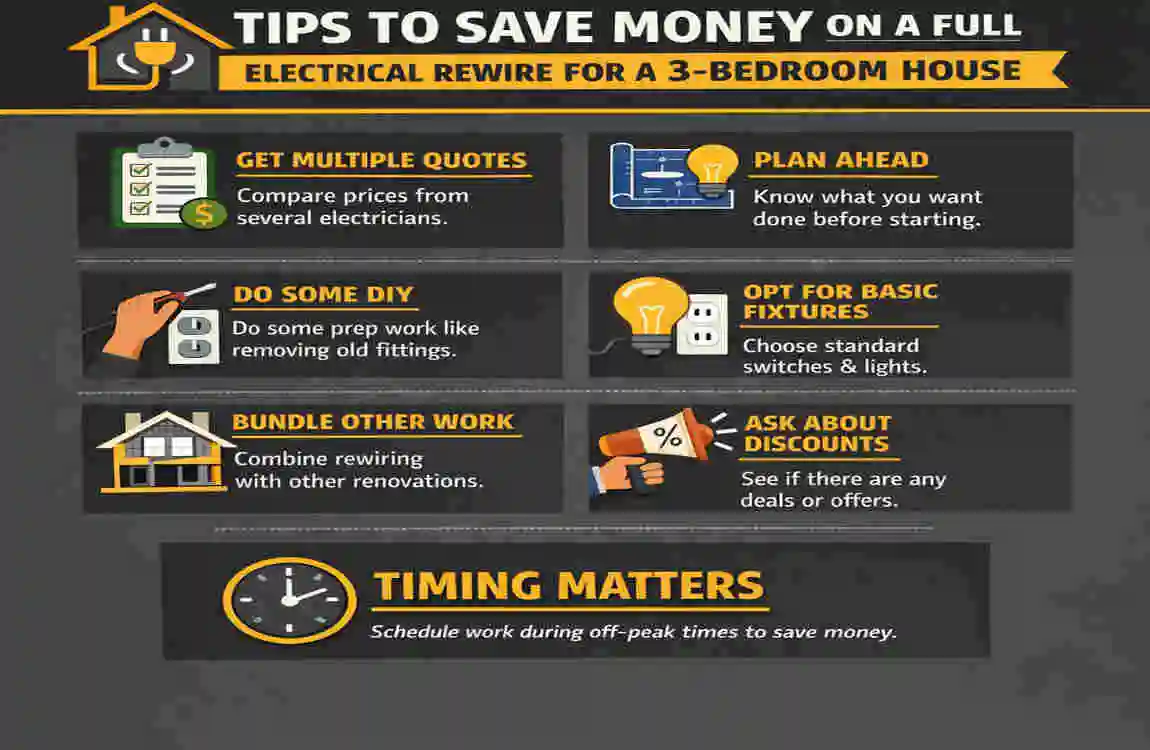
You can reduce costs without lowering safety.
Simple ways to save
- Get multiple quotes
- Rewire during a renovation
- Keep the layout simple
- Avoid unnecessary extras
- Combine the job with kitchen or bathroom work
The best savings often come from planning. If walls are already being opened for other work, rewiring becomes easier and cheaper.
FAQ
How much does it cost to rewire a 3-bed house in the UK?
Typically between £4,500 and £8,500.
Do I need to move out during rewiring?
Not always, but many people do because it is easier and safer.
How long does a full rewire take?
Usually 5 to 10 days for a 3-bedroom house.
Is rewiring covered by insurance?
Usually no, unless it is linked to an insured event.
Does rewiring add value to a house?
Yes, it can improve safety, compliance, and resale value.
| Category / Factor | What It Includes | Estimated Cost (UK) |
|---|---|---|
| Full Rewire (3 Bed House) | New wiring, sockets, switches, fuse board upgrade | £4,500 – £7,500 |
| Partial Rewire | Only selected rooms or circuits updated | £2,000 – £4,000 |
| Consumer Unit Upgrade | Replacing old fuse box with modern unit | £400 – £800 |
| Labour Costs | Electrician daily rates (2–5 days work) | £1,000 – £3,000 |
| Extra Fixtures | Extra sockets, lighting points, smart switches | £150 – £1,000+ |
| Testing & Certification | Safety checks + Electrical Installation Certificate | £150 – £300 |