Architectural lighting plays a big role in how modern spaces look, feel, and function. They do more than brighten a room. They help people move safely, work comfortably, and enjoy the space visually.
In simple words, architectural lighting is lighting that supports the design of the building itself. It can be hidden in ceilings, built into walls, placed under cabinets, or used to highlight special features. Unlike ordinary decorative lights, it is planned with the architecture in mind.
Good lighting can make a home feel warmer, an office feel more productive, and a commercial space feel more polished. When done well, it improves both beauty and usability.
Understanding Architectural Lighting Works
What Is Architectural Lighting?
Architectural lighting is lighting that works in conjunction with a building’s structure. It is not just about a lamp or a chandelier. It is about how light is placed around ceilings, walls, floors, furniture, and design features.
This type of lighting can be used to:
- Guide the eye to important details
- Improve visibility
- Create mood
- Support daily activities
In short, lighting becomes part of the design instead of sitting on top of it.
Why Architectural Lighting Matters
Lighting matters because it affects how people experience a room every day.
It can:
- Improve safety
- Increase comfort
- Make spaces feel larger or more open
- Highlight textures, shapes, and surfaces
- Support different tasks in the same room
A dark room may feel small or heavy. A well-lit room feels easier to use and more welcoming.
Architectural Lighting vs. Decorative Lighting
Decorative lighting is often chosen for style. Think of pendant lights, chandeliers, or statement lamps. These are beautiful and useful, but they are usually visible design objects.
Architectural lighting is more about the building and how light supports it.
Simple difference:
- Architectural lighting = part of the structure and function
- Decorative lighting = visible feature that adds style
Many spaces use both together. For example, a dining room may have a decorative pendant light, recessed lights, and hidden LED strips.
Main Types of Architectural Lighting
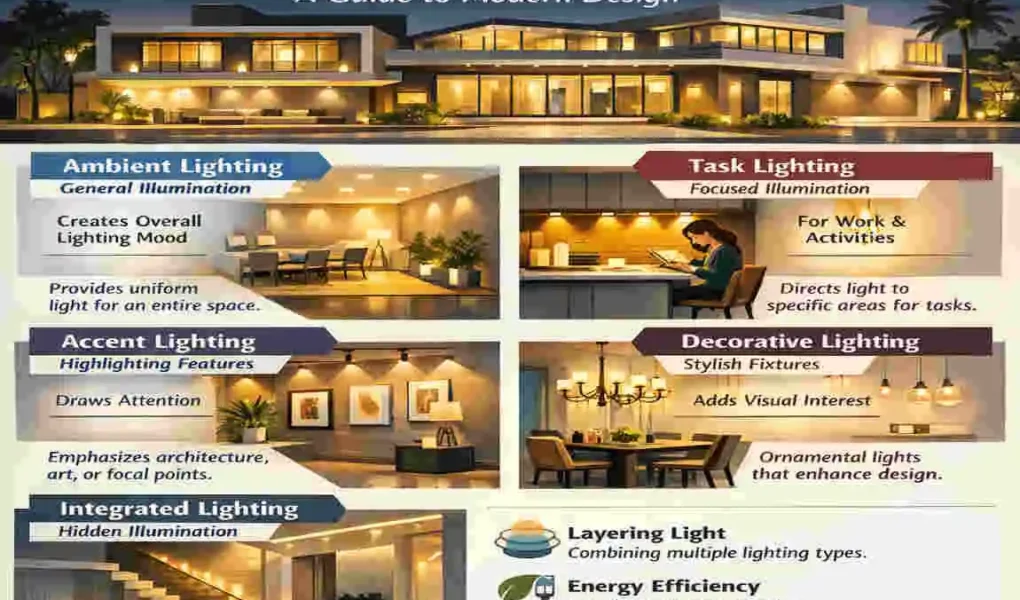
Ambient Lighting
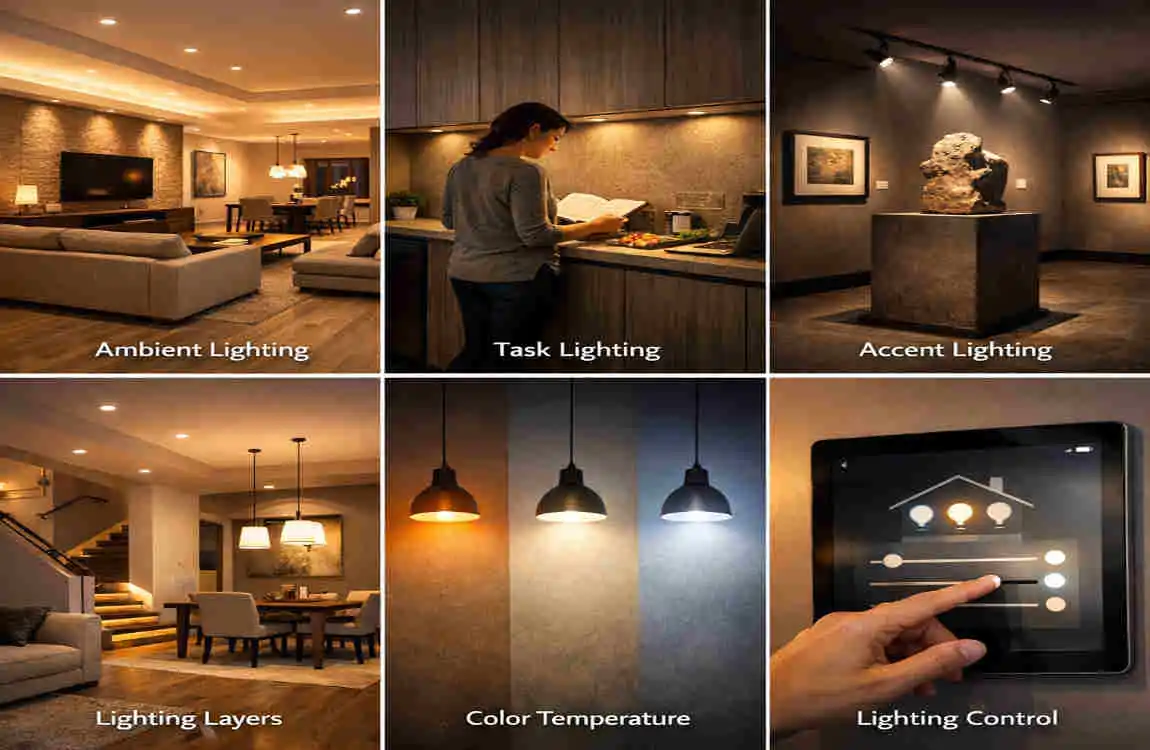
Ambient lighting provides a room with its overall brightness. It is the base layer of light.
Common examples include:
- Recessed ceiling lights
- Ceiling fixtures
- Hidden indirect lighting
This type works best when you want even light across the room. It helps people see clearly without relying on one bright source.
Task Lighting
Task lighting is designed for specific activities. It gives extra light where it is needed most.
Examples include:
- Under-cabinet lights in kitchens
- Desk lamps in offices
- Reading lights beside beds
- Vanity lights in bathrooms
This lighting improves focus and reduces eye strain.
Accent Lighting
Accent lighting is used to draw attention to something important.
It can highlight:
- Artwork
- Feature walls
- Textured surfaces
- Stairs
- Niches
- Architectural details
This is the lighting that gives a room depth and character.
Cove and Concealed Lighting
Cove lighting is hidden lighting placed in ledges, recesses, or ceiling spaces. It gives a soft glow instead of direct brightness.
This style works well in:
- Living rooms
- Bedrooms
- Hallways
- Ceilings with details
- Cabinets and shelving
It is popular because it feels calm, clean, and modern.
Wall-Washing and Grazing
Wall washing spreads light evenly across a wall. It makes the wall look smooth and bright.
Wall grazing places light close to a textured surface, allowing shadows to reveal detail. This works well on:
- Brick
- Stone
- Wood
- Patterned walls
These two methods create very different effects, but both can make a space more interesting.
Quick comparison table
Lighting TypeMain PurposeBest Use
Ambient General brightness Whole room
Task Focused work light Kitchens, offices, reading areas
Accent Highlight features Art, walls, stairs
Cove/Concealed Soft indirect glow Ceilings, bedrooms, living rooms
Wall Washing/Grazing Show wall texture Stone, brick, wood surfaces
How Architectural Lighting Works in Modern Design
Layering Different Light Sources
One light source is usually not enough. A modern room often needs layers of light.
A good design usually combines:
- Ambient lighting for the whole room
- Task lighting for work areas
- Accent lighting for style and focus
This layered approach keeps the space flexible. You can use brighter light during the day and softer light in the evening.
Using Light to Highlight Architecture
Lighting can make a building’s best features stand out.
It can emphasize:
- Columns
- Arches
- Staircases
- Ceilings
- Niches
- Feature walls
Light and shadow work together here. A simple wall can become more interesting when light touches it in the right way.
Creating Visual Balance
Good lighting feels balanced. It should not be too bright, too dark, or uneven.
A balanced space avoids:
- Harsh glare
- Deep shadows in the wrong places
- Bright spots that feel uncomfortable
The goal is visual comfort. People should feel relaxed and able to use the space easily.
Architectural Lighting Design for Different Spaces
Living Rooms
Living rooms need lighting for both relaxing and entertaining. A layered design works best here.
You can combine:
- Recessed lights
- Indirect cove lighting
- Accent lights for Art or shelves
This gives you flexibility for daily life, guests, and quiet evenings.
Kitchens
Kitchens need strong task lighting. This is where clear visibility matters most.
Useful options include:
- Under-cabinet lights
- Ceiling lights over work areas
- Bright lighting near sinks and counters
Good kitchen lighting makes cooking safer and easier.
Bedrooms
Bedrooms should feel soft and calm. Too much brightness can make the room feel harsh.
A good bedroom setup may include:
- Bedside lamps
- Dimmable ceiling lights
- Hidden lighting for a soft glow
The aim is comfort, not strong brightness.
Bathrooms
Bathrooms need clean, even light. This helps with grooming and daily routines.
Important points:
- Use mirror lighting for the face
- Add ceiling lighting for overall brightness
- Choose fixtures that are suitable for wet areas
A bathroom should feel practical and safe.
Offices and Commercial Buildings
In offices, lighting affects focus and productivity. Too much glare can be tiring, while poor lighting can reduce concentration.
Good office lighting should:
- Support computer work
- Reduce eye strain
- Allow flexibility for different tasks
Commercial spaces also benefit from lighting that feels clear, professional, and welcoming.
Key Elements of Effective Architectural Lighting Works
Color Temperature
Color temperature affects the mood of a room.
- Warm light feels soft and cozy
- Neutral light feels clean and balanced
- Cool light feels crisp and bright
Choose the tone based on the room’s purpose.
Color Rendering
Color rendering is about how true colors look under light.
Good lighting helps:
- Furniture look natural
- Paint colors appear accurate
- Artwork and materials show their true tone
This matters a lot in homes, galleries, retail spaces, and offices.
Brightness and Dimming
Not every moment needs the same brightness. Dimming gives you control.
For example:
- Bright light for cleaning or working
- Medium light for daily use
- Soft light for relaxing or entertaining
Dimmers make a room more flexible and more comfortable.
Light Direction
Light can shine directly, indirectly, or diffusely.
- Direct light is focused
- Indirect light bounces off surfaces
- Diffused light spreads softly
The direction changes how shadows appear and how the room feels.
Modern Technologies Used in Architectural Lighting
LED Lighting
LEDs are very popular in architectural lighting works because they are:
- Energy-efficient
- Long-lasting
- Compact
- Easy to place in many designs
They also work well for recessed, concealed, and linear lighting.
Smart Lighting Controls
Smart systems make lighting easier to manage. They may include:
- Sensors
- Timers
- Apps
- Automated scenes
This lets you change the mood of a space with very little effort.
Dimmable Lighting
Dimmable lighting provides greater comfort and control. It is useful in homes and commercial spaces alike.
You can adjust the light for:
- Daytime tasks
- Evening relaxation
- Movie time
- Night use
Energy-Efficient Lighting Design
A good lighting plan does not just look nice. It should also save energy.
You can do this by:
- Using efficient fixtures
- Turning off unnecessary lights
- Planning lighting zones carefully
- Choosing controls that reduce waste
Common Architectural Lighting Mistakes to Avoid
Using Too Much Light
More light is not always better. Too much brightness can cause glare and discomfort.
Poor Fixture Placement
Bad placement can create shadows where you do not want them. It can also make a room feel uneven.
Ignoring Room Function
Every room has a different purpose. A kitchen, bedroom, and office should not all use the same lighting approach.
Forgetting Controls
Without dimmers or zones, a lighting system can feel limited. Controls make the space more useful.
How to Plan Architectural Lighting Works
Start With the Purpose of the Space
Ask yourself: What happens in this room? That answer should guide the lighting plan.
Study the Architecture
Look at:
- Ceiling height
- Wall finishes
- Windows
- Natural light
- Furniture placement
Create a Lighting Layout
Plan the position of each fixture before installation. Divide the room into lighting zones where needed.
Consider Natural Daylight
Daylight changes during the day, so artificial lighting should support it, not fight it.
Test the Lighting
Always check brightness, shadows, and color before final installation. Small changes can make a big difference.
Benefits of Well-Planned Architectural Lighting
Good architectural lighting works bring many benefits:
- Better appearance
- Improved safety
- Greater comfort
- Stronger architectural detail
- More flexible use of space
- Better energy use
In many cases, lighting can completely change how a room feels.
Practical Tips for Better Architectural Lighting
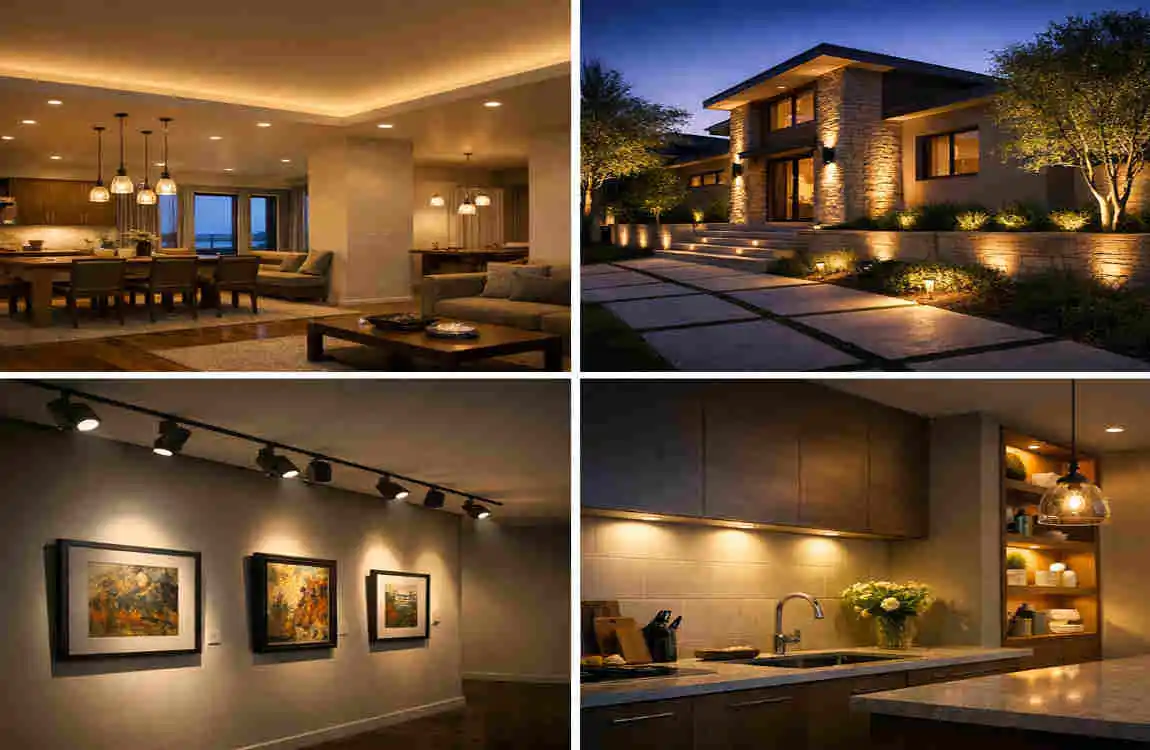
- Use multiple layers of light
- Match fixtures to the room’s purpose
- Reduce glare with smart placement
- Add dimmers where possible
- Highlight only the most important features
- Coordinate lighting with colors and materials
These small choices can improve the whole design.
Frequently Asked Questions
What are architectural lighting works?
Architectural lighting refers to lighting plans and installations that support a building’s function while enhancing its appearance, comfort, and atmosphere.
What are the three main types of architectural lighting?
The three main types are ambient lighting, task lighting, and accent lighting.
Why is architectural lighting important?
It improves safety, visibility, comfort, and the appearance of a space.
Is LED lighting good for architectural design?
Yes. LEDs are efficient, flexible, and well-suited for modern lighting designs.
How can architectural lighting improve a small room?
It can create depth, reduce dark corners, and make the room feel more open.
| Aspect | Architectural Lighting Works |
|---|---|
| Meaning | Lighting designed to enhance a building’s architecture, spaces, and visual character. |
| Main Purpose | Improves visibility while highlighting walls, ceilings, structures, textures, and features. |
| Common Types | Ambient, accent, task, decorative, façade, recessed, and linear lighting. |
| Modern Design | Often uses LED fixtures, smart controls, minimalist designs, and energy-efficient systems. |
| Key Benefits | Creates atmosphere, improves functionality, highlights architectural details, and supports energy efficiency. |
| Where It Is Used | Homes, offices, hotels, restaurants, retail spaces, public buildings, and outdoor façades. |
| Design Considerations | Light direction, color temperature, brightness, fixture placement, energy use, and room function. |
| Best Approach | Combine different lighting layers to create a balanced, comfortable, and visually appealing space. |