
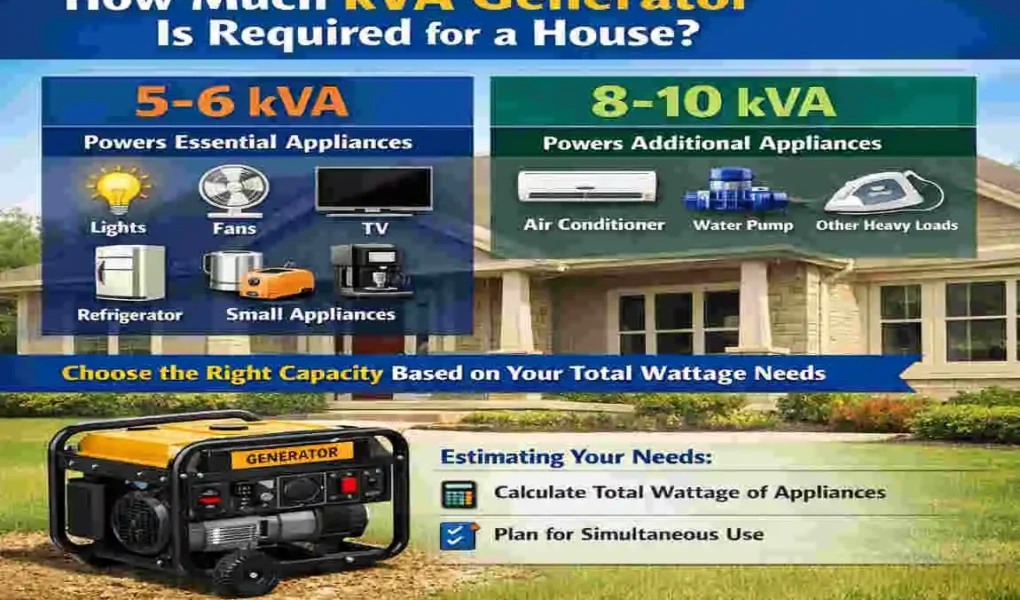
Choosing the right generator size is very important if you want steady backup power during outages. A generator that is too small may fail to run your appliances properly. At the same time, a generator that is too large can waste fuel and cost more than you need to spend.
Power cuts can happen for many reasons. Storms, grid failures, local repairs, and overloads are all common causes. When the power goes out, a generator can help keep your home comfortable and safe.
This is where kVA comes in. Many homeowners see this number but are not fully sure what it means. If you understand kVA, choosing the right generator for your home becomes much easier.
What Is a kVA Generator?
What Does kVA Mean?
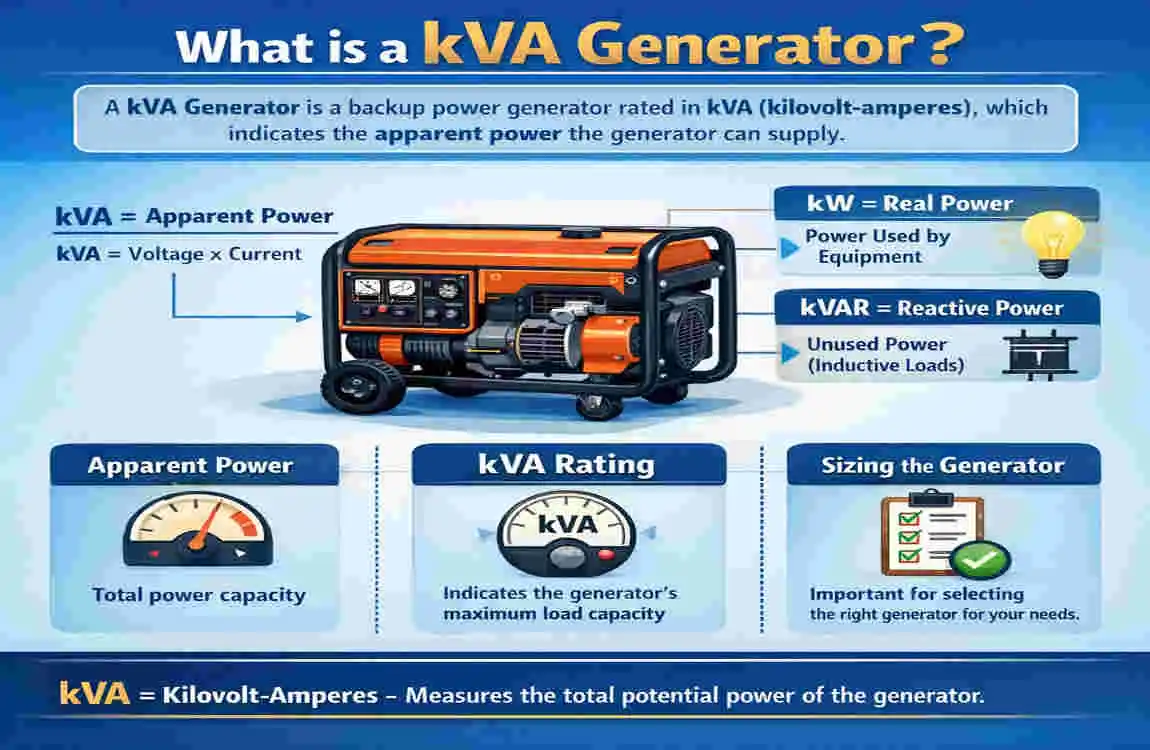
kVA stands for kilovolt-amperes. It is a way to measure a generator‘s power capacity.
You may also see kW, which means kilowatts. The difference is simple:
- kVA = the total power the generator can supply
- kW = the usable power your appliances actually get
Generators are usually rated in kVA because it provides a more complete picture of the machine’s capacity.
Why Generator Size Matters
Choosing the right size helps in several ways:
- It prevents overload
- It improves fuel efficiency
- It helps your generator last longer
- It keeps your appliances safer
A generator that matches your home’s needs will give smoother performance and fewer problems.
How Much kVA Generator Is Required for a House?
Average Generator Size by Home Type
The right size depends on the number of rooms and the appliances you want to run.
House Size Recommended Generator
Small Apartment 2–3 kVA
2-Bedroom House 3–5 kVA
3-Bedroom House 5–7.5 kVA
4-Bedroom House 7.5–10 kVA
Large Home 10–15+ kVA
Factors That Affect Generator Size
Your home may need a bigger or smaller generator depending on these things:
- Number of appliances
- Air conditioners
- Electric heaters
- Water pumps
- Refrigerator and freezer
- Lighting
- Future power needs
If you plan to run only basic items, a smaller generator may be enough. If you want to power the whole house, you will need a larger one.
Calculate Your Home’s Power Requirement
List Essential Appliances
Start by writing down the appliances you want to use during a power cut. Common ones include:
- Refrigerator
- Lights
- Fans
- Television
- Wi-Fi router
- Washing machine
- Microwave
- Air conditioner
Not every house will run all of these at the same time. That is why it helps to focus on your essential needs first.
Calculate Total Wattage
Each appliance uses a certain amount of power. You need to add the running watts of all the items you plan to use.
Also remember starting watts. Some appliances, like refrigerators and pumps, need extra power when they first switch on.
For example:
- Lights = 200 watts
- Fans = 300 watts
- Refrigerator = 700 watts
- TV = 150 watts
- Router = 50 watts
Total running load = 1,400 watts
But if the refrigerator needs extra starting power, the real load may be higher for a short moment.
Convert Watts to kVA.
A simple formula is:
kVA = Watts ÷ 1000 ÷ power factor
For many home generators, the power factor is often around 0.8.
So if your total load is 4,000 watts:
- 4,000 ÷ 1000 = 4 kW
- 4 ÷ 0.8 = 5 kVA
That means a 5 kVA generator may suit your needs.
Recommended Generator Sizes for Different Homes
3 kVA Generator
A 3 kVA generator is a good fit for a small home or apartment with basic power needs.
It can usually handle:
- A few lights
- Fans
- TV
- Router
- Small refrigerator
It is best for light use, not for heavy appliances.
5 kVA Generator
A 5 kVA generator is one of the most popular choices for home use.
It can comfortably power:
- Lights
- Fans
- Refrigerator
- Television
- Wi-Fi router
- Small kitchen appliances
For many average homes, this is a practical and balanced option.
7.5 kVA Generator
A 7.5 kVA generator is better for medium to larger homes.
It can often run:
- Multiple fans
- Several lights
- Refrigerator and freezer
- TV and router
- Water pump
- Small air conditioner
This size gives you more flexibility during outages.
10 kVA Generator
A 10 kVA generator is suitable for homes with higher power demand.
It may support:
- Multiple rooms
- Several appliances at once
- Larger cooling units
- Water pumps
- Kitchen equipment
If your home uses many electrical devices, this size is a safer choice.
15 kVA Generator
A 15 kVA generator is for larger homes or homes with heavy load needs.
It can handle:
- More than one air conditioner
- Large refrigerators and freezers
- Pumps
- Multiple lighting zones
- Several appliances at the same time
This is often used when backup power is needed for most or all of the house.
Portable vs Standby Generators
Portable Generator Benefits
Portable generators are smaller and easier to move.
Benefits:
- Lower cost
- Easy to store
- Good for short outages
- Useful for basic home needs
They are a smart choice if you only need backup power sometimes.
Standby Generator Benefits
Standby generators are installed permanently and turn on automatically when power fails.
Benefits:
- Automatic operation
- Can power more of the house
- More convenient
- Better for frequent outages
They are usually more expensive, but they provide stronger backup support.
Which One Is Better for Your Home?
If you want something simple and affordable, choose a portable generator.
If you want automatic, whole-home backup, a standby generator is better.
Your choice depends on your budget, home size, and how often outages happen.
Fuel Types for Home Generators
Petrol
Petrol generators are common and easy to find.
Pros:
- Affordable to buy
- Easy to start
- Widely available
Cons:
- Higher fuel use
- Less efficient for long use
- Fuel does not store as well as some other options
Diesel
Diesel generators are known for durability and better fuel economy.
Pros:
- Strong and reliable
- Good for long use
- Better fuel efficiency
Cons:
- Usually louder
- Higher upfront cost
- Can be heavier
Natural Gas
Natural gas generators are convenient for homes with a gas supply.
Pros:
- Cleaner burning
- Low maintenance
- Good for standby use
Cons:
- Needs gas connection
- Not always available everywhere
LPG/Propane
LPG or propane is another common home fuel option.
Pros:
- Cleaner than petrol
- Longer storage life
- Good backup option
Cons:
- Requires fuel tanks
- May not be easy to refill in some areas
Common Mistakes When Choosing a Generator
Buying Too Small a Generator
If your generator is too small, it may shut down or struggle to run your appliances. This can damage both the generator and the devices.
Buying an Oversized Generator
A very large generator may seem safer, but it can cost more to buy and run. It may also use more fuel than needed.
Ignoring Startup Power
Some appliances require extra power at startup. If you ignore this, your generator may seem large enough on paper but still fail in real use.
Forgetting Fuel Costs
A generator is not just a one-time purchase. You must also think about fuel cost over time.
Skipping Maintenance
Even a good generator needs care. Regular servicing helps it work better and last longer.
Tips for Choosing the Right Home Generator
Practical Tips to Follow
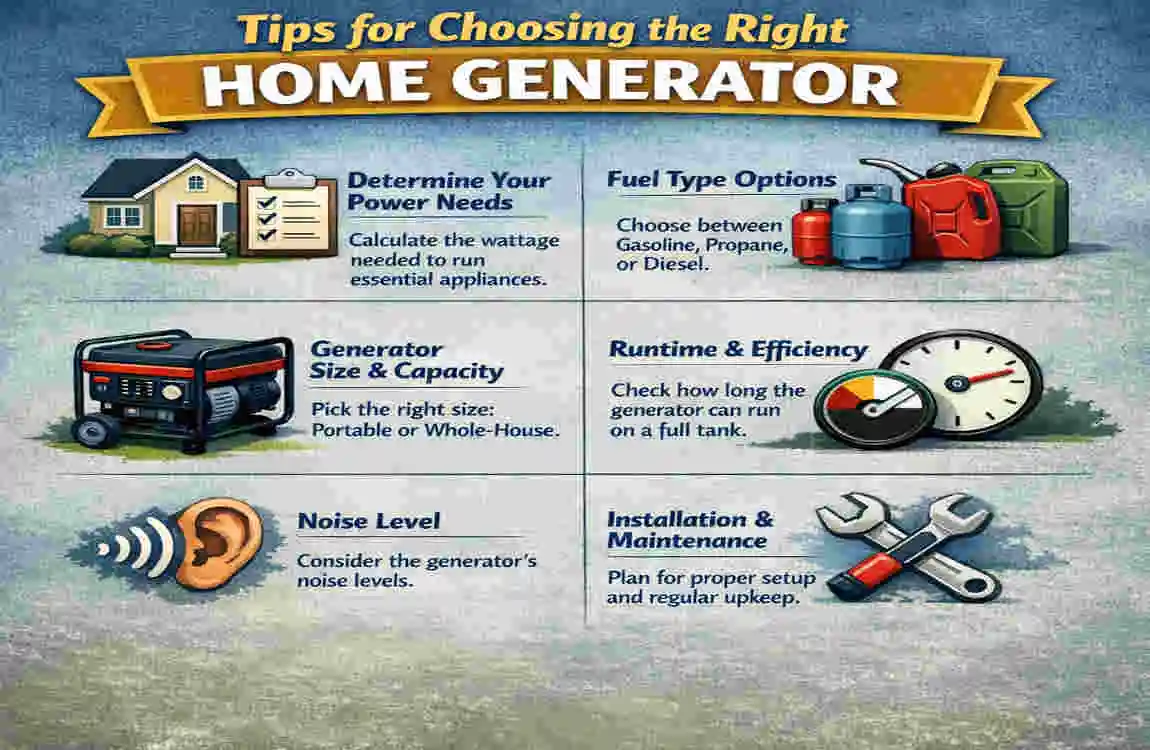
Here are simple steps to help you choose well:
- Calculate total load before buying.
- Plan for future appliances so you do not outgrow the generator too soon.
- Choose quality brands with good support.
- Check noise level if you live in a quiet neighbourhood.
- Consider fuel availability in your area.
- Install safely with proper wiring and switching.
- Schedule regular maintenance to keep it reliable.
These steps can save you money and avoid stress later.
Frequently Asked Questions
How much kVA generator is required for a house?
Most homes need between 3 kVA and 10 kVA, while larger homes may need 10–15 kVA or more.
Is a 5 kVA generator enough for a house?
Yes, a 5 kVA generator is enough for many average homes with basic appliances like lights, fans, a refrigerator, and a TV.
How do I calculate the generator size for my home?
Add the running and starting wattage of the appliances you want to use, then convert the total to kVA.
What is the difference between kVA and kW?
kVA is total power capacity, while kW is the actual usable power.
Can one generator power an entire house?
Yes, if it is sized correctly and installed properly with the right transfer switch.
| House Size / Load | Estimated Power Requirement | Recommended Generator Size (kVA) | Suitable For |
|---|---|---|---|
| Small Apartment (1–2 Bedrooms) | 2–3 kW | 3–5 kVA | Lights, fans, TV, refrigerator, Wi-Fi |
| Medium House (2–3 Bedrooms) | 3–5 kW | 5–7.5 kVA | Essential appliances, water pump, small AC |
| Large House (3–4 Bedrooms) | 5–7 kW | 7.5–10 kVA | Multiple ACs, kitchen appliances, washing machine |
| Very Large Home (4+ Bedrooms) | 8–12 kW | 10–15 kVA | Whole-house backup with high-power appliances |
| Luxury Home / Villa | 12–20+ kW | 15–25+ kVA | Central AC, electric water heaters, full-home backup |