Chicago’s residential architecture grew out of a city that was constantly changing. As neighborhoods expanded, families needed homes that were durable, affordable, and suited to city life. That is why Chicago houses often feel practical, sturdy, and full of character.
Immigration, industry, and rebuilding after the Great Chicago Fire all shaped the homes people built. Over time, new styles appeared as the city grew upward and outward. Today, those older homes remain a big part of what makes the city so visually interesting.
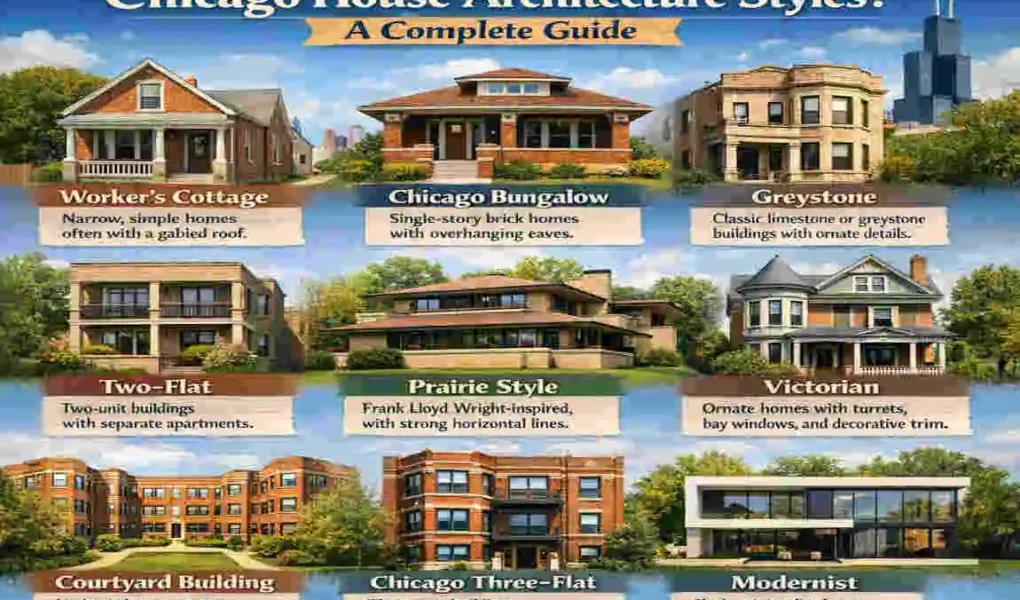
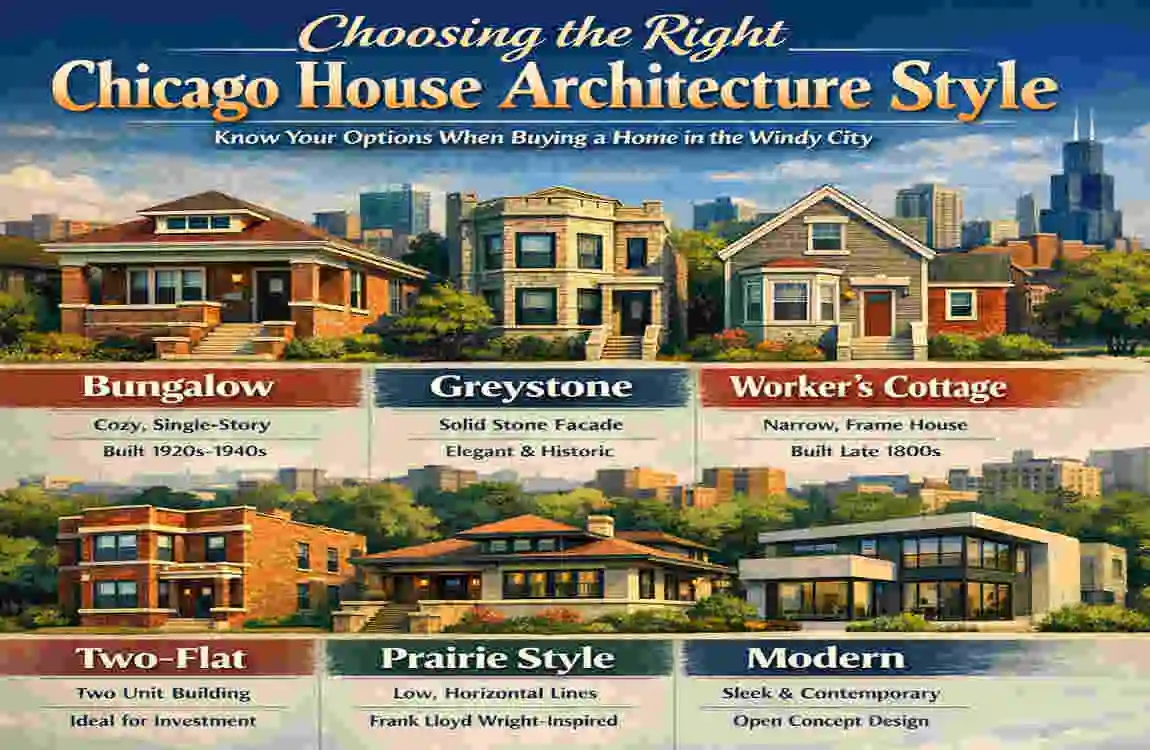
The most familiar Chicago house architecture styles include bungalows, two-flats, greystones, Prairie homes, Queen Anne houses, and modern homes inspired by earlier designs. Each one has its own feel, but they all belong to Chicago’s larger architectural story.
What Makes Chicago House Architecture Unique?
Key influences on Chicago homes
Several practical forces shaped Chicago homes.
First, the city grew quickly. People needed homes fast, so builders used materials and layouts that made sense for dense neighborhoods.
Second, the Great Chicago Fire changed how buildings were made. Stronger materials became more important, especially brick and stone.
Third, the climate mattered. Chicago winters are harsh, so homes needed to be solid and weather-resistant.
Common characteristics
Many Chicago homes share a few common features:
- Brick or masonry exteriors
- Narrow urban lot layouts
- Front porches or stoops
- Large, practical windows
- Simple but strong floor plans
These features helped homes withstand the weather while still working well in city living. Even when the styles differ, you often see the same practical spirit behind them.
Popular Chicago House Architecture Styles
Chicago Bungalow
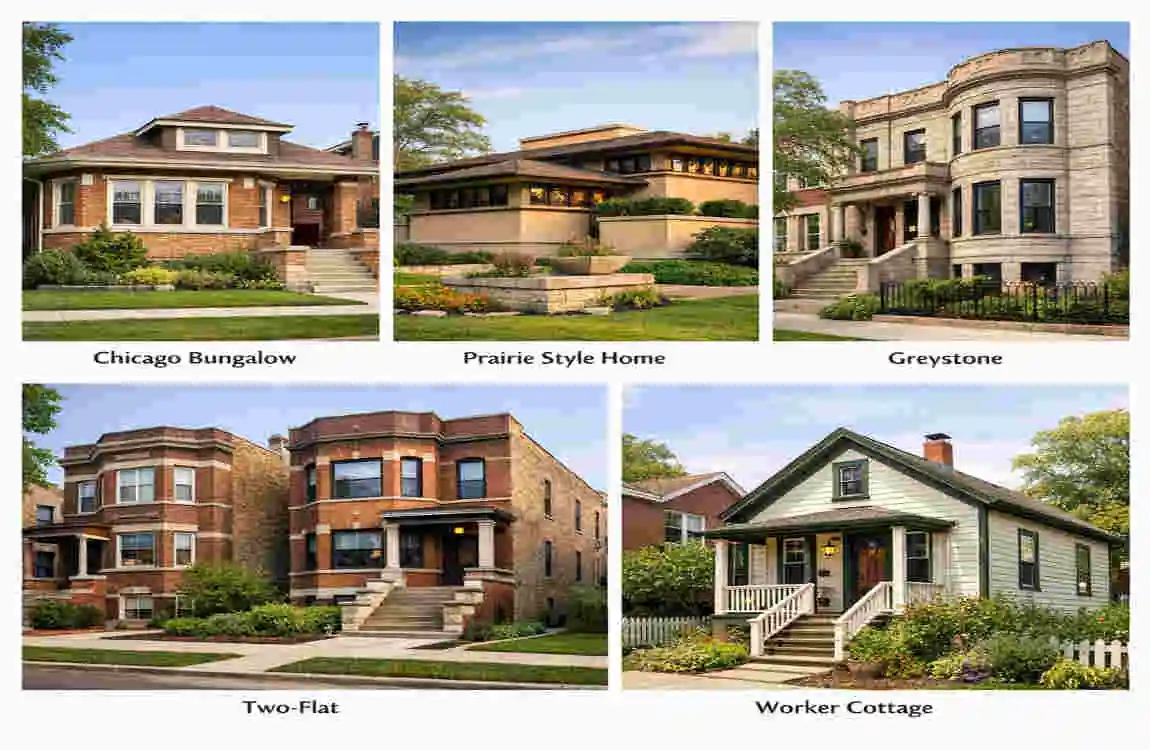
The Chicago bungalow is one of the city’s best-known home styles. It usually has a low-pitched roof, a solid brick exterior, and a front porch or covered entry.
Inside, bungalows often have efficient layouts that make good use of space. They were designed for family life, so they feel comfortable and functional rather than overly formal.
These homes remain popular because they are simple, durable, and full of charm. If you like a home that feels classic but not too fancy, a bungalow is a strong example of Chicago residential architecture.
Two-Flat Homes
A two-flat is a building with two separate residential units, usually one on each floor. These homes became very common in Chicago because they worked well for city families and rental income.
They are practical, flexible, and easy to recognize. Many two-flats have exterior styles similar to those of nearby homes, but their interior layouts are designed for two households.
Two-flats are still valued today because they can support multigenerational living, rental income, or a mix of both.
Greystone Houses
Greystone homes are known for their limestone facades, which give them a strong and elegant appearance. They are among the most recognizable historic homes in Chicago.
These houses often have detailed stone fronts, tall windows, and a more formal look than bungalows. They were especially popular in urban neighborhoods where builders wanted a durable and attractive finish.
If you see a row of homes with a pale stone front and classic city character, you are probably looking at greystones.
Prairie Style
The Prairie style is one of the most important architectural traditions connected to Chicago. It is closely tied to Frank Lloyd Wright and the Prairie School movement.
Prairie homes usually feature horizontal lines, low roofs, broad overhangs, and open interiors. The idea was to make the house feel connected to the land and more natural in its shape.
Compared with many older Chicago homes, Prairie houses feel more open and artistic. They are simple on the outside but thoughtfully designed inside.
Queen Anne and Victorian Homes
Chicago also has many Queen Anne and Victorian-style homes, especially in older neighborhoods. These houses are usually more decorative, with steep roofs, bay windows, wraparound porches, and detailed trim.
They stand out because of their ornamentation. While bungalows and greystones tend to feel more grounded and practical, Queen Anne homes often look more ornate and expressive.
These homes are an important part of the city’s historic fabric and remain popular with people who love old-home character.
Modern and Contemporary Chicago Homes
Modern Chicago homes often draw on older styles but present them more cleanly. They may use large windows, open floor plans, simple materials, and sharp geometric shapes.
Some contemporary homes sit in historic neighborhoods and blend modern living with traditional street character. Others stand out more boldly with glass, steel, and minimalist details.
This mix shows how Chicago’s architectural styles continue to evolve without losing their connection to the past.
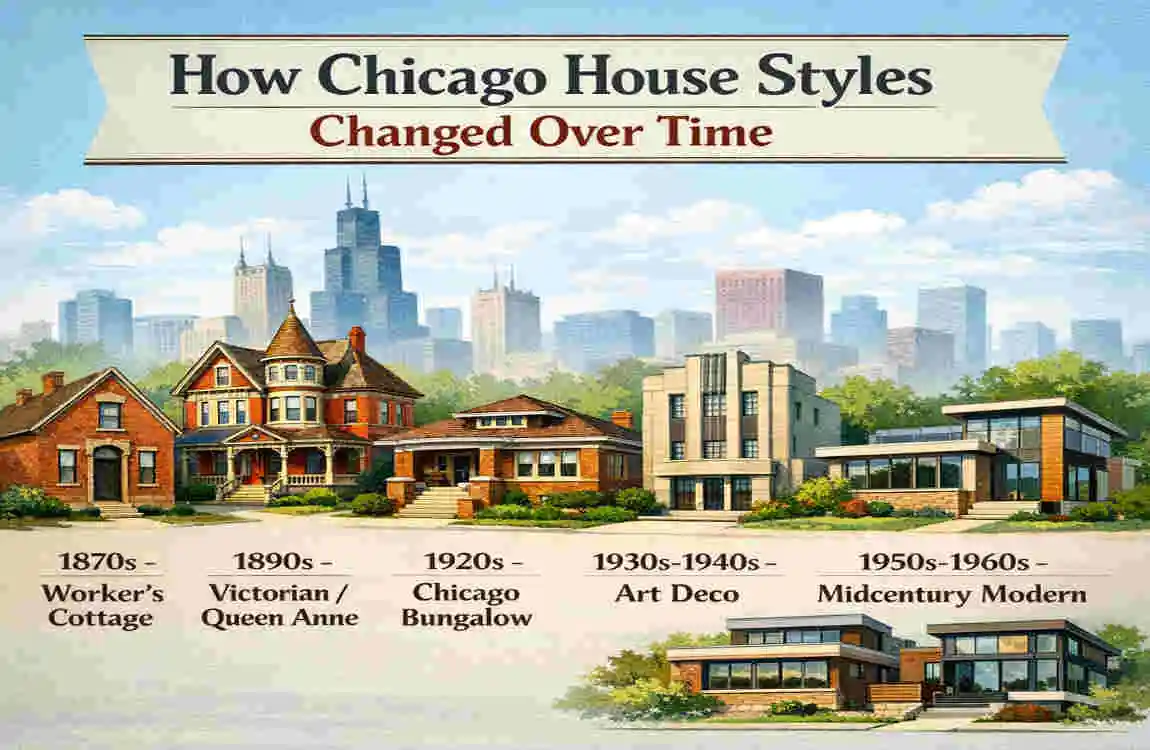
How Chicago House Styles Changed Over Time
Late 19th century
In the late 1800s, Chicago homes often reflected Victorian and Queen Anne influences. These houses were decorative and expressive, showing the wealth and optimism of the time.
Early 20th century
As the city grew, more practical styles became popular. This is when Chicago bungalows, two-flats, and Prairie-style houses became especially important.
These homes met the needs of families seeking durable, livable housing in growing neighborhoods.
Mid-century
Mid-century homes became simpler and more functional. Designers focused on convenience, comfort, and cleaner lines. Homes became less ornate and more efficient.
Modern era
Today, Chicago neighborhoods include a mix of historic homes, renovated houses, and new builds. Many newer homes borrow from older styles while adding modern layouts and energy-saving features.
That is part of what makes the city’s housing so interesting: old and new still live side by side.
How to Identify Different Chicago House Styles
If you want to identify a Chicago home style, start by looking at the outside. Small details often tell you a lot.
What to look for
Check these features:
- Roof shape
- Exterior materials
- Window style
- Front porch or stoop
- Decorative trim
- Overall proportions
- Door placement
- Interior layout
A bungalow usually has a low roof and brick exterior. A greystone often has limestone facing. A Prairie home tends to look wider and lower. A Queen Anne home is usually more decorative.
Why details matter
The more you look at the shape, material, and layout, the easier it becomes to tell one style from another. Often, the biggest clues are not dramatic features but small design choices repeated across the whole house.
Choosing the Right Chicago House Architecture Style
For historic character
If you love older homes and strong neighborhood history, consider greystones, Queen Anne homes, or classic bungalows. These styles have a lot of charm and a strong sense of place.
For practical family living
If you want space that works well for daily life, bungalows and two-flats are often smart choices. They are usually easier to understand, easier to maintain, and well suited to city living.
For modern lifestyles
If you prefer open layouts and clean lines, a contemporary home or a renovated historic home may be a better fit. This gives you modern comfort while still keeping some local character.
Important factors to think about
Before choosing a home style, consider:
- Budget
- Renovation costs
- Maintenance needs
- Energy efficiency
- Historic rules
- Resale value
- Lot size and layout
A beautiful style is important, but it should also fit your daily life and long-term plans.
Preserving and Modernizing Chicago’s Historic Homes
Chicago’s older homes are valuable because they carry the city’s identity. Preserving them helps keep neighborhoods connected to their history.
At the same time, many historic homes need updates to stay comfortable. Kitchens, bathrooms, insulation, windows, and mechanical systems often need modern attention.
How to modernize without losing character
The best updates usually improve comfort while keeping the home’s original feel. For example:
- Replace outdated systems carefully
- Improve insulation where possible
- Update kitchens and bathrooms in a respectful way
- Keep original brick, stone, or wood details when you can
- Use windows and finishes that fit the home’s style
Care for the original materials
Brick, stone, wood trim, windows, and roofs all need attention over time. When you maintain them well, the house keeps its character and value.
If you own a historic home, it is wise to check local building and preservation rules before making major changes.
Chicago’s homes are more than places to live. They are part of the city’s story.
Frequently Asked Questions
What are the most common Chicago house architecture styles?
The most common styles include Chicago bungalows, two-flats, greystones, Prairie homes, and Victorian houses.
What is a Chicago bungalow?
A Chicago bungalow is usually a brick home with a low roof, front porch, and practical floor plan.
Why are two-flat homes common in Chicago?
Two-flats became popular because they worked well for urban housing, family living, and rental income.
What is a Chicago greystone?
A greystone is a home with a limestone exterior, usually seen in older Chicago neighborhoods.
Is Chicago architecture mostly brick?
Brick is very common, but Chicago homes also use limestone, wood, stone, and modern materials. The city has a wide mix of styles.
What architectural style is Chicago best known for?
Chicago is known for several residential styles, not just one. Bungalows, two-flats, greystones, and Prairie homes are all strongly associated with the city.
Can historic Chicago homes be modernized?
Yes. Many historic homes can be updated with new kitchens, bathrooms, and systems while still keeping their original character.
What should I look for when buying a historic Chicago home?
Check the roof, masonry, windows, plumbing, electrical systems, renovation history, and preservation limits before buying.
| Chicago House Architecture Style | Key Features | Common Materials | Best Known For |
|---|---|---|---|
| Chicago Bungalow | Low-pitched roof, wide front porch, compact layout | Brick, wood, stone | Classic Chicago neighborhoods |
| Prairie Style | Horizontal lines, open interiors, broad roof overhangs | Brick, wood, stucco | Frank Lloyd Wright influence |
| Greystone | Symmetrical façade, raised entry, stone exterior | Limestone, brick | Historic urban elegance |
| Italianate | Tall windows, decorative brackets, low roofs | Brick, stone | 19th-century character |
| Queen Anne | Detailed trim, varied rooflines, bay windows | Brick, wood, stone | Ornate Victorian design |