Soviet Brutalist architecture is one of the most striking architectural styles of the 20th century. It is bold, heavy, and impossible to ignore. Some people see it as cold and severe, while others see it as powerful and original.
If you want to understand this style, the key is simple: it was built to be practical, monumental, and visually strong. It used concrete, sharp forms, and large shapes to create buildings that looked serious and long-lasting. In many ways, it reflected the goals and mood of the Soviet era itself.
What Is Soviet Brutalist Architecture?
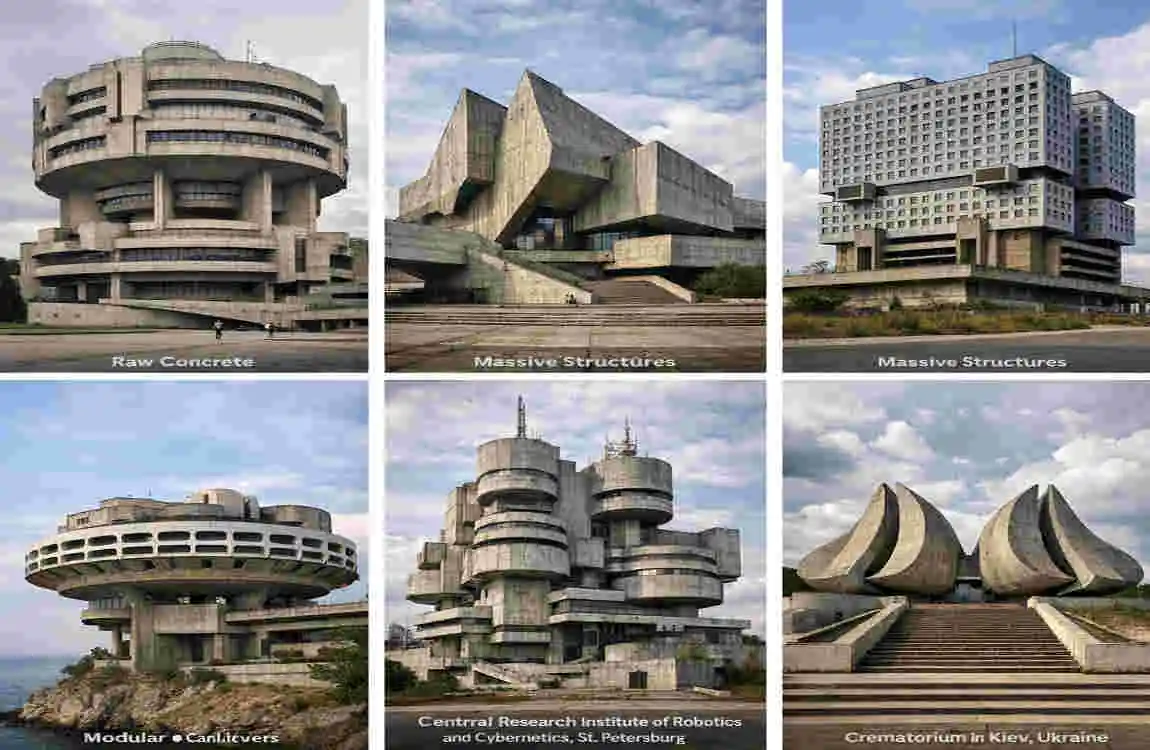
A simple definition
Soviet brutalist architecture is a style of building design that uses raw concrete, geometric shapes, and strong structural forms. It became especially popular in the Soviet Union during the mid-to-late 20th century.
The style is part of the wider Brutalist movement, but Soviet examples developed their own identity. They were shaped by Soviet planning goals, public building needs, and a desire to show strength through architecture.
How it developed from Brutalism
Brutalism first emerged as a modern architectural approach that valued honesty in materials and structure. Instead of hiding how a building was constructed, Brutalist design often openly exposed the concrete, beams, and load-bearing elements.
In the Soviet Union, this approach fit well with post-war needs. The country needed buildings that were affordable, durable, and quick to construct. Concrete became a natural choice.
Why architects used concrete and strong geometry
Soviet architects often chose concrete because it was practical, flexible, and strong. It could support large buildings and allow for dramatic shapes.
They also used geometry to create order and monumentality. Blocks, towers, wide slabs, and angular forms gave the buildings a serious presence. The result was architecture that felt both functional and symbolic.
How it differs from Western Brutalism
Soviet Brutalism and Western Brutalism share many visual traits, but they are not identical. Soviet buildings were often more tied to state planning, public institutions, and collective use.
Western Brutalism sometimes had more experimental or civic expression, while Soviet Brutalist architecture often served broader government and urban goals. That gives Soviet examples a distinct historical and cultural meaning.
History and Development of Soviet Brutalism
Post-war rebuilding needs
After World War II, the Soviet Union faced a huge need for rebuilding. Cities, public services, housing, and institutions all needed rapid development.
That made practical architecture very important. Buildings had to be strong, efficient, and relatively affordable. This practical pressure helped create the conditions for Soviet Brutalist design to grow.
The rise of Brutalist design
As modernist ideas spread, architects began exploring exposed materials and large structural forms. Concrete became especially useful because it supported wide spans and sculptural shapes.
This was a time when many architects believed buildings should reflect the modern world honestly. That idea fit well with Brutalism, where the structure itself becomes part of the design.
Soviet architectural identity
The Soviet Union did not simply copy international modernism. Architects adapted it to local needs, political goals, and public projects.
Government institutions, cultural centres, apartment blocks, and civic buildings all became spaces where this style could be seen. In that sense, Soviet Brutalism was not just an artistic choice. It was also a statement about the era’s priorities.
Key Characteristics of Soviet Brutalist Architecture
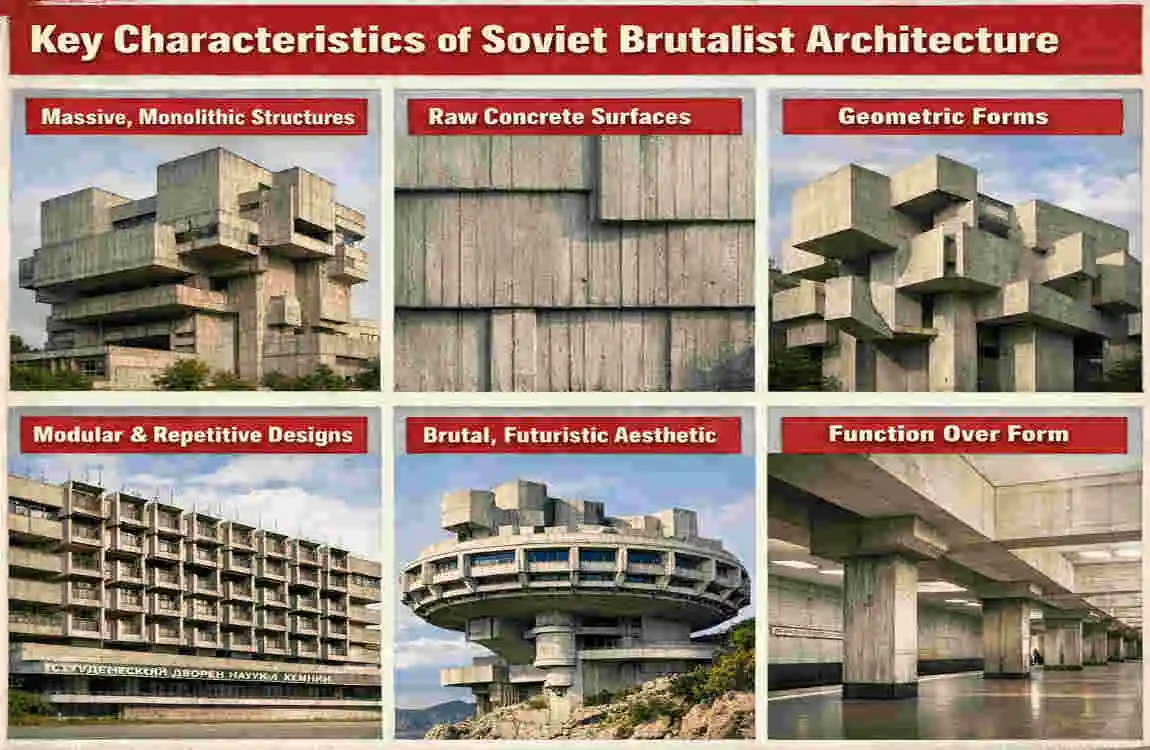
Raw concrete and unfinished materials
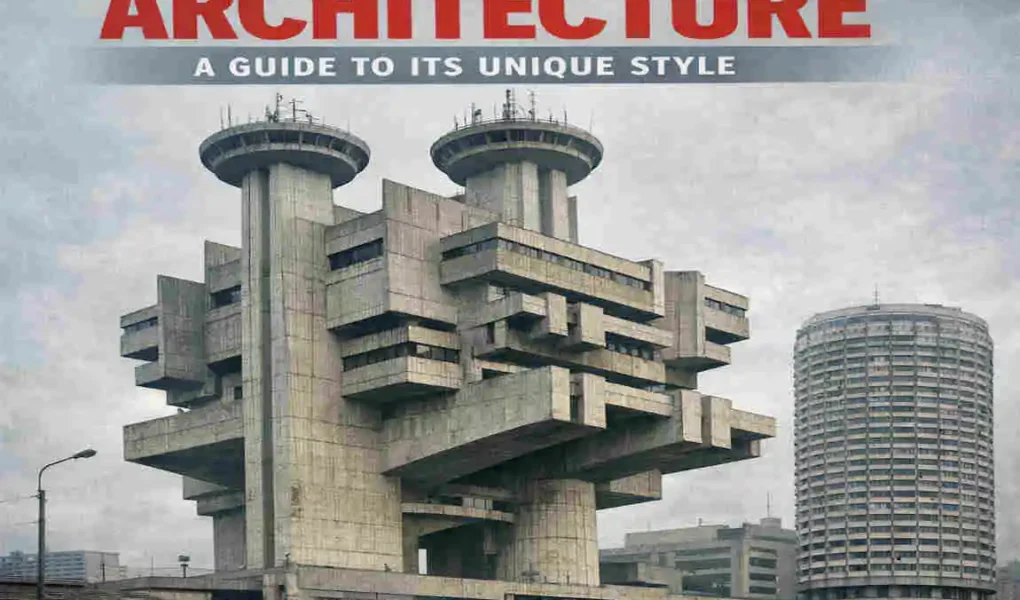
One of the most recognisable features of Soviet Brutalist architecture is exposed concrete. The material often appears rough, plain, and unfinished.
This gives buildings a direct and honest look. Rather than covering the structure with decoration, the design lets the material speak for itself.
Massive geometric shapes
These buildings often use large blocks, cylinders, slabs, and sharp angles. The forms feel bold and solid.
That massiveness is part of the style’s power. It makes the building seem permanent and important.
Minimal decoration
Soviet Brutalism usually avoids ornate details. There is little unnecessary decoration.
Instead, the focus stays on form, shadow, surface texture, and structural logic. That is what makes the style so different from more decorative architecture.
Functional interior layouts
The outside may look dramatic, but the inside was often designed for practical use. Many buildings had to support offices, theatres, housing, or public gatherings.
So the layout often prioritised function. The design had to work in daily life, not just look impressive from the street.
Repetition and strong façades
Repetition also plays a big role. Rows of windows, repeated panels, and regular structural rhythms can make the façade feel organised and heavy.
This repetition adds to the sense of scale and discipline. It also helps these buildings stand out visually.
Famous Examples of Soviet Brutalist Architecture
Public and government buildings
Many public institutions were built in this style. Administrative buildings, ministry offices, and civic centres often used large concrete forms to express authority and permanence.
These buildings were not meant to blend in. They were meant to be noticed.
Cultural and recreational buildings
Theatres, museums, sports halls, and cultural centres also became important examples of the style. These spaces often had dramatic rooflines, bold columns, or sculptural concrete shells.
That made them feel both functional and symbolic. They were places for public life, but they also acted like architectural landmarks.
Residential architecture
Soviet housing projects often used simpler Brutalist ideas at a larger scale. Apartment blocks and housing complexes needed to be efficient and repeatable.
While these homes were not always as dramatic as government buildings, they still showed the same interest in mass, repetition, and practical design.
Regional differences
Not every building looked the same across the former Soviet Union. Local climate, available materials, and regional culture all influenced design.
That means Soviet Brutalist architecture can look different in Moscow, Kyiv, Tbilisi, Yerevan, or other cities. Some examples feel heavier and more monumental, while others are more sculptural or experimental.
Why Soviet Brutalist Architecture Looks So Unique
The power of scale
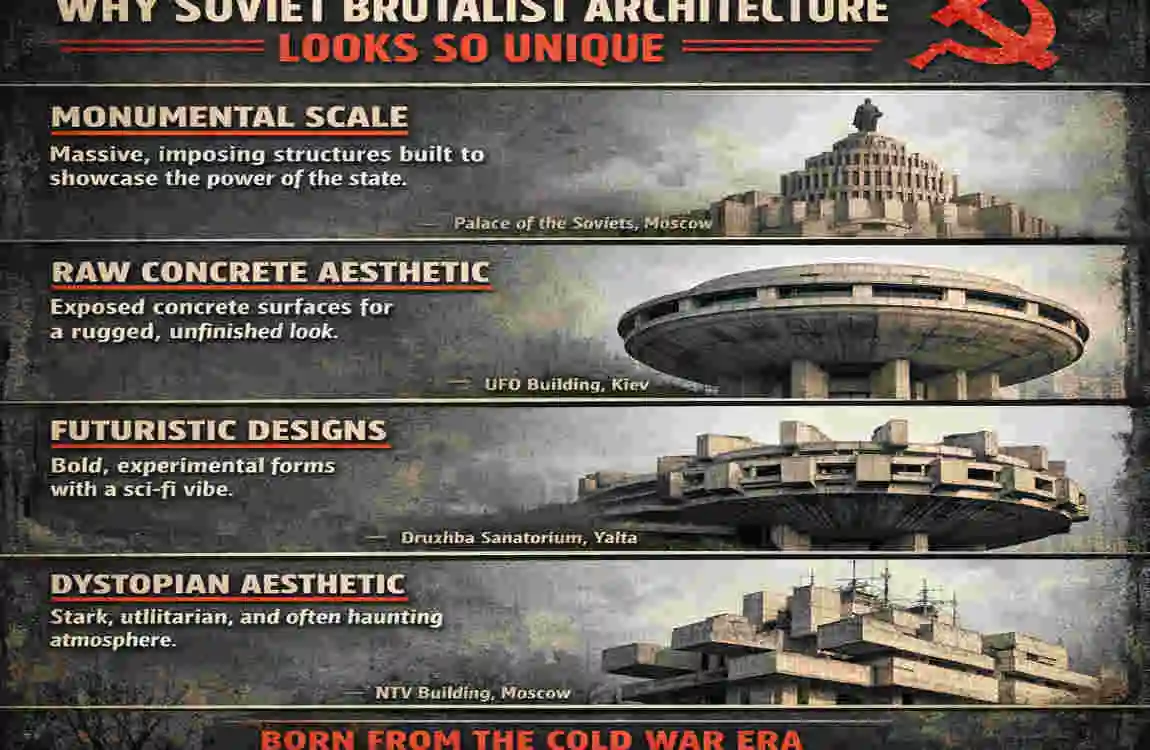
These buildings often feel huge. Their size alone creates a strong impression.
Large walls, deep shadows, and heavy forms immediately make the viewer feel the scale. That is one reason people never forget them.
The relationship between form and function
A major part of the style’s appeal is that the shape often reflects the building’s purpose. Structural honesty matters here.
You can often see how the building works just by looking at it. That gives the architecture a direct, almost mechanical beauty.
Texture, shadow, and repetition
Concrete is not visually flat when it is used well. Its surface can catch light in interesting ways, especially when the sun creates deep shadows.
Repetition also matters. Rows of similar forms can make the building feel rhythmic, serious, and almost sculptural.
Futuristic and intimidating at the same time
Some Soviet Brutalist buildings feel futuristic, as if they belong in a science-fiction world. Others feel heavy and imposing, almost fortress-like.
That contrast is part of what makes the style memorable. It can suggest both progress and power at the same time.
Why photographers and designers love it
Many photographers, architects, and design fans are drawn to these buildings for their visual strength. They offer bold lines, dramatic shadows, and unusual shapes.
Even when people disagree about whether they are beautiful, they still find them interesting. That alone has helped keep the style alive in public attention.
Soviet Brutalism Today: Preservation, Criticism, and Influence
Why some people criticise it
Not everyone likes Soviet Brutalist architecture. Some people see it as cold, harsh, or too intimidating.
There are also practical issues. Ageing concrete can crack, stain, or require expensive maintenance. In some places, the buildings are tied to difficult historical memories, which affects how people view them.
Why others appreciate it
Supporters often admire the style for its originality, honesty, and historical importance. These buildings tell a story about a specific time and place.
They also show bold architectural thinking. Even when the style is not widely loved, it is often respected.
Modern influence
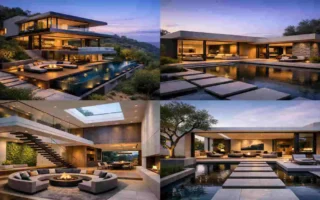
Today, many architects still borrow from Brutalist ideas. Exposed concrete, strong geometry, and minimalist design continue to appear in new buildings and interiors.
You can see the influence in modern homes, galleries, and public spaces. The style may have changed, but its visual language is still alive.
Growing cultural interest
Interest in Soviet Brutalism has also grown due to photography, social media, and preservation discussions. People are looking again at buildings that were once ignored or disliked.
That renewed attention has helped many structures gain new appreciation.
FAQ About Soviet Brutalist Architecture
What is Soviet Brutalist architecture?
It is a style of architecture from the Soviet era that uses concrete, bold geometry, minimal decoration, and strong structural forms. It grew from the wider Brutalist movement but developed its own Soviet identity.
Why did Soviet architects use so much concrete?
Concrete was strong, available, affordable, and flexible. It worked well for large public buildings and dramatic forms.
What are the main features of Soviet Brutalism?
The main features are exposed concrete, large geometric shapes, repetitive façades, minimal decoration, and a functional layout.
Is Soviet Brutalism the same as Brutalism?
Not exactly. Soviet Brutalism is related to Brutalism, but it developed in the Soviet Union under its own political, cultural, and architectural conditions.
Where can you see Soviet Brutalist architecture?
You can find examples throughout the former Soviet Union, including Russia and several neighbouring republics. Many cities still have notable examples today.
Why is Soviet Brutalist architecture becoming popular again?
People are rediscovering it through photography, preservation efforts, social media, and historical interest. Its unusual look also stands out in today’s more polished design world.
Is Soviet Brutalist architecture still influential?
Yes. Its ideas still influence contemporary architecture, interior design, and urban style, especially where people want bold forms and exposed materials.
| Feature | Description |
|---|---|
| Origin | Developed mainly in the Soviet Union during the mid-20th century. |
| Main Material | Exposed concrete was widely used for a raw, powerful appearance. |
| Design Style | Bold geometric shapes, massive forms, and minimal decoration. |
| Key Influence | Modernist architecture combined with Soviet-era functional design. |
| Typical Buildings | Government offices, housing blocks, cultural centers, universities, and monuments. |
| Visual Character | Heavy, imposing, dramatic, and often futuristic. |
| Main Purpose | Emphasized functionality, durability, and collective public life. |