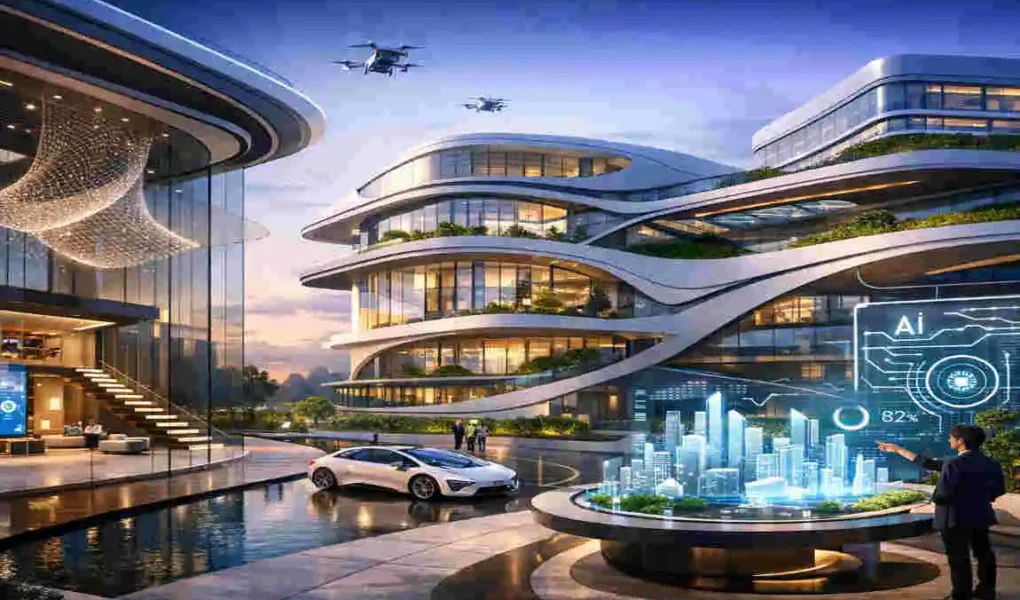
Digital architecture design uses digital tools and technologies to plan, shape, test, and improve buildings before and during construction. Instead of relying only on hand-drawn plans, architects now use software, models, data, and smart systems to create better spaces.
| Key Area | Short Information |
|---|---|
| Definition | Using digital technology to plan, design, and visualize modern buildings. |
| 3D Modeling | Creates realistic digital versions of buildings before construction. |
| BIM | Helps manage building design, materials, systems, and project information. |
| AI Design | Supports creative concepts, analysis, and design optimization. |
| Smart Technology | Integrates lighting, security, HVAC, and automated systems. |
| Sustainability | Helps improve energy efficiency and reduce material waste. |
| Future Trends | Includes generative design, digital twins, VR, and 3D-printed buildings. |
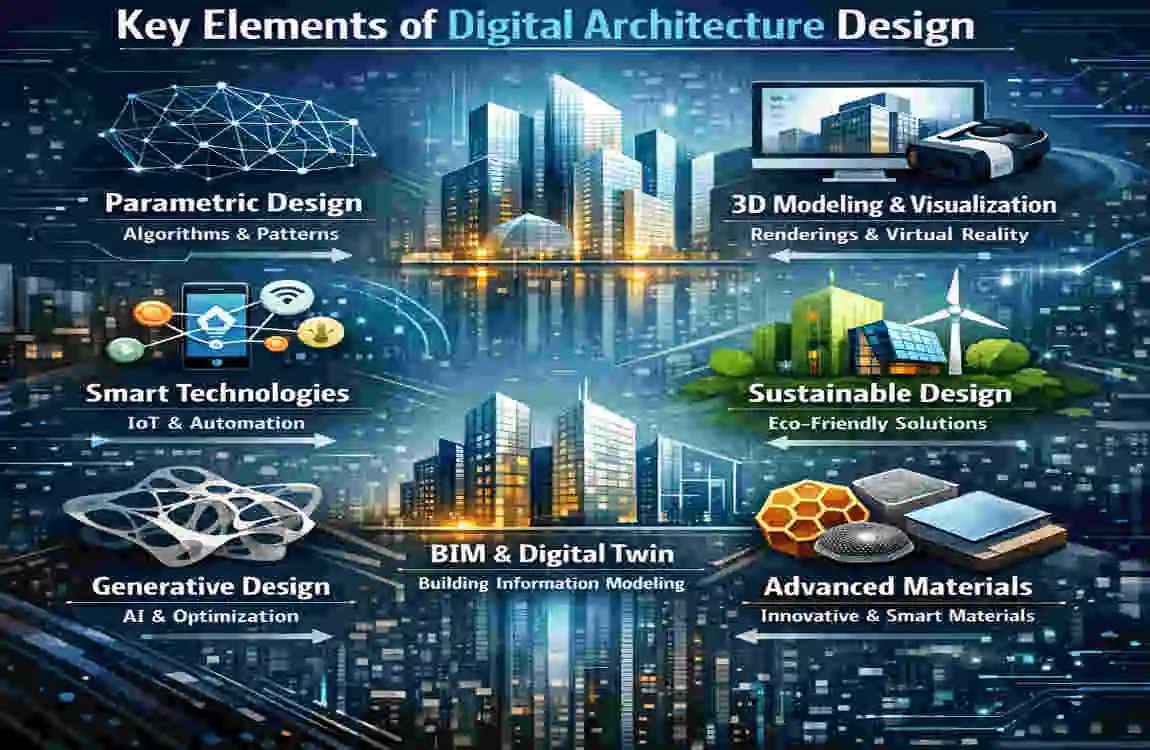
Key Elements of Digital Architecture Design
3D Modeling and Visualization
3D modelling lets architects build a digital version of a space before building anything physically. This gives a clear view of shape, layout, materials, and size. It also helps clients understand the final result more easily.
Visualisation is especially useful because it turns ideas into something that looks real. Instead of imagining a room from flat drawings, people can see lighting, textures, colours, and structure more naturally.
Building Information Modeling
Building Information Modeling, or BIM, is more than just a 3D model. It also stores useful information about materials, systems, costs, and schedules. This makes it a powerful planning tool.
With BIM, architects, engineers, and builders can work from the same updated model. That reduces confusion and helps everyone stay on the same page. It also makes project management much easier.
Parametric and Computational Design
Parametric design uses rules and data to shape a building. Instead of drawing every detail by hand, designers set conditions, and the software creates forms based on those rules.
This is very useful for modern buildings with complex shapes or special performance needs. It allows architects to explore many options quickly and find designs that are both creative and practical.
Digital Fabrication
Digital fabrication connects design directly to production. Tools like CNC machines, 3D printers, and laser cutters help turn digital models into physical parts with high precision.
This is useful for custom pieces, detailed structures, and fast prototyping. It also helps reduce waste because materials are cut more accurately.
Technologies Used in Digital Architecture Design
CAD and 3D Architecture Software
CAD software helps architects create precise drawings and plans on a computer. It is one of the most common tools in the field and supports both early concepts and final technical drawings.
3D architecture software goes a step further by showing the building in three dimensions. This makes design reviews easier and more useful for everyone involved.
Artificial Intelligence in Architecture
AI is becoming a strong helper in architecture. It can suggest design ideas, test layouts, and analyze how a building may perform. In some cases, AI can even generate many design options at once.
This saves time and helps architects focus on the best choices. It also supports smarter decisions around space use, energy, and comfort.
Virtual Reality and Augmented Reality
Virtual reality allows people to walk through a building before it is built. Augmented reality adds digital details on top of the real world, which can help during presentations or construction.
These tools are valuable because they improve understanding. Clients can feel more confident, and design teams can spot issues earlier.
Cloud Collaboration and Digital Workflows
Cloud-based tools make it easier for teams to work together from different places. Architects, engineers, contractors, and clients can share updates in real time.
This leads to smoother communication and fewer delays. It also keeps project information organized and easy to access.
Benefits of Digital Architecture Design for Modern Spaces
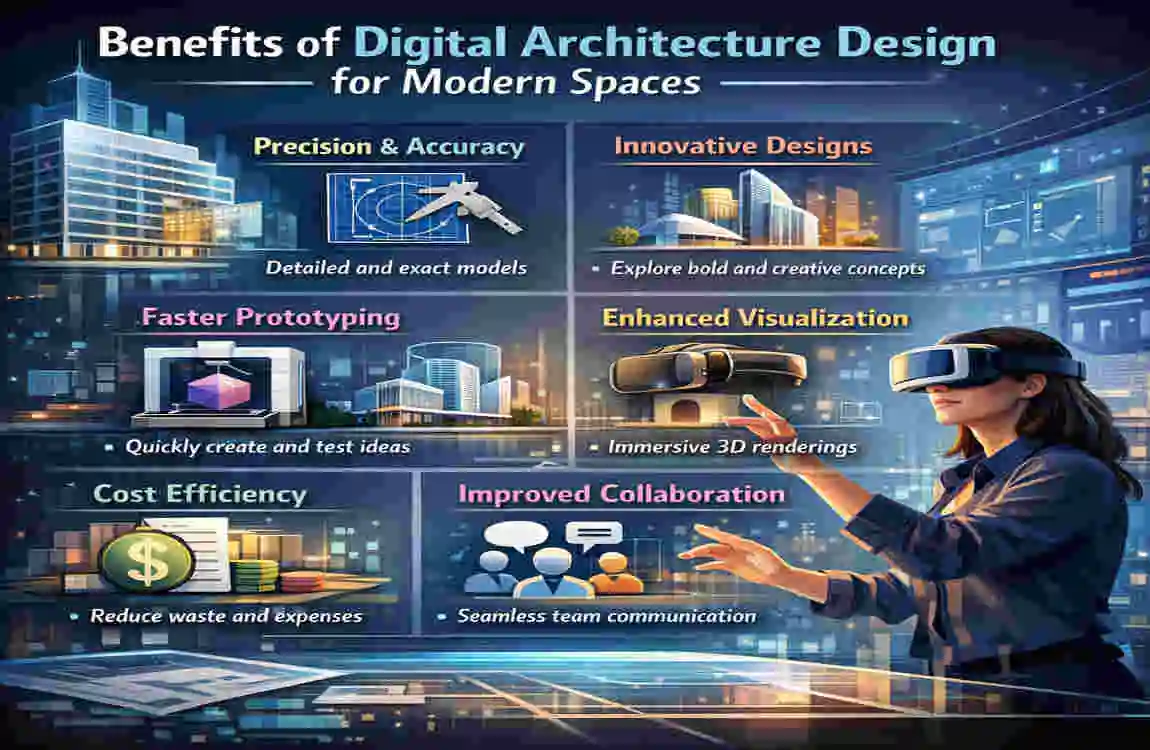
Digital design brings many practical benefits. It is not just about using advanced tools. It is about building better and planning better.
Better Accuracy
Digital tools help reduce measurement errors and design mistakes. Since everything is created in a clear digital format, teams can check details more carefully before building starts.
Faster Planning
Design changes can be made quickly. This helps teams move from ideas to final plans faster and makes coordination easier across different parts of a project.
Cost and Material Efficiency
Early testing helps find problems before they become expensive. Digital planning also supports smarter material use, reducing waste and saving money.
Smart and Sustainable Buildings
Digital architecture design supports energy-saving choices. It can help with natural light, airflow, insulation, and smart systems that adjust based on use.
Improved Client Experience
Clients can view models, virtually walk through spaces, and request changes more easily. This creates a better experience and leads to more confident decisions.
Applications of Digital Architecture Design
Smart Homes
In smart homes, digital design supports connected devices, automated lighting, climate control, and security systems. It helps create homes that feel more comfortable and respond to everyday needs.
Modern Commercial Buildings
Offices and business spaces use digital design for flexible layouts, energy monitoring, and building management systems. This helps improve both performance and user comfort.
Sustainable Architecture
Digital tools help architects test energy use, material choices, and environmental impact. This makes it easier to design more responsible, efficient buildings.
Urban and Public Spaces
Cities use digital planning for transport systems, public areas, and large-scale development. It helps decision-makers study traffic flow, access, and environmental effects.
Interior Architecture
Interior spaces benefit from digital room planning, furniture layouts, lighting studies, and material previews. This helps create rooms that look good and function well.
Future Trends in Digital Architecture Design
AI and Generative Architecture
AI will continue to play a bigger role in design. It can create concepts based on data, user needs, and performance goals, making the design process smarter and faster.
3D-Printed Buildings
3D printing is opening new possibilities in construction. It can speed up construction and enable unique shapes, though it still has limits in scale and material choice.
Digital Twins
A digital twin is a live virtual copy of a real building. It can track performance, predict issues, and improve maintenance over time.
Smart and Responsive Architecture
Future buildings will respond more actively to the environment. They may adjust lighting, temperature, and shading automatically to improve comfort and save energy.
Sustainable and Data-Driven Design
Real-time data will help architects make better choices about energy and space use. This supports lower waste and better long-term building performance.
How to Use Digital Architecture Design for a Smart Modern Space
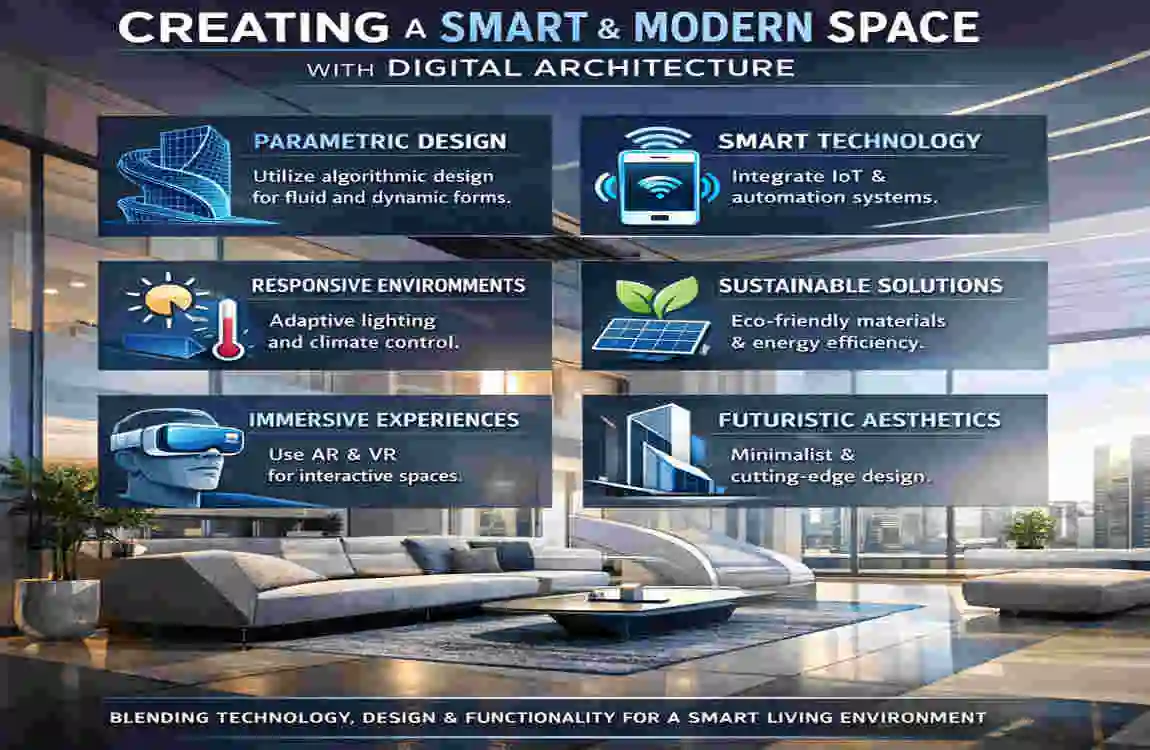
Define the Project Goals
Start by deciding what the space needs to do. Think about function, style, budget, and sustainability. Clear goals make the rest of the process easier.
Select the Right Digital Tools
Choose tools based on the project. Depending on the scale and complexity, you may need CAD, BIM, 3D modelling, VR, or AI support.
Create and Test the Digital Model
Build the model and test important details like layout, lighting, materials, and energy use. This is the stage where ideas become practical.
Integrate Smart Technology
Add systems such as automated lighting, HVAC control, security, and energy management. These features help the space work better every day.
Review and Prepare for Construction
Work closely with professionals to refine the design and finalize the documents. Once everything is checked, the digital model can move into the construction stage.
FAQ About Digital Architecture Design
What is digital architecture design?
It is a modern way of designing buildings using digital tools, software, and data to create, test, and improve spaces before construction.
What are the benefits of digital architecture design?
It improves accuracy, speeds up planning, supports teamwork, reduces waste, and helps create smarter, more sustainable buildings.
What software is used for digital architecture design?
Common tools include CAD, BIM, 3D modeling software, rendering tools, and computational design platforms.
How does AI affect digital architecture design?
AI helps with idea generation, design analysis, automation, and creating multiple options based on project goals.
Is digital architecture design useful for residential projects?
Yes, it works well for homes, apartments, and smart interiors because it supports planning, comfort, and efficient use of space.
What is the future of digital architecture design?
The future includes AI, digital twins, smart buildings, 3D printing, and more data-driven design methods.
Is digital architecture design expensive?
It depends on the project size and tools used. While some technology may cost more at first, it often saves money later by reducing mistakes and waste.