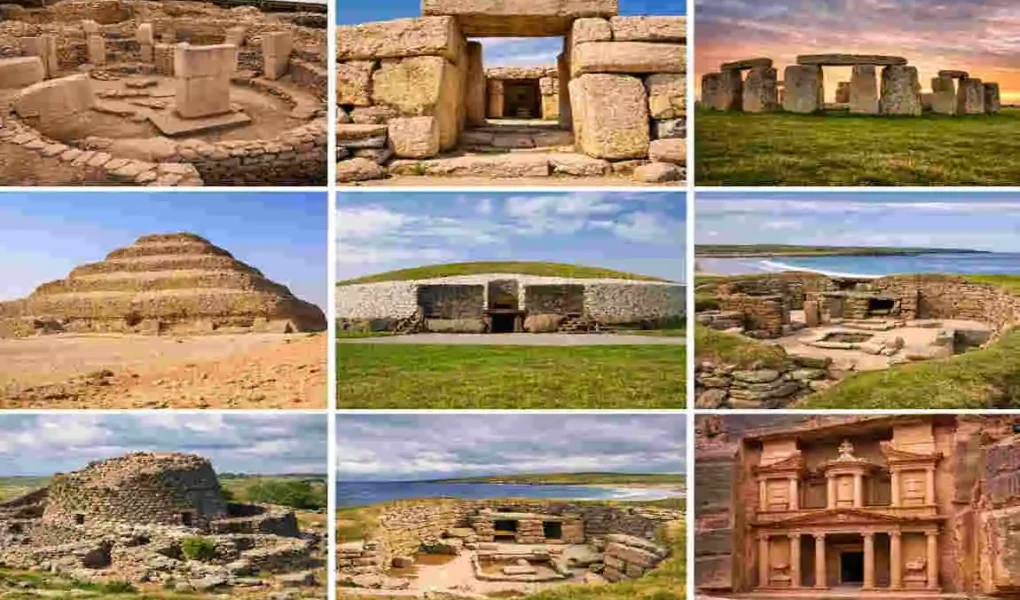
The phrase oldest architecture in the world points to the earliest known buildings and structures made by humans. These are not just old stones or ruins. They prove that early people could plan, build, and create spaces for daily life, worship, defencedefence, and community.
| Ancient Structure | Location | Approx. Age | Key Feature |
|---|---|---|---|
| Göbekli Tepe | Türkiye | 11,000+ years | Massive carved stone pillars |
| Jericho Structures | West Bank | 9,000+ years | Early stone construction |
| Newgrange | Ireland | 5,000+ years | Megalithic tomb and solar alignment |
| Egyptian Pyramids | Egypt | 4,500+ years | Monumental stone engineering |
| Stonehenge | England | 4,500+ years | Large stone circle |
| Ziggurats | Mesopotamia | 4,000+ years | Stepped temple platforms |
| Great Bath | Pakistan | 4,000+ years | Advanced ancient water design |
| Parthenon | Greece | 2,400+ years | Classical Greek architecture |
Ancient architecture tells us a lot about human history. It shows how people lived, what they believed, and how they solved problems with the tools they had. Even without machines, cranes, or steel, they built structures that still stand today. That is impressive, and it is one reason these places continue to inspire modern architects.
What Is the Oldest Architecture in the World?
Ancient architecture usually refers to buildings and structures made in early human history, often before written records were common. People built these with simple, local materials such as stone, mud brick, timber, and earth.
How Do Experts Find the Age of Ancient Structures?
Archaeologists do not guess the age of a structure. They study soil layers, tools, bones, pottery, and building remains. They also use dating methods such as carbon dating on nearby organic material. Even then, proving the exact age can be hard.
That is why it is difficult to name a single oldest building in the world. Some structures are older in one way, while others are older in another. For example, one may be the oldest temple, while another may be the oldest house or the oldest settlement wall.
Early Human Construction
At first, people built simple shelters to protect themselves from weather and animals. Over time, they began making more permanent homes and community spaces. They used stone foundations, mud walls, and wooden frames. These early buildings marked a major step in human progress.
Why Ancient Architecture Matters
Architecture is closely tied to agriculture, religion, and social life. Once people settled in one place, they needed homes, storage spaces, gathering areas, and ceremonial sites. Buildings became signs of organized society.
Ancient Structures That Changed the History of Architecture
Some early sites changed what experts thought was possible in prehistoric times. These places show that early builders were far more skilled and organized than people once believed.
Göbekli Tepe
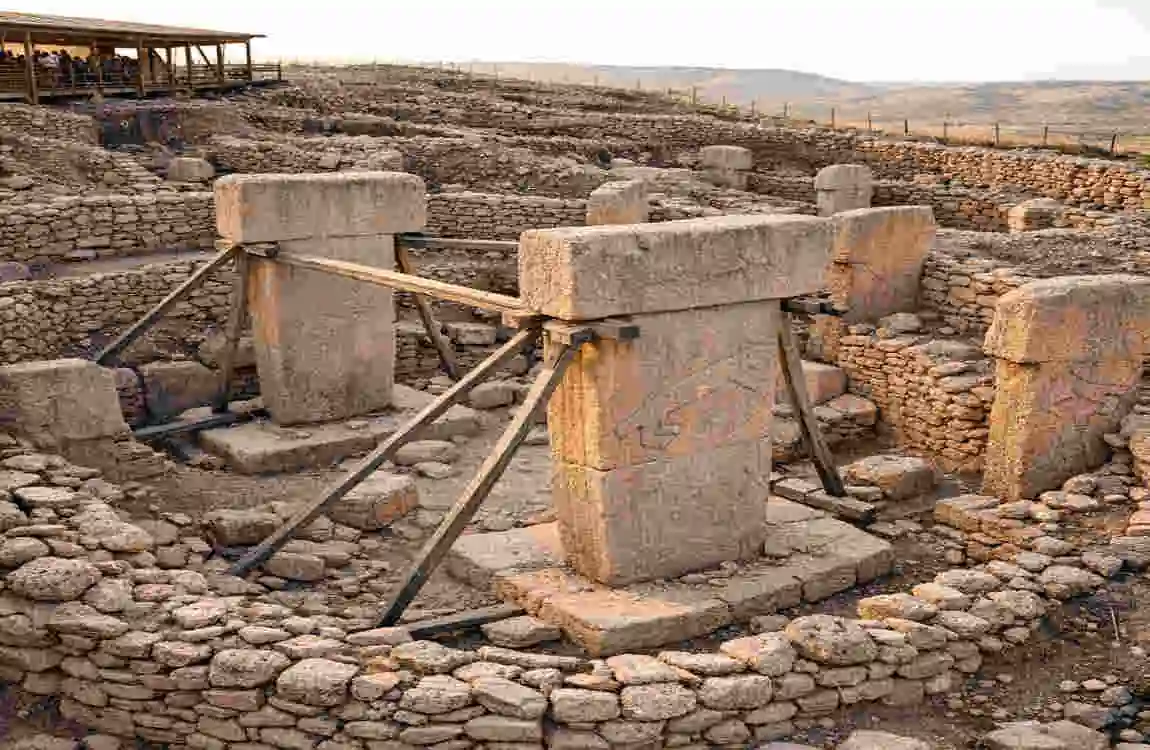
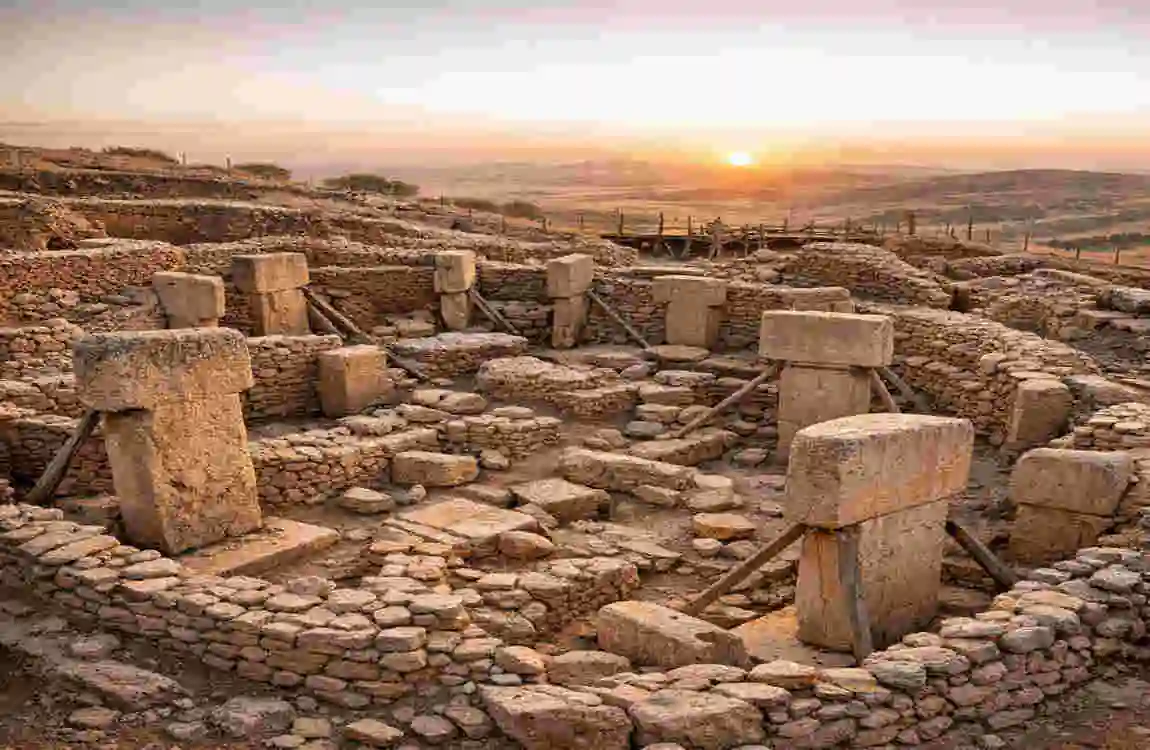
Göbekli Tepe in modern-day Turkey is one of the world’s most important ancient sites. It has massive stone pillars arranged in circles. Many of the stones are carved with animal images and symbols.
What makes it so special is its age. It is much older than many famous temples and cities. For a long time, people thought large ceremonial buildings only came after farming and settled life. Göbekli Tepe challenged that idea. It showed that people may have built monuments before fully developed cities.
Jericho
Jericho is one of the world’s oldest known settlements. It is famous for its ancient stone tower and defensive wall. These structures suggest that early people were already thinking about safety, protection, and community planning.
The tower may have served different purposes, such as defence or ceremony. Either way, it proves that ancient builders could manage large construction projects with simple tools and teamwork.
Çatalhöyük
Çatalhöyük is known for its closely packed houses. The homes were built side by side, with few streets between them. People often entered through the roof rather than a front door.
This unusual layout gives us a clear picture of early community living. It also shows that people were already thinking carefully about space, movement, and daily life.
The World’s Oldest Monumental and Religious Architecture
Many of the oldest surviving structures were not homes. They were built for religion, ritual, or burial. This shows that belief systems played a major role in early architecture.
Egyptian Pyramids and Early Monumental Design
The Step Pyramid of Djoser is one of Egypt’s earliest large stone structures. It marked a major shift from simple tombs to carefully planned monumental architecture.
The Great Pyramid of Giza later became one of the most famous buildings in history. Its precise shape, scale, and stone construction show advanced planning and strong engineering skill. These pyramids were deeply connected to Egyptian beliefs about life, death, and the afterlife.
Stonehenge
Stonehenge in England is another famous ancient structure. It is made of large standing stones arranged in a circular pattern. People still debate its exact purpose, but many believe it had ceremonial and astronomical meaning.
What stands out most is the effort required to move and place the stones. That alone shows how organized and determined early builders were.
Newgrange
Newgrange in Ireland is a passage tomb with a corbelled roof and a special alignment with the winter solstice. On certain days, sunlight reaches deep inside the chamber.
This shows that ancient builders understood the sky, seasons, and sunlight in surprising detail. It also proves that architecture could combine function, meaning, and beauty.
Ancient Architecture Around the World
The world’s oldest architecture was not made in one place. Different regions developed their own styles based on climate, resources, and culture.
RegionCommon MaterialsMain FeaturesWhat It Shows
Mesopotamia Mud brick Ziggurats, city walls Adaptation to river plains
Egypt Stone Pyramids, temples, tombs Precision and monument-building
Indus Valley Brick Planned streets, drains, wells Early urban planning
China Timber, earth Courtyards, wooden frames Flexible climate-based design
Mediterranean Stone Temples, columns, roads Public life and classical influence
Mesopotamian Architecture
In Mesopotamia, mud brick was common because stone was scarce. Builders used it to make homes, temples, and ziggurats. The climate and river environment strongly shaped these choices.
Ancient Egyptian Architecture
Egyptian builders used stone to create long-lasting structures. They carefully aligned their monuments and built them on a grand scale. This level of precision still amazes people today.
South Asian Ancient Architecture
The Indus Valley Civilization is famous for planned cities like Mohenjo-daro. Streets were laid out in organized patterns. Drainage systems, wells, and brick houses show that these people valued order and public health.
Ancient Chinese Architecture
Early Chinese buildings used timber and courtyard planning. These ideas later became a major part of traditional Chinese design. The layout often reflected family life, harmony, and connection to nature.
Ancient Mediterranean Architecture
Greek and Roman architecture introduced strong ideas about columns, symmetry, public spaces, and roads. These ideas deeply influenced later architecture across Europe and beyond.
Building Techniques Behind the Oldest Architecture in the World
Ancient builders had no machines, but they still created lasting structures. They used skill, patience, and teamwork.
Ancient Engineering Without Modern Technology
They moved heavy stones with human labour, sleds, ropes, rollers, and simple ramps. They also used careful measurement and planning. Even without modern tools, they understood basic ideas like balance, weight, and stability.
Materials Used in Ancient Architecture
- Stone for strength and durability
- Mud brick for easy shaping and local availability
- Timber for roofs and frames
- Earth for walls and platforms
- Lime and early mortar for joining and finishing
People chose materials based on what was nearby and what worked best in the climate.
How Ancient Architecture Still Inspires Modern Design
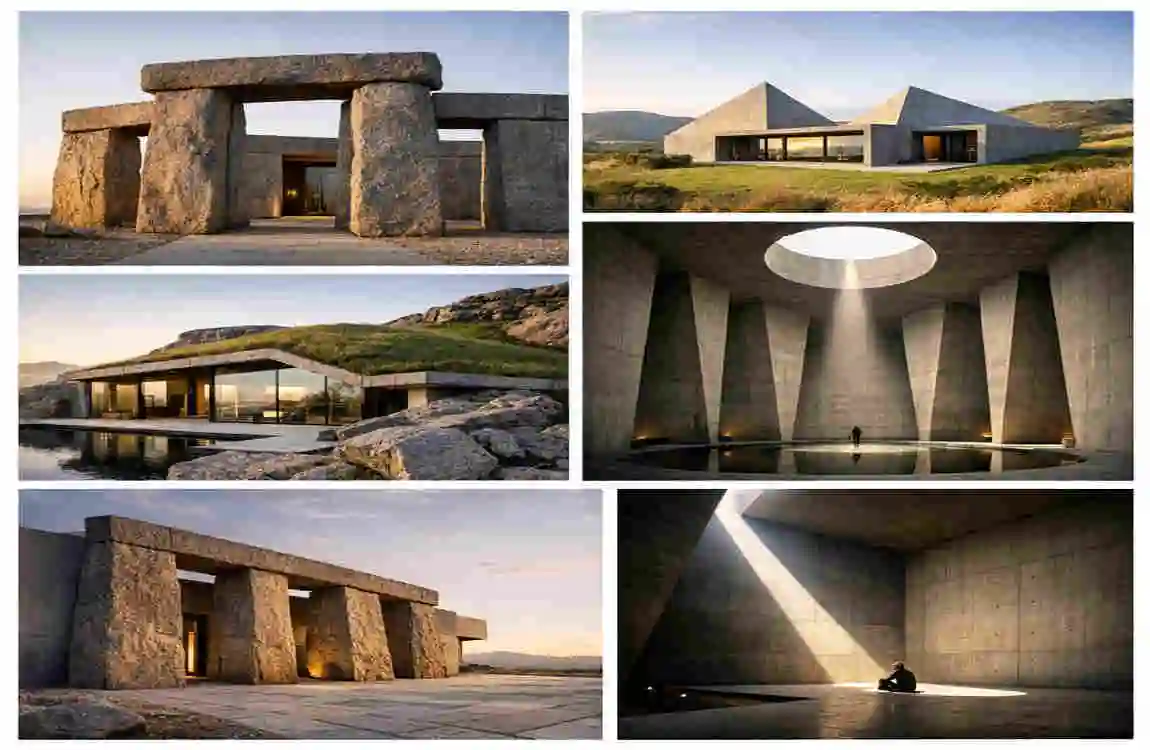
Ancient buildings still influence modern architects because they offer timeless lessons. Many of today’s best design ideas are actually very old.
Lessons Modern Architects Can Learn
Ancient architecture teaches us to work with the local environment, not against it. It also reminds us to build with purpose, use durable materials, and create spaces that connect people with nature.
Modern designers still borrow ideas like:
- Courtyards
- Passive cooling
- Natural ventilation
- Stone and earth textures
- Strong geometric forms
These ideas are popular because they are simple, practical, and beautiful.
Preserving the World’s Oldest Architecture
These places are fragile. Weather, tourism, pollution, development, and climate change can damage them. That is why preservation matters so much.
Protecting ancient sites helps us keep history alive. It also gives future generations a chance to learn from the people who built them.
FAQ About the Oldest Architecture in the World
What is considered the oldest architecture in the world?
There is no single agreed answer. It depends on whether you mean the oldest house, temple, wall, tower, or settlement.
What is the oldest known building still standing?
Several very early structures still survive in partial form. Their exact ranking depends on dating methods and how a “building” is defined.
Is Göbekli Tepe the oldest architecture in the world?
It is one of the oldest and most important known monumental sites. However, “oldest” depends on the type of structure being discussed.
What is the oldest house in the world?
Early domestic sites such as Knap of Howar are often discussed as some of the oldest surviving houses. These help us understand everyday life in prehistoric times.
What materials did builders use in the oldest buildings?
Ancient builders mainly used stone, mud brick, timber, and earth because those materials were easy to find and use.
Why is ancient architecture important today?
It gives us cultural history, engineering lessons, and design ideas that still work in modern life.