If you are learning how to build a timber frame house, you are looking at one of the most practical and flexible ways to build a home. Timber frame houses are popular because they are faster to build, often more affordable, and can be made energy efficient with the right materials.
In simple terms, a timber frame house uses a strong wooden skeleton to support the structure. The walls, roof, and insulation are then added around that frame. This makes the building process easier to plan and usually quicker to complete than traditional methods.
What is a Timber Frame House?
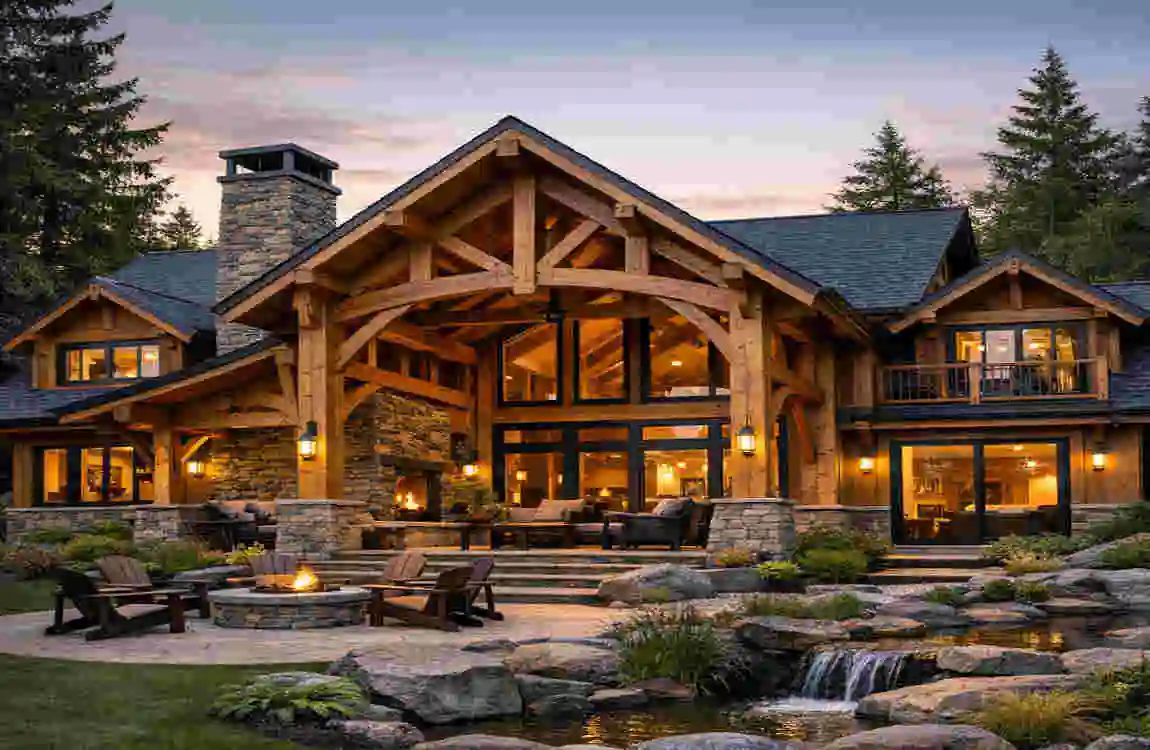
A timber frame house is a home built with a wooden structural frame. This frame carries the building’s load, while other layers, such as insulation, cladding, and wall panels, protect it and improve comfort.
Main Parts of a Timber Frame House
- Frame: The main wooden structure
- Insulation: Keeps heat in and cold out
- Sheathing: Adds strength and weather protection
- Cladding: The outer finish you see from outside
Compared with brick homes, timber-frame houses are usually lighter, quicker to assemble, and easier to customise. They also work well for modern energy-saving designs.
Planning Before You Build
Good planning makes the whole project run more smoothly. Before you start building, focus on budget, land, and permissions.
Budget Planning
You should estimate the total cost early. This includes:
- Timber and other materials
- Labor costs
- Foundation work
- Roofing and insulation
- Interior finishing
A clear budget helps you avoid delays and surprise expenses.
Land Selection
Choose land that is stable, suitable for building, and easily accessible. It is also important to check the soil condition, drainage, and nearby services.
Building Permissions
Always check local rules before construction. Most areas require permits, inspections, and approved plans. Skipping this step can cause legal problems later.
Materials Needed
The materials you choose affect the strength and life of your house. Most timber frame homes need:
MaterialPurpose
Softwood or hardwood timber Main frame structure
Nails, bolts, and connectors hold the frame together
Insulation boards or rolls improve energy efficiency
Moisture barrier Protect against dampness
Sheathing panels Add support and stability
Softwood is often used because it is easier to work with and usually cheaper. Treated timber is also important because it helps protect the frame from moisture and insects.
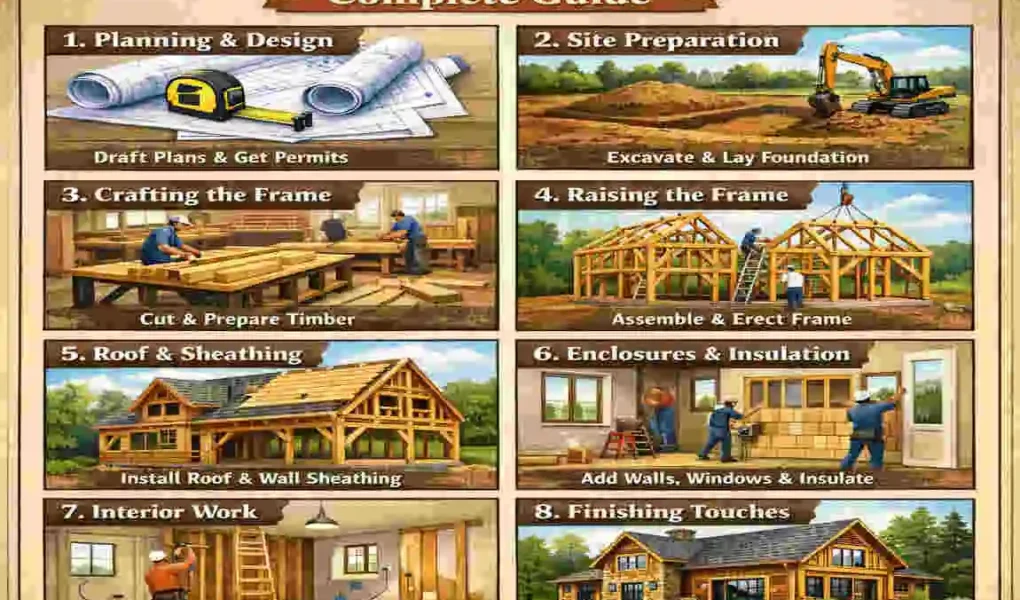
Step-by-Step Guide: How to Build a Timber Frame House
Foundation Work
The foundation is the base of the house, so it must be strong and level. Common choices include slab, strip, and pile foundations.
A poor foundation can lead to cracks, movement, and long-term damage. So, take time to make sure the base is correct before moving forward.
Floor Frame Construction
Next, the floor frame is built on top of the foundation. Builders place sill plates first, then install the floor joists.
This step creates the base for the rest of the house. It must be square and level so the walls fit properly.
Wall Frame Assembly
Wall frames are usually built on the ground first and then lifted into place. These frames include:
- Studs
- Top plates
- Openings for doors and windows
This stage is where the house begins to take shape. The walls must be measured carefully to avoid alignment problems.
Raising the Frame
Once the wall sections are ready, they are raised and fixed in position. Temporary braces are used to keep everything stable.
This is one of the most important moments in the build, as the house’s structure becomes visible. Accuracy here matters a lot.
Roof Frame Installation
After the walls are secure, the roof frame is installed. Builders may use trusses or rafters depending on the design.
The roof should be weatherproofed quickly to protect the timber and the inside of the house from rain.
Insulation and Sheathing
Now the frame is covered with insulation and sheathing. This helps control temperature and strengthens the structure.
External cladding is then added to protect the home and improve its appearance.
Interior Finishing
The last stage includes:
- Drywall installation
- Electrical wiring
- Plumbing
- Painting and flooring
This is where the house becomes livable and comfortable.
Cost of Building a Timber Frame House
The cost can vary based on size, location, and material quality. In many cases, timber frame houses can be 20–30% cheaper than brick homes, but this depends on your project.
What Affects the Cost?
- Size of the house
- Timber quality
- Labor charges
- Foundation type
- Interior finish level
To save money, plan carefully, compare material prices, and avoid design changes during construction.
Common Mistakes to Avoid
Many beginners make simple but costly mistakes. Try to avoid these:
- Poor planning
- Using untreated timber
- Ignoring moisture protection
- Building on an unsafe foundation
These problems can reduce the life of the house and increase repair costs later.
Benefits of Timber Frame Houses
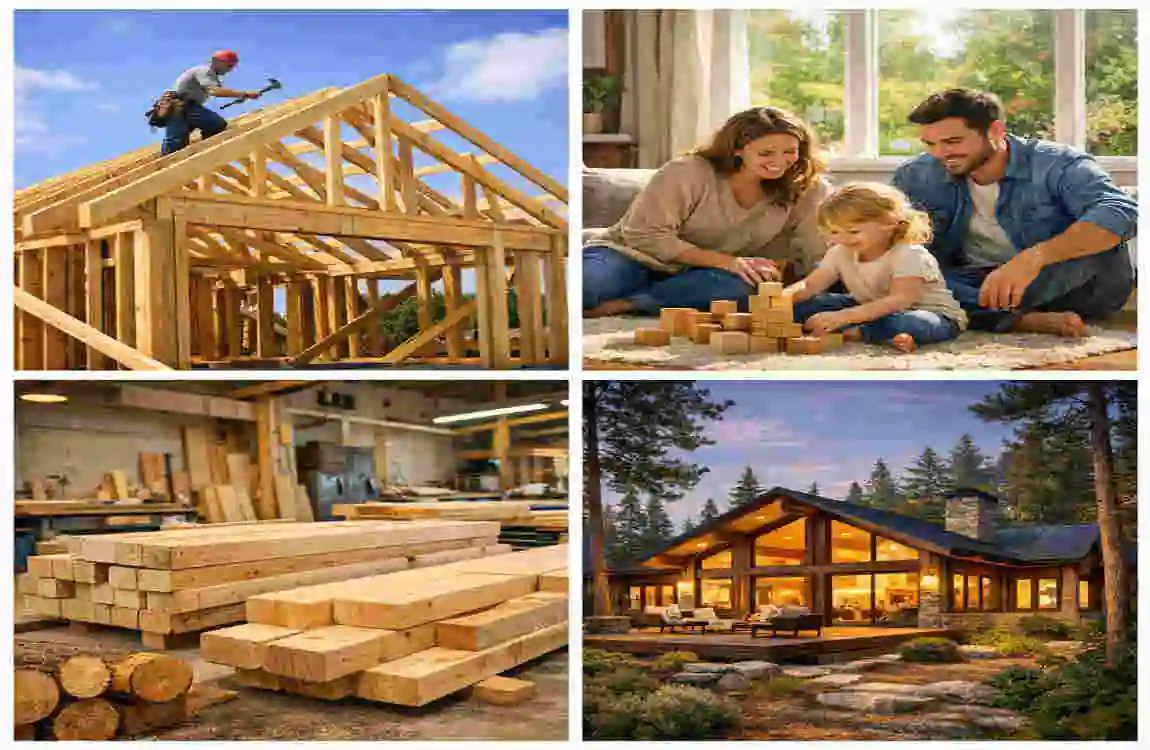
Timber frame homes offer many good advantages. They are:
- Fast to build
- Energy efficient
- Environmentally friendly
- Flexible in design
They also feel warm and comfortable when built properly. For many people, this makes them a smart choice for modern housing.
Maintenance Tips
A timber frame house can last a long time if you care for it well. Check the house regularly for:
- Moisture leaks
- Pest damage
- Cracks or movement
- Roof or cladding issues
If small problems are fixed early, they usually do not become serious.
FAQs
How long does it take to build a timber frame house?
Usually, it takes 3 to 6 months, depending on the size and design.
Is a timber frame house cheaper than a brick house?
Yes, it is often cheaper, especially when labour time is lower.
Are timber frame houses durable?
Yes, they can last many decades if built and maintained properly.
Can I build one myself?
Small timber projects may be DIY-friendly, but a full house usually needs professional help.
| Stage | Description | |
|---|---|---|
| Planning & Design | Create architectural drawings, budget, and get building permissions. | |
| Foundation Work | Prepare land and construct a strong concrete foundation. | |
| Timber Frame Construction | Build the structural wooden frame using treated timber. | |
| Wall & Roof Installation | Add wall panels, roof trusses, insulation, and sheathing. | |
| Windows & Doors | Install windows and external doors for weather protection. | |
| Plumbing & Electrical | Fit internal wiring, pipes, heating, and ventilation systems. | |
| Interior Finishing | Add drywall, flooring, painting, and interior design work. | |
| Exterior Finishing | Apply cladding, roofing finish, and external insulation. | |
| Final Inspection | Check safety, quality, and compliance before moving in. |