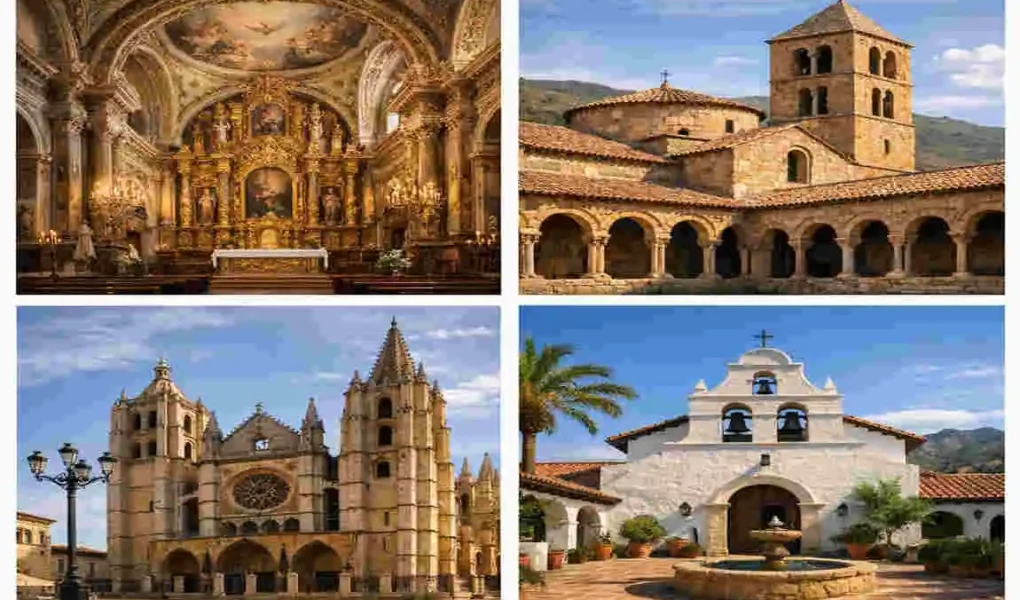
These churches often stand out because of their ornate façades, bell towers, arches, domes, courtyards, and richly decorated interiors. Some feel strong and simple, while others look highly detailed and dramatic. Together, they show how architecture in Spain has changed over time while maintaining a clear identity.
This style remains important today because it continues to influence historic preservation, architectural study, tourism, and modern design. Even now, many architects still borrow ideas from these traditional forms. If you want to understand the beauty and meaning of Spanish religious buildings, learning about Spanish church architecture is the perfect place to start.
What Is Spanish Church Architecture?
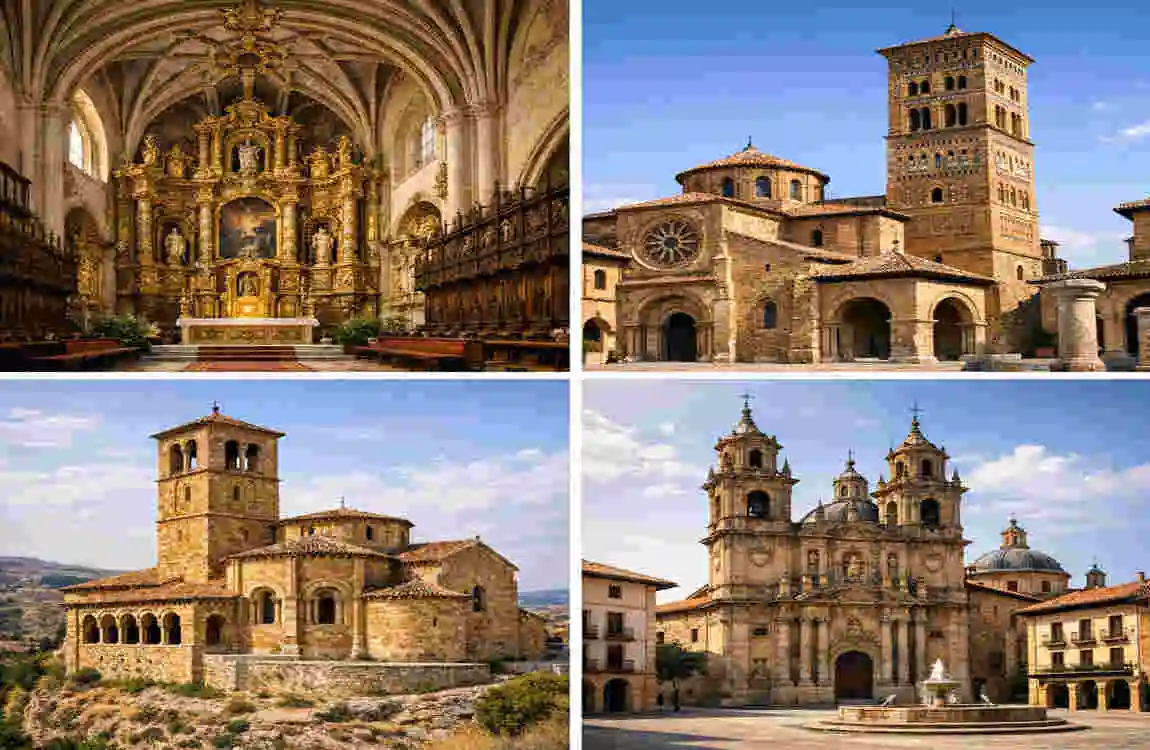
Spanish church architecture is the design tradition used for churches, cathedrals, monasteries, and religious complexes across Spain. It developed slowly over many centuries and never followed a single style. Instead, it absorbed ideas from Roman, Visigothic, Romanesque, Gothic, Islamic, Renaissance, and Baroque traditions.
That mix is what makes it so rich. Some churches are heavy and fortress-like. Others rise upward with pointed arches and tall vaults. Many later buildings became highly decorative, with detailed stonework, carvings, and painted interiors. In every period, churches served both a religious purpose and a visual purpose. They were meant to support worship, but also to inspire awe.
Spain’s different regions also shaped the style. Churches in Andalusia often show Islamic influence. Northern churches may feel older, simpler, and more Romanesque. Catalan churches sometimes use compact forms and local stone. In Castile, you often see grand churches that reflect the power of historic cities.
Over time, Spanish churches evolved from plain religious shelters into major landmarks. They became places where faith, power, art, and identity all came together.
Key Characteristics
Spanish church architecture often includes these features:
- Thick masonry walls
- Arched entrances and windows
- Bell towers and campaniles
- Domes and vaulted ceilings
- Decorative façades
- Courtyards and cloisters
- Religious sculptures and artwork
- Tile, stone, wood, and plaster details
These elements help create a style that feels both spiritual and grounded in local tradition.
Historical Development of Spanish Church Architecture
Spanish church design did not appear all at once. It formed over centuries as different cultures, rulers, and religious movements shaped the landscape.
Roman and Early Christian Influences
The earliest Spanish churches borrowed from Roman building methods and early Christian basilica plans. The Romans brought advanced construction techniques, including stone walls, arches, columns, and well-organized interior spaces. Early Christian builders adapted these ideas for worship.
The basilica layout became important. It usually included a long nave, side aisles, and an altar area at one end. This made the church practical for gatherings and processions. Many early Spanish churches were modest, but they laid the foundation for later styles.
Romanesque Architecture
Romanesque churches appeared across Spain during the Middle Ages. They are easy to recognize because they look heavy, solid, and secure. Builders used thick walls, rounded arches, small windows, and low ceilings. The result was a strong, fortress-like appearance.
This style made sense in a time of instability. Churches had to feel protected and permanent. Romanesque buildings often had simple exteriors but powerful shapes. Their interiors felt dim and quiet, which added to the spiritual mood.
Gothic Architecture
Gothic architecture brought a dramatic change. Churches became taller, brighter, and more open. Builders used pointed arches, ribbed vaults, and flying buttresses to support higher ceilings and larger windows.
This allowed more natural light to enter the building. The effect was striking. Light became part of the religious experience. Many Spanish Gothic churches also added detailed portals, sculpted figures, and elegant towers.
Renaissance Influence
During the Renaissance, architects began to value symmetry, balance, and classical order. Spanish churches from this period often feature columns, geometric façades, and more controlled decoration.
This did not erase older traditions. Instead, Renaissance ideas blended with Spanish religious needs. Churches still felt sacred and grand, but they also looked more measured and refined.
Spanish Baroque
Baroque churches took ornamentation to another level. These buildings often feature dramatic façades, curved lines, sculptural decoration, gilded interiors, and layered visual effects.
The goal was emotional impact. Baroque architecture wanted to move the viewer, not just impress them. In Spain, this style became deeply expressive. It gave churches a sense of movement, richness, and spiritual intensity.
Defining Features of Spanish Church Architecture
Spanish churches are known for specific elements that make them feel distinctive and memorable.
Ornate Church Façades
The façade is often the most visible part of a Spanish church. It acts like a public face. In many churches, the façade is richly decorated with carved stone, statues of saints, religious symbols, and patterned details.
Some façades are simple and balanced. Others are layered and highly elaborate. Either way, they usually draw attention and guide the viewer toward the sacred interior.
Bell Towers and Campaniles
Bell towers are a major feature in many Spanish churches. They hold bells used for worship, announcements, and community timekeeping. But they also serve an architectural role.
A bell tower helps define the skyline. Some are square and plain. Others are tall, elegant, and highly ornamented. In many cities, the tower is one of the first things people notice.
Arches, Vaults, and Domes
Arches are central to the style. Spanish churches use both rounded arches and pointed arches, depending on the period. Vaults and domes help cover large interior spaces while adding beauty and structure.
These forms also affect acoustics. Sound moves well in vaulted spaces, which helps during chanting, prayer, and music. That is one reason these buildings feel so powerful when you step inside.
Courtyards and Cloisters
Many Spanish religious complexes include courtyards or cloisters. These spaces are enclosed, quiet, and peaceful. They give people a place for reflection, walking, and prayer.
Cloisters are especially common in monasteries and larger church complexes. They connect religious life with calm, ordered movement.
Decorative Interiors
The inside of a Spanish church can be even more impressive than the outside. Interiors may include carved altars, painted ceilings, sculptures, tilework, wood panels, and gold accents.
These details are not just decorative. They support the building’s spiritual purpose. They help create a mood of devotion, wonder, and respect.
Regional Styles and Cultural Influences
Spain is a large and historically diverse country, so its churches vary from region to region. Geography, materials, and cultural exchange all shaped the final result.
Andalusian Influences
Andalusia shows some of the strongest Islamic influence in Spanish church architecture. This is partly because the region has a long history of Christian and Islamic interaction.
Here you may see horseshoe arches, geometric decoration, courtyards, and rich tilework. Even after churches were converted or rebuilt for Christian worship, many Islamic design ideas remained visible. This creates a layered and unique look.
Castilian and Central Spanish Traditions
In Castile and central Spain, churches often feel more monumental. Stone construction is common, and façades may be bold and formal. Gothic and later Baroque styles are especially important here.
These churches were often built in historic city centers, which gave them strong civic importance. They stood as symbols of faith and local power.
Catalan Influences
Catalonia has its own architectural character. Catalan Romanesque and Gothic churches often use local stone and compact forms. They may feel sturdier and less extravagant than some other regional examples.
Even so, they can be deeply beautiful. Their strength often comes from proportion, craftsmanship, and careful use of space.
Northern Spanish Architecture
Northern Spain has many Romanesque and Gothic churches linked to pilgrimage routes. These buildings were shaped by travel, devotion, and local tradition.
Because of the climate and terrain, northern churches often needed to be practical and durable. Still, many became highly artistic over time.
Materials and Construction Techniques
Spanish church architecture depends heavily on materials. Builders used what was available locally, and that influenced both style and durability.
MaterialCommon UseVisual Effect
Stone Walls, façades, towers, columns Strong, permanent, monumental
Wood Ceilings, doors, beams, choir areas Warm, detailed, natural
Tile/Ceramic Roofs, walls, decorative panels Colorful, patterned, regional
Plaster/Stucco Ornament, wall finishes, molded detail Smooth, decorative, flexible
Metal Grilles, lamps, fittings, decoration Fine detail, contrast, shine
Stone and Masonry
Stone is one of the most important materials in Spanish churches. Builders used limestone, sandstone, granite, and other local stones. Stone created durability and a sense of weight.
It also helped churches look permanent and sacred. The mass of the building often reflected the strength of faith itself.
Wood
Wood appears in ceilings, doors, choir spaces, and decorative features. In some churches, carved wooden ceilings are especially impressive. Wood adds warmth to the stone-heavy structure.
Tile and Ceramic Decoration
Colorful tiles are a major part of Spanish visual identity. In churches, they may appear in floors, walls, domes, or decorative borders. Tile adds brightness and pattern, and it also protects surfaces in practical ways.
Plaster and Stucco
Plaster and stucco allowed artisans to shape detail more freely. These materials were useful for ornamental surfaces, molded trim, and textured finishes. They helped make decoration more affordable and adaptable.
Famous Examples of Spanish Church Architecture
Studying famous churches helps you see how the style changed over time.
Sagrada Família
The Sagrada Família in Barcelona is not a traditional historic church in the older sense, but it is one of the most famous religious buildings in Spain. Its design is highly original and deeply tied to Barcelona’s artistic identity.
What makes it stand out is its unusual forms, vertical movement, and sculptural quality. It shows how Spanish religious architecture can continue to evolve while still staying rooted in symbolism and craft.
Seville Cathedral
Seville Cathedral is one of the largest Gothic churches in the world. Its scale is massive, and its interior feels dramatic and grand. It reflects the wealth and ambition of Seville during a powerful historical period.
When you study this building, look at its height, structure, and layered history. It shows how Gothic ideas could grow into something monumental in Spain.
Santiago de Compostela Cathedral
This cathedral is one of the most important pilgrimage destinations in Europe. Its Romanesque core is a major part of its identity, though later additions changed its appearance.
The building tells a story of faith, travel, and continuity. It is a great example of how churches often evolved rather than staying fixed.
Mezquita-Catedral of Córdoba
This is one of the most remarkable buildings in Spain. It combines Islamic and Christian elements in a single structure, creating a powerful example of layered history.
Its arches, columns, courtyard, and interior rhythm make it unforgettable. It shows how architecture can preserve diverse cultural identities within a single sacred space.
Toledo Cathedral
Toledo Cathedral is known for its Gothic character and highly detailed interior. It reflects the city’s deep religious and historic importance.
The building also shows how regional history shaped church architecture. In Toledo, architecture became a visible expression of power, faith, and craftsmanship.
How Spanish Church Architecture Influenced Modern Design
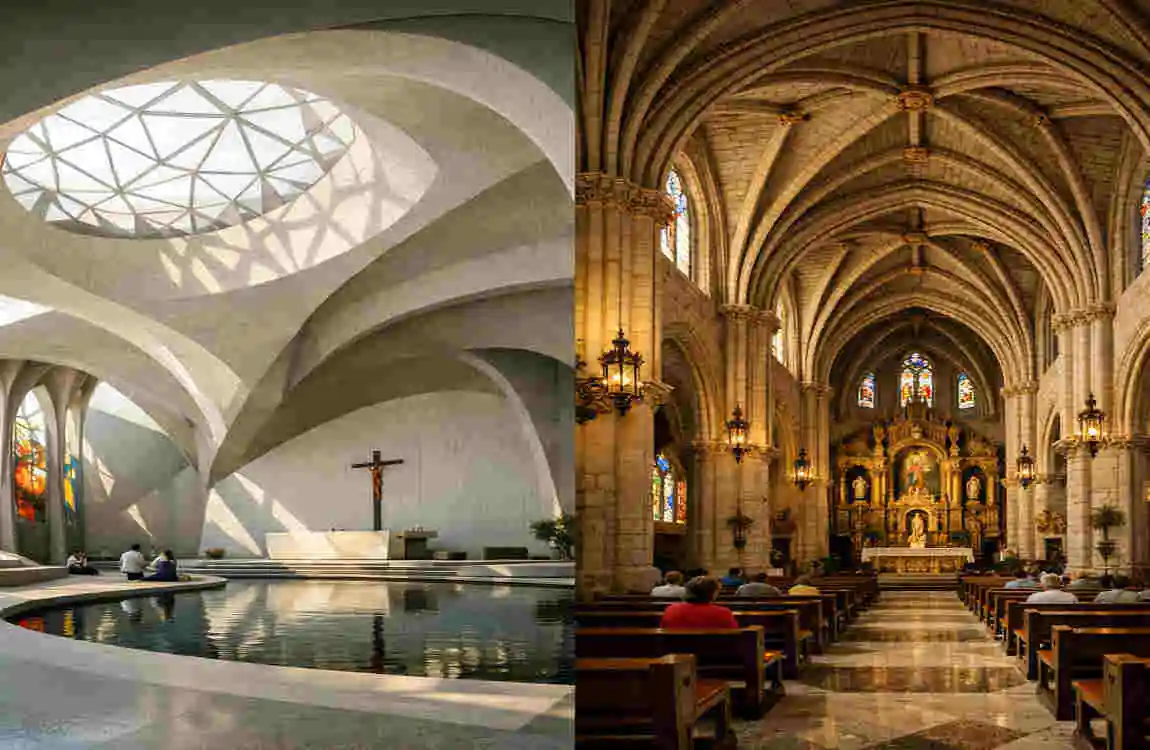
Spanish church design still matters today because its forms continue to inspire new buildings.
Spanish Revival Architecture
Spanish Colonial Revival and Spanish Revival styles became popular much later, especially in the Americas and in parts of Europe. These styles borrow ideas from historic Spanish buildings.
Common features include:
- Stucco walls
- Red tile roofs
- Arches
- Courtyards
- Decorative ironwork
These elements create a warm, traditional feeling that still appeals to modern builders.
Modern Interpretations
Today, architects often simplify historic Spanish forms. They may use clean façades, modern materials, open interiors, and limited ornamentation.
Even with these changes, the influence remains visible. The basic ideas of light, proportion, texture, and sacred space still matter. Modern design can honor tradition without copying it exactly.
How to Identify Spanish Church Architecture
If you want to recognize this style quickly, look at the building as a whole. Do not focus on just one detail. Spanish church architecture is a combination of structure, decoration, materials, and history.
Exterior Clues
Watch for:
- Ornamental façades
- Bell towers
- Arched openings
- Stone construction
- Courtyards
- Tile details
Interior Clues
Inside, look for:
- Vaulted ceilings
- Domes
- Elaborate altars
- Religious artwork
- Sculptures
- Decorative tile and woodwork
Historical Clues
Ask yourself what period the church may belong to. Look for signs of Islamic, Romanesque, Gothic, Renaissance, or Baroque influence. Also consider the location. A church in Andalusia may look very different from one in northern Spain.
FAQ
What are the main features of Spanish church architecture?
The main features include ornate façades, arches, bell towers, domes, vaulted ceilings, courtyards, stonework, tile, and religious artwork.
What influenced Spanish church architecture?
It was shaped by Roman, Christian, Islamic, Romanesque, Gothic, Renaissance, and Baroque influences.
What is the difference between Spanish and Spanish Revival architecture?
Historic Spanish church architecture developed over many centuries in Spain. Spanish Revival is a later style inspired by older traditions.
Why do Spanish churches have bell towers?
Bell towers were used for religious calls, practical announcements, and visual impact. They also help define the building’s silhouette.
What materials are commonly used in Spanish churches?
Common materials include stone, brick, wood, tile, plaster, stucco, and decorative metals.
How did Islamic architecture influence Spanish churches?
Islamic architecture influenced Spanish churches through arches, courtyards, geometric detail, tilework, and ornamental design, especially in regions like Andalusia.
Why is Spanish church architecture important today?
It matters because it preserves history, craftsmanship, religious tradition, regional identity, and architectural inspiration. It also supports tourism and conservation.
| Feature | Spanish Church Architecture |
|---|---|
| Main Style | Traditional, elegant, and influenced by Spanish colonial design |
| Key Materials | Stucco, stone, clay tiles, and wood |
| Roof Design | Red clay tile roofs with simple sloped forms |
| Windows | Arched windows, decorative frames, and stained glass |
| Doors | Large wooden doors with detailed craftsmanship |
| Interior | High ceilings, arches, ornate altars, and religious artwork |
| Colors | Warm white, cream, terracotta, brown, and earthy tones |
| Signature Feature | Bell towers, courtyards, arches, and decorative facades |
| Overall Feel | Historic, peaceful, grand, and highly decorative |