

AI for architectural design refers to using smart digital tools to help architects create, test, and refine building designs. In simple words, it helps designers work faster, explore more options, and make better decisions.
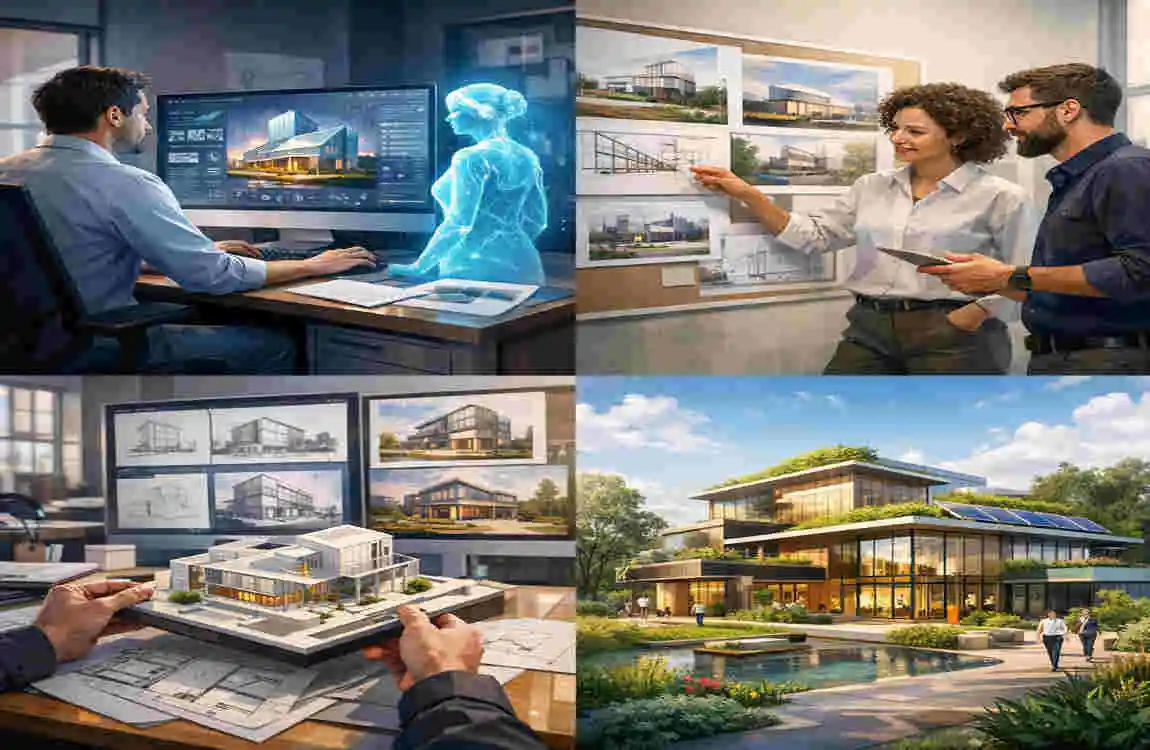
Today, architecture is no longer only about hand sketches and manual drafting. Architects now use AI to generate ideas, study layouts, improve building performance, and create realistic visuals. This does not replace the architect. Instead, it gives the architect a stronger and faster design process.
AI is becoming important because modern projects need speed, accuracy, flexibility, and better sustainability. Clients want clear ideas. Teams want faster workflows. Cities want smarter buildings. AI helps support all of these needs.
What Is AI for Architectural Design?

Understanding AI in Architecture
Artificial intelligence in architecture refers to software that can analyse data, find patterns, and suggest design options. It can learn from input, such as site conditions, room needs, energy goals, or style preferences.
Traditional CAD tools help architects draw what they already know. AI tools go a step further. They can suggest new ideas based on the information you give them. That makes them useful in the early stages of design.
How AI Supports Architects
AI can help architects in many ways:
- Concept generation for early ideas
- Design optimization for better layouts
- Space planning for room arrangement
- 3D visualization for realistic presentation
- Building performance analysis for energy and comfort
- Material and energy decisions for sustainable design
AI vs Traditional Architectural Design
Aspect Traditional Design AI-Assisted Design
Idea generation Manual and slower Faster and more varied
Layout testing Done by hand Tested through data and simulation
Visualisation Time-consuming Rapid and flexible
Decision support Based mainly on experience Combines experience with data
Role of architect Central Still central
AI is a support tool, not a full replacement. The architect still makes the final call.
How AI Is Used in Architectural Design
AI-Powered Concept Generation
One of the biggest strengths of AI is speed. It can create many concept ideas in a short time. This helps architects explore different shapes, styles, and layouts without having to start from scratch each time.
During brainstorming, this is very useful. Instead of settling on the first idea, you can compare many possibilities and choose the best direction.
Space Planning and Layout Optimisation
AI can also help arrange rooms more efficiently. It can study how people move through a space, how much natural light enters, and how well the layout uses available area.
This is helpful for homes, offices, schools, and public buildings. A well-planned space feels easier to use and more comfortable for the people inside it.
3D Visualisation and Rendering
AI can turn simple design ideas into realistic images and visual scenes. This helps clients understand a project before it is built.
Clear visuals improve communication. When clients can actually see the idea, they can give better feedback and make faster decisions.
Sustainable Architectural Design
AI can support greener design choices. It can help evaluate daylight, building orientation, energy use, and material selection.
This matters because good design is not only about beauty. It is also about reducing waste, saving energy, and creating buildings that work well over time.
Building Performance Analysis
Before construction starts, AI can help estimate how a building may perform. It can look at comfort, heat, airflow, energy use, and environmental response.
This kind of analysis helps architects avoid problems early. That can save time, money, and effort later.
Benefits of AI for Architectural Design
Faster Design Development
AI reduces repetitive work. That means architects can spend more time on ideas, creativity, and strategy.
Instead of doing every test manually, they can move more quickly through the early design phase.
More Design Options
AI can generate many alternatives from one brief. This encourages experimentation and can lead to more creative results.
You are not limited to one direction. You can compare several and choose the one that fits best.
Improved Decision-Making
With AI, design choices can be supported by data. This makes it easier to compare layouts, materials, and performance outcomes.
Better information often leads to better decisions.
Better Client Communication
Clients often find technical drawings hard to understand. AI-generated visuals can make ideas easier to explain.
This helps during meetings, revisions, and presentations.
Cost and Resource Efficiency
AI can help spot weak ideas early. That means fewer changes later and less time wasted on poor options.
It can also reduce effort on repetitive tasks, improving overall productivity.
AI Tools and Technologies Used in Modern Architecture
Generative Design
Generative design creates multiple solutions based on set rules and goals. For example, you can ask the system to consider space limits, sunlight, and circulation.
This is useful for planning, form-finding, and optimisation.
AI Image and Visualisation Tools
These tools can turn written prompts or rough sketches into visual concepts. They are great for early exploration, but they should not be treated as final construction documents.
They help architects think, test, and present ideas more clearly.
BIM and AI
Building Information Modelling, or BIM, stores important project data in a single digital model. AI can study this data and help with coordination, error checking, and workflow improvement.
This makes project management smoother and more connected.
Parametric and Computational Design
AI can also work with parametric design, where forms change based on rules and input values. This is useful for complex shapes and performance-based solutions.
It helps designers test ideas that would be difficult to explore manually.
Challenges and Limitations of AI in Architecture
Accuracy and Reliability
AI can be useful, but it is not perfect. Sometimes it gives unrealistic or incorrect suggestions.
That is why qualified professionals should always review the results.
Creativity and Human Judgment
Culture, place, people, and purpose shape architecture. AI cannot fully understand these human factors.
It can assist with ideas, but it cannot replace judgment, taste, or responsibility.
Copyright and Design Ownership
AI-generated content raises questions about who owns the result and how it may be used. Architects should understand the rules of the tools they use.
This is important for both legal and ethical reasons.
Data Privacy and Security
Architects often work with private client details and project information. That data should be protected carefully.
It is best to avoid sharing sensitive information with tools that lack strong privacy safeguards.
Overdependence on AI
If people rely too much on AI, they may stop thinking critically about the design.
AI should support professional thinking, not replace it.
The Future of AI in Architectural Design
More Personalised Building Design
In the future, AI may help create spaces that better match user needs. Homes, offices, and public buildings could become more adaptable and personal.
This could improve comfort and usability in everyday life.
Smarter and More Sustainable Buildings
AI will likely play a bigger role in energy efficiency and climate-aware design. Buildings may become better at managing light, heat, water, and resources.
That is a major step toward more sustainable architecture.
AI-Assisted Collaboration
AI may also improve teamwork between architects, engineers, contractors, and clients. It can help process information faster and reduce confusion.
This can lead to smoother project coordination.
AI and Digital Twin Technology
Digital twins are virtual versions of real buildings. AI can help monitor them and improve performance over time.
This means buildings may not only be designed with AI, but also managed with AI after they are built.
Architects and AI Skills
Future architects will need both design thinking and digital skills. Important abilities will include:
- AI prompting
- Data interpretation
- Computational thinking
- Visualization
- Critical evaluation
Best Practices for Using AI in Architectural Design
- Use AI for early brainstorming
- Define project goals clearly
- Give accurate inputs and constraints
- Generate several options, not just one
- Review every output carefully
- Combine AI ideas with expert judgment
- Check structural, environmental, and legal needs
- Protect client and project data
- Treat AI as a design assistant, not an architect
AI for Architectural Design: What Architects Should Expect
AI will likely become a normal part of architectural workflows. It will help with faster iteration, better analysis, stronger visualisation, and more informed design choices.
Still, the best results will come from combining human creativity with digital intelligence. AI can suggest, support, and speed up the process, but architects remain responsible for the outcome.
Frequently Asked Questions
What is AI for architectural design?
It is the use of artificial intelligence to assist architects in concept generation, visualisation, layout planning, design optimisation, and analysis.
How is AI changing architectural design?
AI is making design faster, improving visualisation, helping to test more alternatives, and supporting data-driven decisions.
Can AI replace architects?
No. AI can assist with tasks, but it cannot replace creativity, judgment, responsibility, and context-aware thinking.
What are the benefits of using AI in architecture?
The main benefits are faster workflows, more design options, better communication, improved analysis, and potential performance gains.
Is AI useful for sustainable architecture?
Yes. AI can help study daylight, building orientation, energy use, and environmental performance.
What skills do architects need to work with AI?
They need design knowledge, digital literacy, AI tool skills, data interpretation, critical thinking, and good judgment.
| Aspect | Information |
|---|---|
| Topic | AI and Architecture: Exploring the Future of Digital Design |
| Focus Keyword | AI for architectural design |
| Main Idea | AI is transforming how architects plan, visualize, and optimize buildings. |
| AI Applications | Concept generation, 3D modeling, floor planning, rendering, and design optimization |
| Key Benefits | Faster workflows, creative exploration, improved efficiency, and data-driven decisions |
| Design Impact | Helps architects test multiple ideas and create more personalized, functional spaces |