
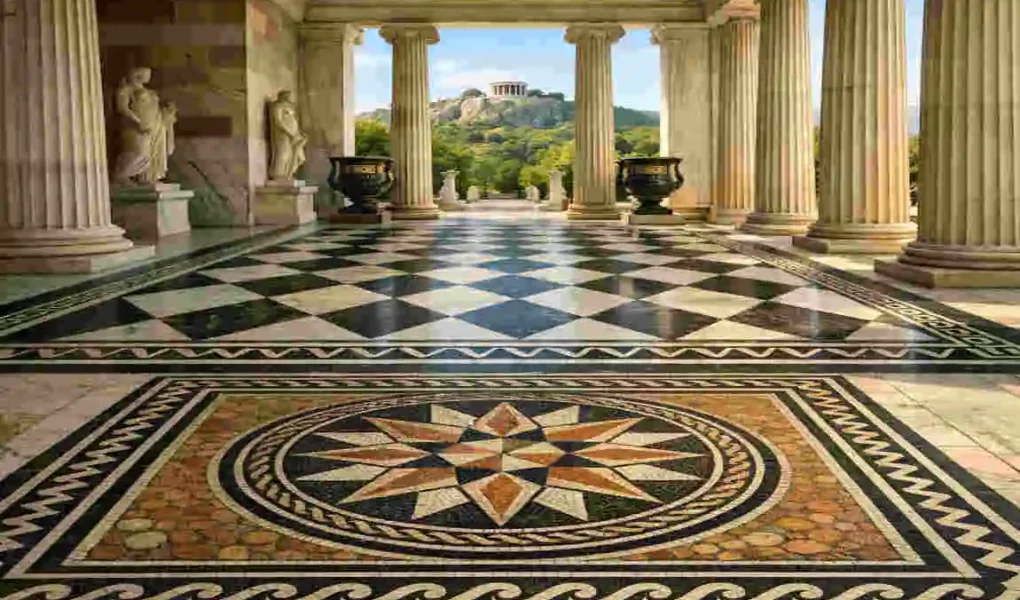
Greek architecture flooring is all about balance, elegance, and timeless beauty. It takes inspiration from the floors used in ancient Greek homes, temples, courtyards, and public buildings. These floors were not only practical. They also helped express order, harmony, and classical style.
In ancient Greece, flooring often reflected a space’s purpose. Temples used stone and marble to convey power and permanence. Homes and villas used durable, easy-to-maintain materials. Public spaces often included decorative designs that showed artistry and social importance.
Traditional Materials Used in Greek Architecture Flooring
Marble flooring and its historical importance
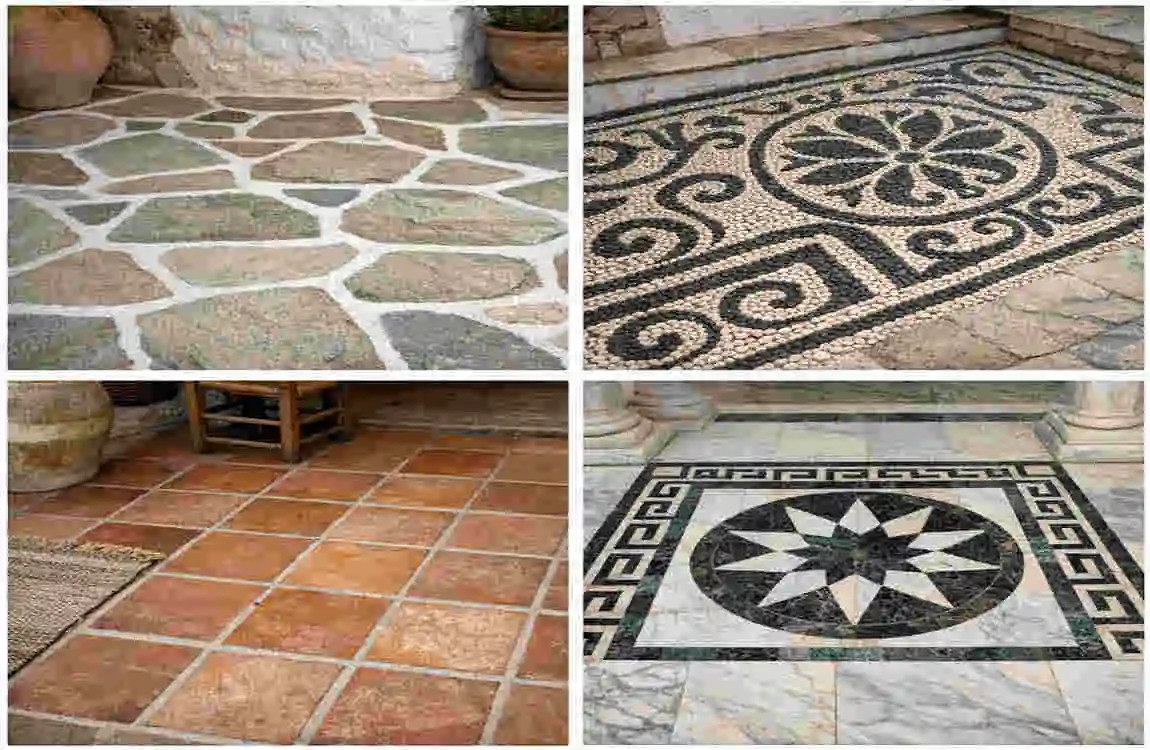
Marble is one of the most famous materials connected with Greek architecture. People valued it for its strength, beauty, and polished surface. In temples and important buildings, marble helped create a strong visual impression.
Modern Greek-inspired interiors still use marble because it feels elegant and clean. It reflects light well and gives rooms a refined look.
Limestone and natural stone
Limestone and other natural stones were also common. They offered a more earthy and practical option than marble. These materials worked well indoors and outdoors.
They still appeal to homeowners today because they feel natural and timeless. Stone floors can also handle heavy use, which makes them a smart choice in busy areas.
Terracotta and clay tiles
Terracotta and clay were often used in warmer climates. These materials have a warm, handmade look that fits Mediterranean and Greek-inspired design.
They are especially useful if you want a softer, more rustic version of Greek flooring. The colour and texture bring warmth into the room.
Mosaic flooring
Mosaic floors were a decorative feature in many ancient spaces. Small pieces of stone or tile were arranged into patterns, scenes, or borders.
Today, mosaic flooring is still a beautiful option for accent areas, entryways, and bathrooms. It adds detail without overwhelming the room.
Wood flooring in Greek-inspired interiors
Wood was not always the main material in ancient Greek public buildings, but it is often used in modern Greek-inspired homes. It brings warmth and comfort while still fitting a classical style.
Wood pairs well with stone, marble, or simple geometric accents. It softens the room and balances harder surfaces.
Quick material comparison table
MaterialBest ForMain LookMaintenance
Marble Elegant rooms, entryways Luxurious and polished Moderate to high
Limestone Living areas, halls Natural and soft Moderate
Terracotta Mediterranean spaces Warm and earthy Moderate
Mosaic tile Decorative accents Artistic and detailed Moderate
Wood Modern Greek-inspired homes Warm and balanced Moderate
Stone High-traffic spaces Strong and timeless Low to moderate
Greek Flooring Patterns, Colours, and Decorative Details
Greek key patterns
The Greek key is one of the most recognisable patterns in classical design. It uses repeated straight lines in a looping form. You often see this pattern in borders, rugs, and floor edges.
It works beautifully in flooring because it adds structure without too much decoration. The pattern feels formal, balanced, and iconic.
Meander designs and borders
Meander patterns are closely related to the Greek key. They create a flowing, continuous line that suggests movement and order.
These patterns are often used as borders around larger floor areas. That makes the centre of the room feel framed and intentional.
Mosaic patterns inspired by ancient Greece
Mosaics can include geometric shapes, floral forms, symbols, or repeated motifs. In Greek-inspired interiors, they often appear in entryways, bathrooms, or outdoor spaces.
A mosaic floor can become the main feature of a room. If used carefully, it gives the space a strong classical identity.
Floral and natural motifs
Greek design also draws from nature. Laurel leaves, vines, scrolls, and floral details can all appear in flooring patterns.
These motifs soften the room and make the design feel more refined. They work especially well when paired with simple furniture.
Common colours in Greek-inspired flooring
Greek architecture flooring often uses natural, calm colours such as:
- White
- Cream
- Beige
- Sand
- Soft blue
- Terracotta
- Earthy gray
These colours help the floor feel timeless and bright. They also work well with sunlight, which is important in Greek and Mediterranean design.
Why symmetry matters
Symmetry is a major part of the Greek look. Repeated shapes, mirrored borders, and centred designs create visual balance.
When flooring follows symmetry, the room feels more formal and structured. That is one reason the style feels so classic.
Greek Architecture Flooring for Modern Homes
Living room flooring ideas
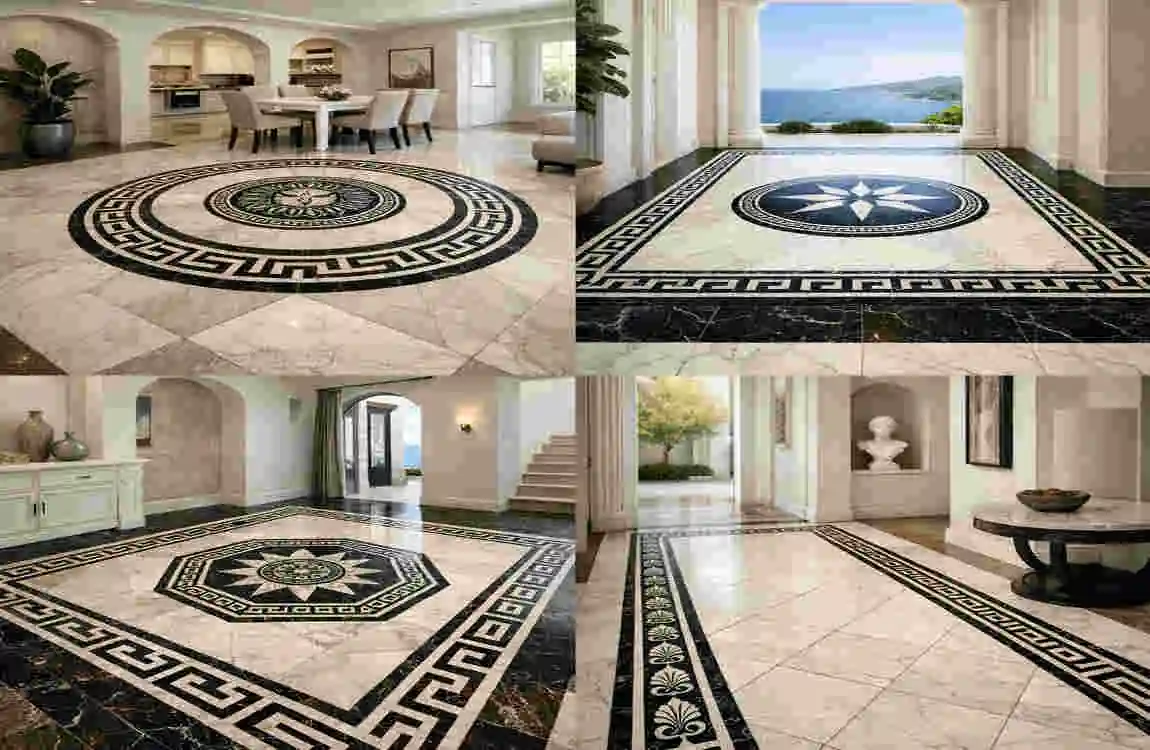
In a living room, Greek-inspired flooring can create a calm and elegant base for the rest of the design. Marble-look tile, stone, or even wood with geometric borders can work well.
This style pairs beautifully with simple sofas, neutral walls, and clean furniture lines. The floor becomes part of the room’s visual identity.
Kitchen flooring ideas
Greek-inspired kitchen floors should look beautiful but also be practical. Natural stone, textured tile, or marble-look porcelain can offer the right balance.
For a Mediterranean feel, soft beige or warm white tones work well. They keep the kitchen bright and inviting.
Bathroom and spa-style flooring
Bathrooms are a great place for Greek-inspired flooring because the style naturally feels clean and calm. Marble, mosaic tile, and stone-look finishes all work well here.
For a spa-like effect, keep the colour palette soft and simple. A small decorative border can add just enough detail.
Bedroom flooring
In bedrooms, Greek flooring should feel peaceful, not dramatic. Wood, stone-look tile, or light marble tones can create that effect.
The idea is to support rest and comfort. A balanced, soft floor helps the room feel more relaxing.
Entryways, patios, and outdoor spaces
Greek-inspired flooring is especially strong in entryways and outdoor areas. These are the places where pattern and structure can make a big first impression.
Patios and courtyards can use stone, tile, or mosaic patterns to create a classic Mediterranean atmosphere. These spaces often suit Greek design very well.
Matching with modern furniture
Greek flooring does not have to make a home feel old-fashioned. It can work beautifully with modern furniture, especially if the furniture is simple and clean-lined.
This mix creates a fresh contrast. The floor adds depth, while the furniture keeps it current.
Practical note for high-traffic areas
If the space gets heavy use, choose a material that is durable and easy to maintain. A beautiful floor should also be realistic for daily life.
How to Choose Greek Architecture Flooring
Think about room size.
Large rooms can handle bold patterns, borders, and darker stone. Smaller rooms often look better with lighter colours and simpler designs.
The goal is to make the room feel balanced. Too much pattern in a small space can feel crowded.
Match the floor to the walls and ceiling.
A Greek-inspired floor works best when the rest of the room supports it. White or cream walls often pair well with marble, stone, or patterned tile.
If the walls already have a lot of detail, keep the flooring simpler. That helps the room stay calm.
Choose the right material.
Your choice depends on style, budget, and maintenance needs. Marble gives the strongest luxury look. Stone offers a natural feel. Tile can mimic the Greek style at a lower cost. Wood can soften the space.
Glossy vs matte finishes
Glossy floors reflect more light and can feel more formal. Matte finishes look softer and are often easier to live with.
Both can work well. The right choice depends on the mood you want.
Budget and durability
Authentic marble and stone can be expensive. If you want the look without the higher cost, modern tile or stone-look porcelain may be a smarter choice.
That way, you keep the style while controlling the budget.
Simple choice guide
- Best for luxury: marble
- Best for warmth: terracotta or wood
- Best for durability: stone or porcelain tile
- Best for decoration: mosaic or patterned tile
- Best for balance: limestone or matte natural-look flooring
Greek Architecture Flooring: Installation, Maintenance, and Design Tips
Prepare the subfloor
A strong, level subfloor is important. If the base is uneven, the pattern will not sit properly, and the finish may look off.
Plan patterns before installation
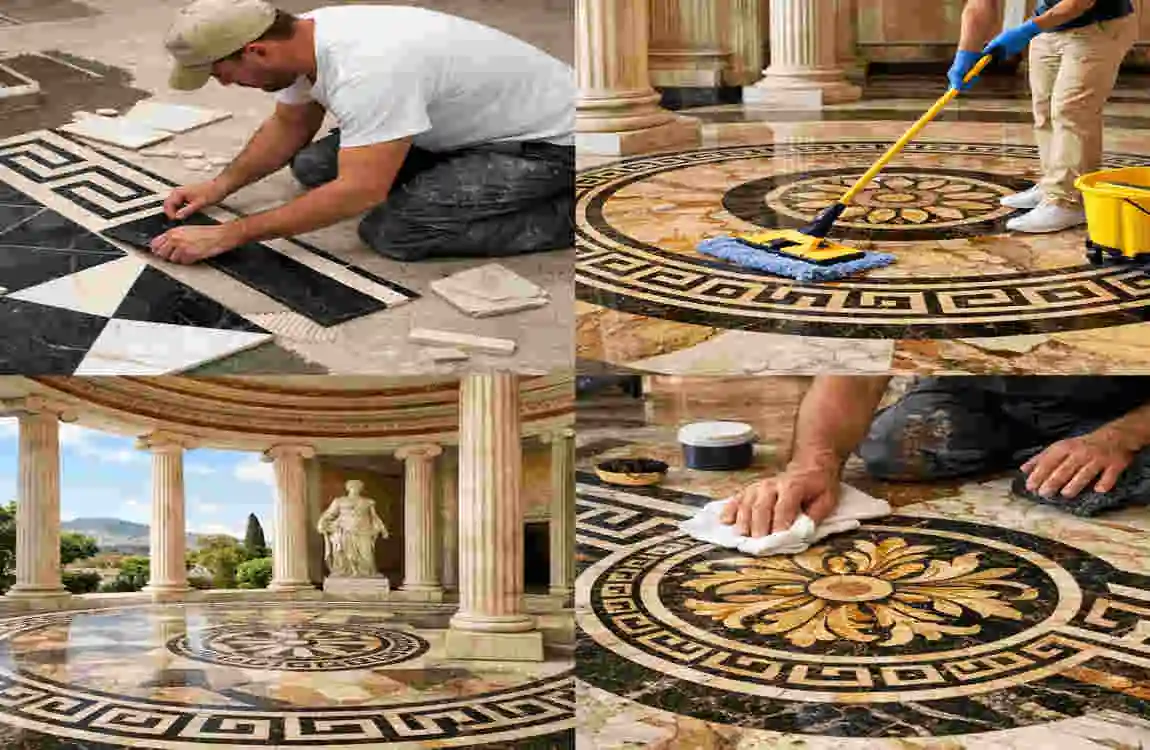
If you are using borders, medallions, or Greek key designs, plan the layout carefully before the first tile goes down. This keeps the pattern centred and balanced.
Professional vs DIY installation
Simple tile flooring may be manageable for some homeowners. But marble, mosaic, and detailed pattern work are often better handled by a professional.
The more decorative the floor, the more precise the installation needs to be.
Clean and protect the surface
Clean marble and natural stone gently. Harsh cleaners can damage the finish. Use soft mops and products made for the material.
For mosaic and decorative tile, avoid heavy scrubbing, which can wear down the pattern.
Common mistakes to avoid
- Using too many patterns in one room
- Choosing a finish that is too slippery
- Ignoring maintenance needs
- Letting the floor compete with every other design element
- Forgetting about room size and lighting
How to keep the Greek look authentic
Keep the design simple, balanced, and elegant. Greek style works best when it feels calm, not crowded. Let the flooring lead the room, and support it with furniture and colour choices that match the same spirit.
FAQ About Greek Architecture Flooring
What is Greek architecture flooring?
Flooring inspired by ancient Greek design, often using stone, marble, mosaic, symmetry, and classical patterns.
What type of flooring was used in Ancient Greece?
Ancient Greece used marble, limestone, stone, clay, terracotta, and mosaic flooring depending on the space.
Is marble the best choice for Greek-inspired flooring?
Marble is one of the most iconic choices, but stone, tile, and even wood can also create a Greek-inspired look.
What is the Greek key flooring pattern?
It is a repeating geometric border pattern made of interlocking lines, often used as a decorative edge.
Can Greek architecture flooring work in modern homes?
Yes. It works very well when paired with simple furniture and balanced colours.
What colours are commonly used in Greek-inspired flooring?
White, cream, beige, sand, blue, grey, and earthy tones are all common.
Is Greek marble flooring difficult to maintain?
It can be more delicate than tile or porcelain, so it usually needs careful cleaning and maintenance.
| Feature | Information |
|---|---|
| Main Materials | Marble, limestone, terracotta, stone, and mosaic |
| Popular Colors | White, cream, beige, gray, and earthy tones |
| Classic Style | Clean lines, geometric patterns, and balanced layouts |
| Greek Key Pattern | Repeating geometric border inspired by ancient Greek design |
| Marble Flooring | Creates an elegant, luxurious, and timeless appearance |
| Mosaic Flooring | Adds artistic patterns and historical character |
| Best Rooms | Entryways, living rooms, courtyards, bathrooms, and patios |
| Modern Use | Greek-inspired flooring works well with minimalist and Mediterranean interiors |